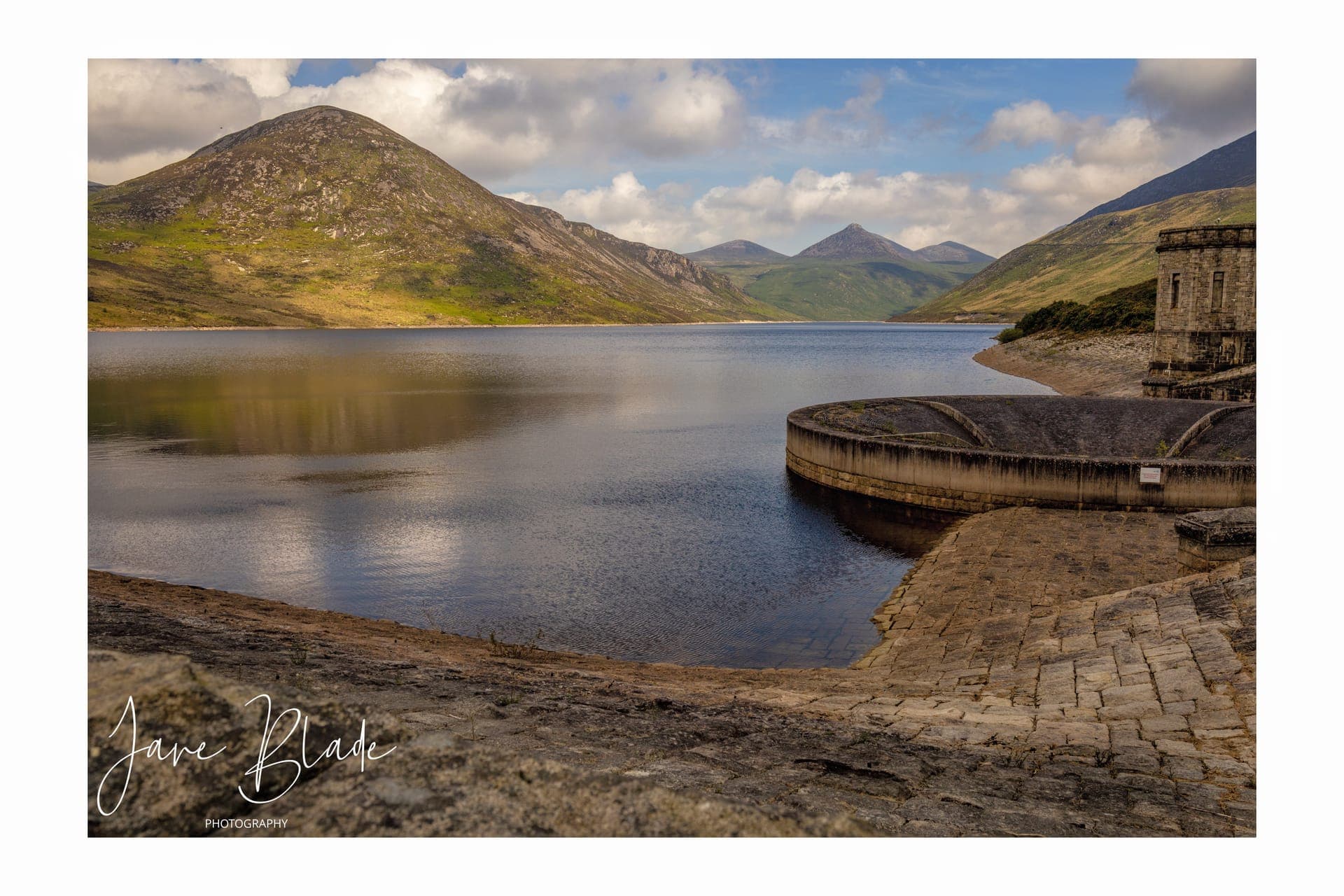
The Valley That Fell Silent
A thousand workers. Ten years of blasting. Nine men who never came home. The construction noise drove every bird from the valley — and the silence gave it a name.
Location
Silent Valley Mountain Park
Time Needed
1–3 hours
Difficulty
Easy (surfaced paths)
Best Season
Year-round
Admission
£5 per car
The Story
A City That Needed Water
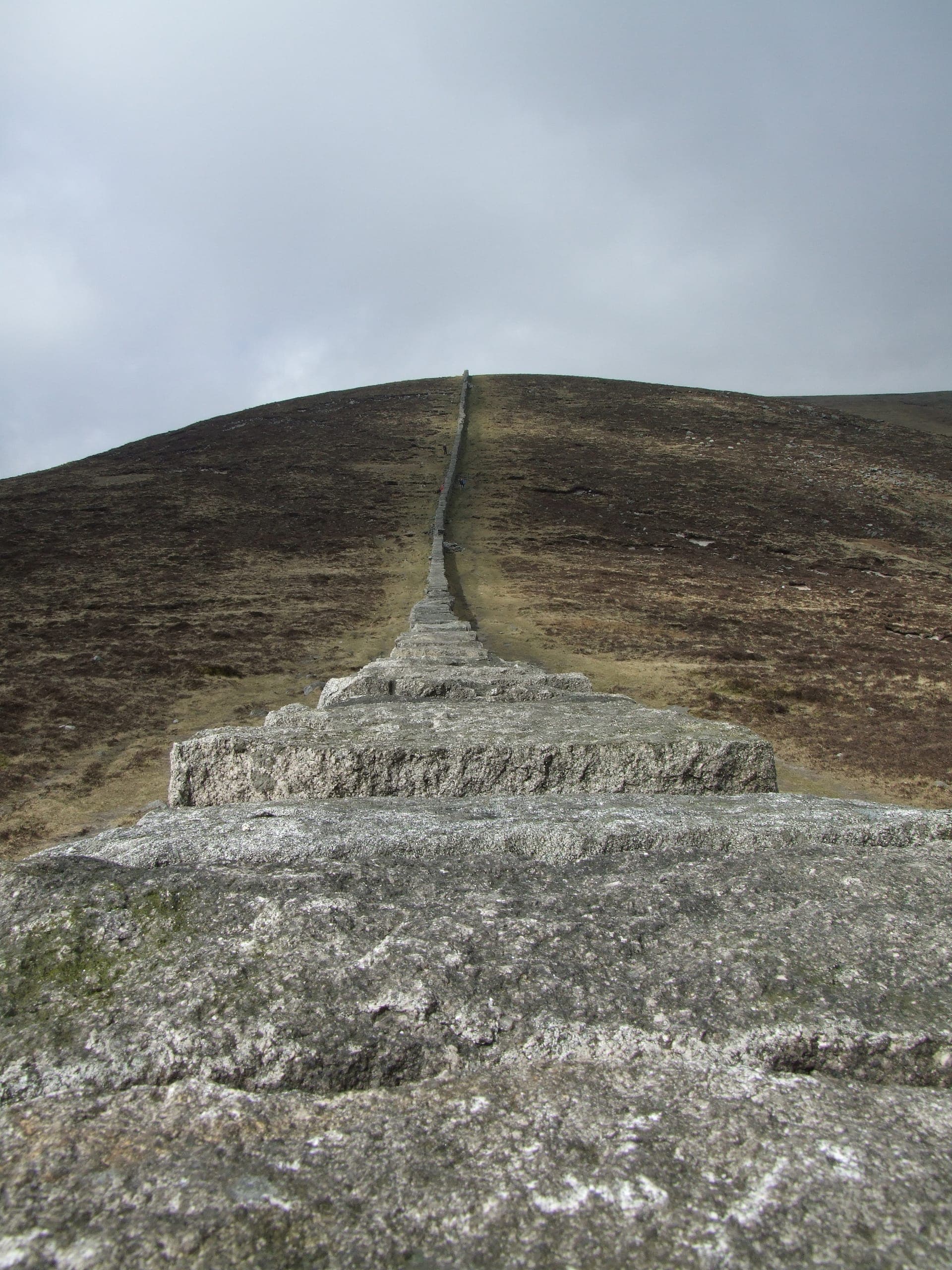
By the early 1900s, Belfast was choking on its own growth. The city’s population had exploded during the industrial revolution — linen mills, shipyards, rope works — and the water supply could not keep up. The Belfast Water Commissioners looked south, toward the Mourne Mountains, where clean water ran off granite peaks in quantities that seemed limitless. They had already built the Mourne Wall to protect the catchment. Now they needed a dam.
The site they chose was a narrow valley in the heart of the mountains — Gleann Binn Bhirce — hemmed in by Slieve Binnian to the east and Slieve Muck to the west. It was remote, difficult to access, and far from any town. But it was perfect: a natural bowl, ringed by high ground, fed by mountain streams. The River Kilkeel rose here before tumbling south to the coast. All they had to do was block it.
“They chose a valley so remote that workers had to be bussed in from the coast every morning. The mountains rang with dynamite from dawn to dusk.”
A Thousand Men in the Mountains
Construction began in 1923, contracted to S. Pearson & Son, the same firm that had built the Blackwall Tunnel under the Thames. At peak activity, over a thousand workers laboured in the valley — drilling, blasting, hauling granite, and pouring concrete. The First World War had delayed procurement of materials for years, but now the work moved with urgency. Belfast was growing by the day.
Most of the workers came from Kilkeel and the surrounding coastal villages. They were bussed up the mountain road each morning and back down each evening. The work was relentless — drilling through granite, laying concrete in all weather, handling explosives in a narrow valley where sound bounced off every surface. The noise was extraordinary. Dynamite blasts echoed off the mountainsides from dawn to dusk. Pneumatic drills hammered into bedrock. Trucks ground up and down the access road.
And slowly, something changed. The birds left. One by one, the species that had nested in the valley for centuries — meadow pipits, skylarks, ravens — abandoned the place. The constant noise had made it uninhabitable. The valley fell silent in the only way that mattered: the natural sounds disappeared. The workers noticed it. The name stuck.
“The construction noise drove every bird away, and the valley fell silent. The name comes not from peace, but from loss.”
What They Built
The dam was completed in 1933, after ten years of continuous work. It is an imposing structure — a concrete gravity dam faced with Mourne granite, holding back 20,000 million litres of water. Behind it, the reservoir stretches deep into the mountains, reflecting Slieve Binnian and Ben Crom on still mornings.
A second dam — Ben Crom — was added further up the valley between 1947 and 1957, extending the reservoir system deeper into the mountains. Between the two, a vast body of water now sits in the heart of the Mournes, hemmed in by some of the highest peaks in Northern Ireland. It is both an engineering triumph and, strangely, a place of great beauty.
The Silence Now
The birds came back. Not immediately, but over the decades since the construction ended, the valley has rewilded itself around the infrastructure. Meadow pipits nest in the heather again. Ravens circle above Ben Crom. Dippers bob along the Kilkeel River below the dam wall. The silence is no longer the silence of absence — it is the silence of a place where the mountains absorb every sound and give back only wind and water.
Today, Silent Valley Mountain Park is one of the most visited spots in the Mournes. Walkers stroll along the reservoir on well-surfaced paths. Children feed ducks at the visitor centre. Photographers come for the mirror reflections on still mornings. But the name carries its history with it. Every time someone says “Silent Valley,” they are repeating the story of a thousand workers, nine deaths, and a decade of noise so relentless that nature itself retreated.
“The birds came back. The silence now is not the silence of absence — it is the silence of a place where the mountains absorb every sound and give back only wind and water.”
The Place
Loading map...
Silent Valley Mountain Park — the main dam, the Ben Crom dam further up the valley, and Slieve Binnian rising to the east.
Silent Valley Mountain Park sits in the heart of the Mourne Mountains, accessed via Head Road from Kilkeel. The park includes a visitor centre, well-maintained walking trails around the reservoir, toilets, and a small shop. Admission is £5 per car.
The main reservoir walk is a gentle, surfaced loop — suitable for families and anyone who enjoys a walk without the need for summit-bagging. For those wanting more, a road (closed to traffic) continues up-valley to the Ben Crom dam, adding a longer out-and-back option with increasingly dramatic mountain scenery.
Coordinates
Silent Valley Visitor Centre:
54.1450°N, 5.9680°W
Silent Valley Dam:
54.1380°N, 5.9750°W
Ben Crom Dam:
54.1180°N, 5.9850°W
Parking
Silent Valley Mountain Park:
Large car park at the visitor centre. £5 per car. Rarely full except on peak summer weekends and bank holidays.
The Visit
Silent Valley is one of the easiest and most rewarding walks in the Mournes. The paths are surfaced, the scenery is extraordinary, and the visitor centre provides shelter and context. You can make it a gentle hour-long stroll or a full half-day exploring up to Ben Crom.
Reservoir Loop
A gentle, surfaced walk around the main reservoir. Flat, family-friendly, and scenic throughout. Allow about an hour at a relaxed pace, with time to stop and take in the views.
Ben Crom Walk
Continue past the main dam on the closed road to Ben Crom. The scenery intensifies as you move deeper into the mountains. Allow 2–3 hours for the full out-and-back walk.
Duration
1–3 hours. The reservoir loop takes about an hour. The walk to Ben Crom and back adds another 1–2 hours.
Difficulty
Easy. Surfaced paths around the main reservoir. The road to Ben Crom is tarmac but slightly uphill. Wheelchair-accessible around the main reservoir.
What to Bring
- •Comfortable shoes — the paths are surfaced but can be wet
- •A waterproof jacket — the valley funnels weather off the mountains
- •Camera — on a still morning, the mirror reflections are breathtaking
- •A packed lunch or snacks — picnic tables are available near the visitor centre
What to Look For
- •The granite-faced dam wall — Mourne granite holding back 20,000 million litres
- •Slieve Binnian’s tors reflected in the reservoir on calm mornings
- •The Mourne Wall climbing the ridgeline above you
- •The historical photographs in the visitor centre — the scale of the workforce is staggering
- •The silence itself — stand by the dam wall and listen
Walk past the main dam and continue to Ben Crom. Most visitors turn back at the first reservoir, but the road continues deeper into the mountains where the scenery becomes wilder and more dramatic with every step. The second dam sits at the foot of Slieve Binnian — one of the most spectacular viewpoints in the Mournes, and you’ll likely have it to yourself.
Make a Day of It
Silent Valley is surrounded by the highest peaks in the Mournes. Combine the reservoir walk with the coastal drive through Kilkeel and Annalong, or make it part of a classic weekend.
While You're Here
Three places worth exploring once you’ve visited.
More Stories to Discover
Every mountain, bridge, and ruin has a story. Here are a few more.

Discover
Discover More Stories
The Mourne Mountains are full of stories built into the landscape — walls, dams, distilleries, and the people who refused to stop building.
Explore All Stories