The Lough That Changes Colour
A glacial lake tucked beneath Slieve Binnian that shifts from vivid blue to near-black depending on the light. You have to earn this one.
Location
Annalong Valley, Mournes
Time Needed
3–4 hours return
Difficulty
Moderate (mountain path)
Distance
~8 km (5 miles) return
Best Season
Clear day, any season
The Story
Carved by Ice
About twelve thousand years ago, when the last great glaciers were grinding their way through the Mourne Mountains, a tongue of ice carved a bowl into the granite between two of the highest peaks. When the ice finally retreated, it left behind a hollow — a corrie, in the language of geology — and the hollow filled with water. Clear, cold, mountain water. They call it Loch Gorm in Irish. The Blue Lough.
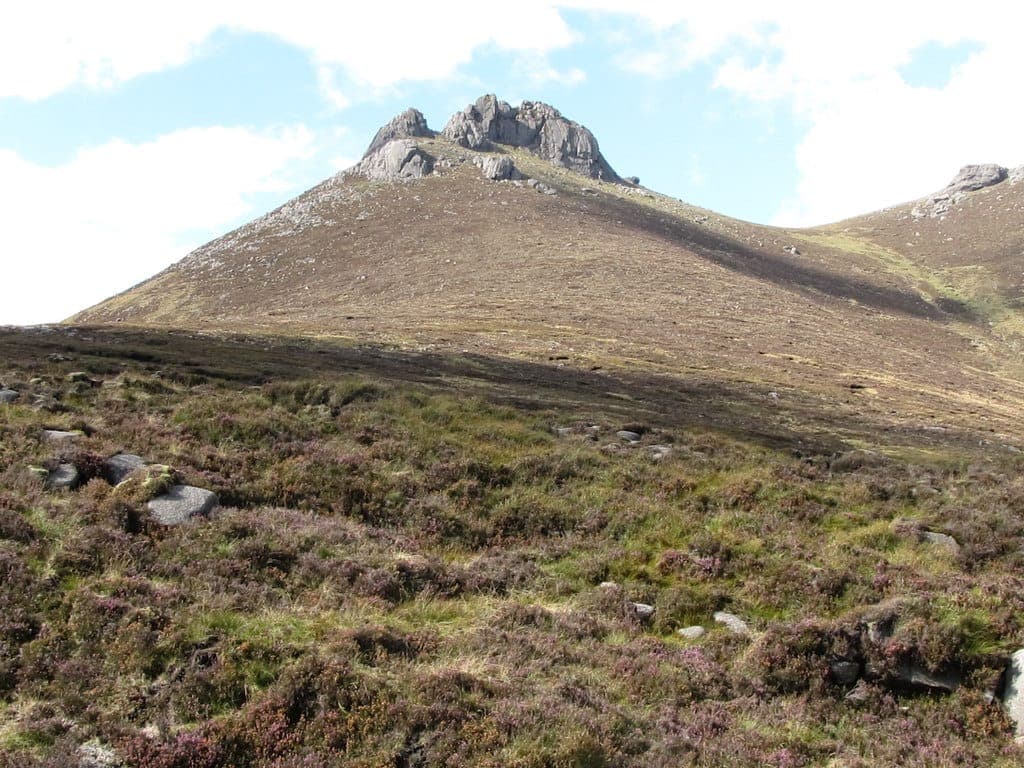
It sits at roughly 340 metres, cupped between Beann Each (Slieve Binnian — ‘Peak of the Horses’) to the north and Sliabh Lamagáin (Slieve Lamagan) to the south. Granite crags rise steeply on three sides, scree slopes tumbling down to the water’s edge, and the whole place has the feel of a natural amphitheatre — a vast, silent auditorium where the only audience is the sky.
“Twelve thousand years of stillness. The glacier carved the bowl, the rain filled it, and the mountains have been standing guard ever since.”
The Shifting Colour
The lough’s name tells you what to expect, but it only tells you half the story. Loch Gorm — the Blue Lough — can indeed be a striking, vivid blue on a clear day, when the sky is reflected in the still surface and the granite beneath gives the water a luminous quality. But come on an overcast afternoon, or when the clouds are low and the wind is pushing across the surface, and the lough turns dark — almost black, brooding, the colour of deep slate. After heavy rain, it takes on a greenish tinge. At sunset, it burns amber and copper.
Photographers love it for precisely this reason. The same walk, the same vantage point, will give you an entirely different lough depending on the day. It is one of the most photographed spots in the Mournes — for those who make the effort to get there. And that is the key point. Blue Lough is not roadside. It is not a quick stop on the way to somewhere else. You walk to it, climbing steadily through the Annalong Valley (Áth na Long — ‘the ford of the ships’), and the walk itself is part of the reward.
“On a clear day, it is vivid blue — the colour of something you’d expect in the Alps, not County Down. On a grey day, it turns the colour of deep slate. The same lough. A different world.”
The Walk In
Most people approach from Carrick Little car park, a small gravel car park on the Head Road above Áth na Long (Annalong). From there, you follow a path south-west into the Annalong Valley, tracking the river upstream as it cuts through bog and rough grassland. The mountains close in around you — Slieve Binnian to your right, Slieve Lamagan ahead, the Mourne Wall snaking along the ridgeline above. After about 4 kilometres of steady walking, the path steepens and the lough appears below you, tucked into its granite bowl like something hidden on purpose.
There is a moment, about three quarters of the way in, when you crest a rise and the lough is suddenly there beneath you. If you have timed it right — a clear morning, low sun, still air — the water is an impossible blue against the grey granite, and the reflection doubles everything. You will stop. Everyone stops. The scramble down to the water’s edge takes another ten minutes, but by then you have already decided this was worth the effort.
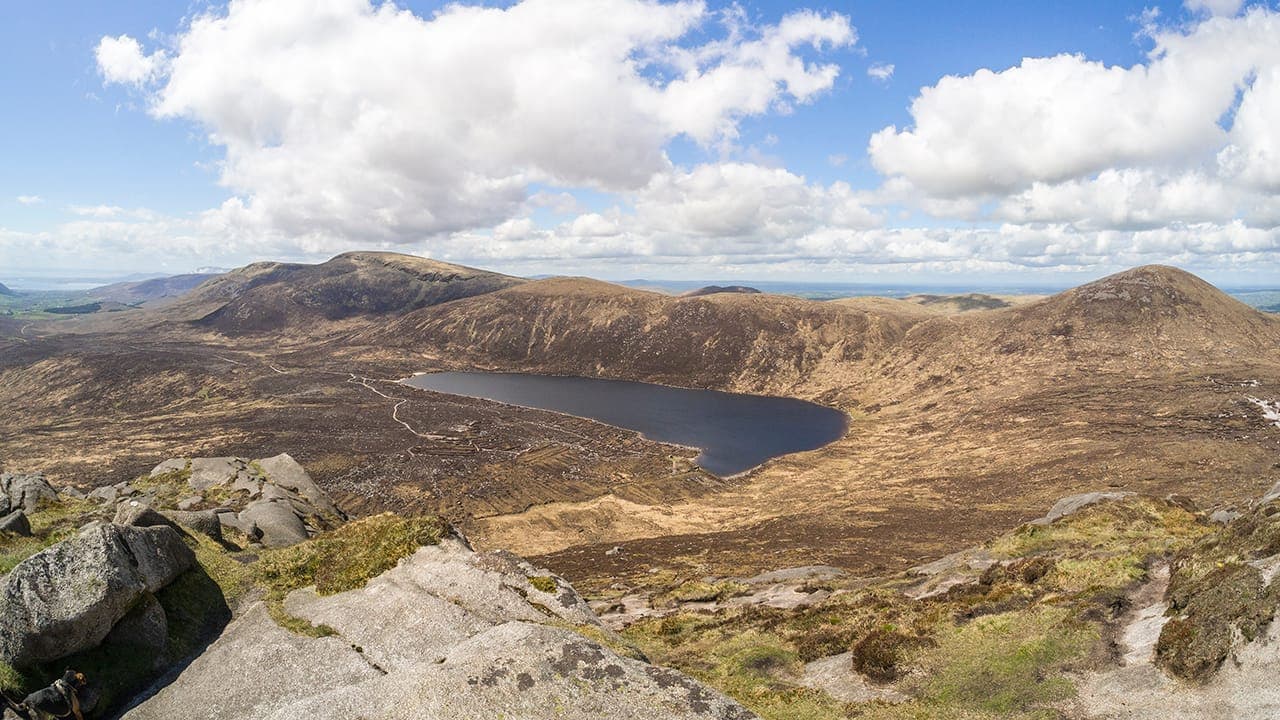
“There is a moment when you crest the rise and the lough is suddenly there beneath you, an impossible blue against grey granite. You will stop. Everyone stops.”
The Place
Loading map...
The route from Carrick Little car park into the Annalong Valley — Blue Lough sits in the glacial corrie between Slieve Binnian and Slieve Lamagan.
Blue Lough sits at roughly 340 metres in the Annalong Valley, the great glacial valley that runs south-west from the coast into the heart of the High Mournes. It is flanked by two of the range’s most dramatic peaks: <em>Beann Each</em> (Slieve Binnian, 747m) with its spectacular granite tors to the north, and <em>Sliabh Lamagáin</em> (Slieve Lamagan, 765m) to the south.
The lough is a textbook <em>corrie lake</em> (or <em>tarn</em>) — a body of water formed in a bowl scooped out by glacial ice. The back wall of the corrie is a near-vertical granite cliff face, and the front is a natural dam of glacial moraine. The result is a deep, enclosed lake surrounded on three sides by crags and open only to the east, where the outflow drains into the Annalong River and eventually to the sea at Annalong harbour.
Coordinates
Blue Lough:
54.1600°N, 5.9300°W
Carrick Little Car Park:
54.1575°N, 5.9060°W
Parking
Carrick Little:
Small gravel car park on the Head Road above Annalong. Free. Limited spaces — arrive before 9am on fine weekends and summer mornings.
Alternative:
If Carrick Little is full, try parking further along the Head Road. Do not block farm gates or narrow lanes.
The Visit
This is a proper mountain walk — not a stroll. Allow 3–4 hours for the return trip, plus time at the lough itself. The path is clear but rough in places, with some boggy sections and a steeper final approach. The reward is one of the most dramatic landscapes in Northern Ireland, and you will likely share it with very few people.
Carrick Little Car Park
Carrick Little car park on the Head Road above Annalong. From the car park, follow the path south-west into the Annalong Valley, keeping the river to your left. The path is clear and well-trodden for the first 3 km.
Duration
3–4 hours return. Allow 3–4 hours return at a moderate pace. Factor in time to sit at the lough, eat lunch, and take photographs. Strong walkers can extend to include Slieve Binnian summit (add 1.5–2 hours).
Difficulty
Moderate. Suitable for reasonably fit walkers with some hillwalking experience. Not suitable for young children or those with mobility issues. Proper hillwalking boots essential. Weather can change rapidly — check the forecast and carry a waterproof and extra layers.
What to Bring
- •Proper hillwalking boots with ankle support — the ground is rough and boggy
- •Waterproof jacket and trousers — mountain weather is unpredictable
- •Map and compass (or GPS) — the corrie fills with cloud quickly
- •Food and water — there are no facilities between the car park and the lough
- •Camera — this is one of the most photogenic spots in the Mournes
What to Look For
- •The colour of the water — note how it shifts as clouds move overhead
- •The granite back wall of the corrie — near-vertical and deeply scored by ice
- •The moraine dam at the eastern end — the glacial rubble that holds the water in
- •Binnian’s granite tors above — the dramatic rock formations on the summit ridge
- •The Mourne Wall on the skyline — the 22-mile dry stone wall that crosses the ridges above
Walk all the way down to the water’s edge. From above, the lough is impressive. From beside it, with the granite cliffs rising sheer on three sides and the silence pressing in, it is something else entirely. On a still day, the reflection is so perfect that photographs look inverted. Sit on the rocks, eat your lunch, and give it time. The colour will change while you watch.
Make a Day of It
Blue Lough is one of the great mountain walks in the Mournes. Combine it with the Binnian ridge, Silent Valley, or a drive down to the coast for a full day.
While You're Here
Three places worth exploring once you’ve visited.
More Stories to Discover
Every mountain, bridge, and ruin has a story. Here are a few more.
Discover
Discover More Stories
Glacial loughs, hidden ruins, and tales the guidebooks never tell — the Mourne Mountains are full of places that reward those who look a little harder.
Explore All Stories