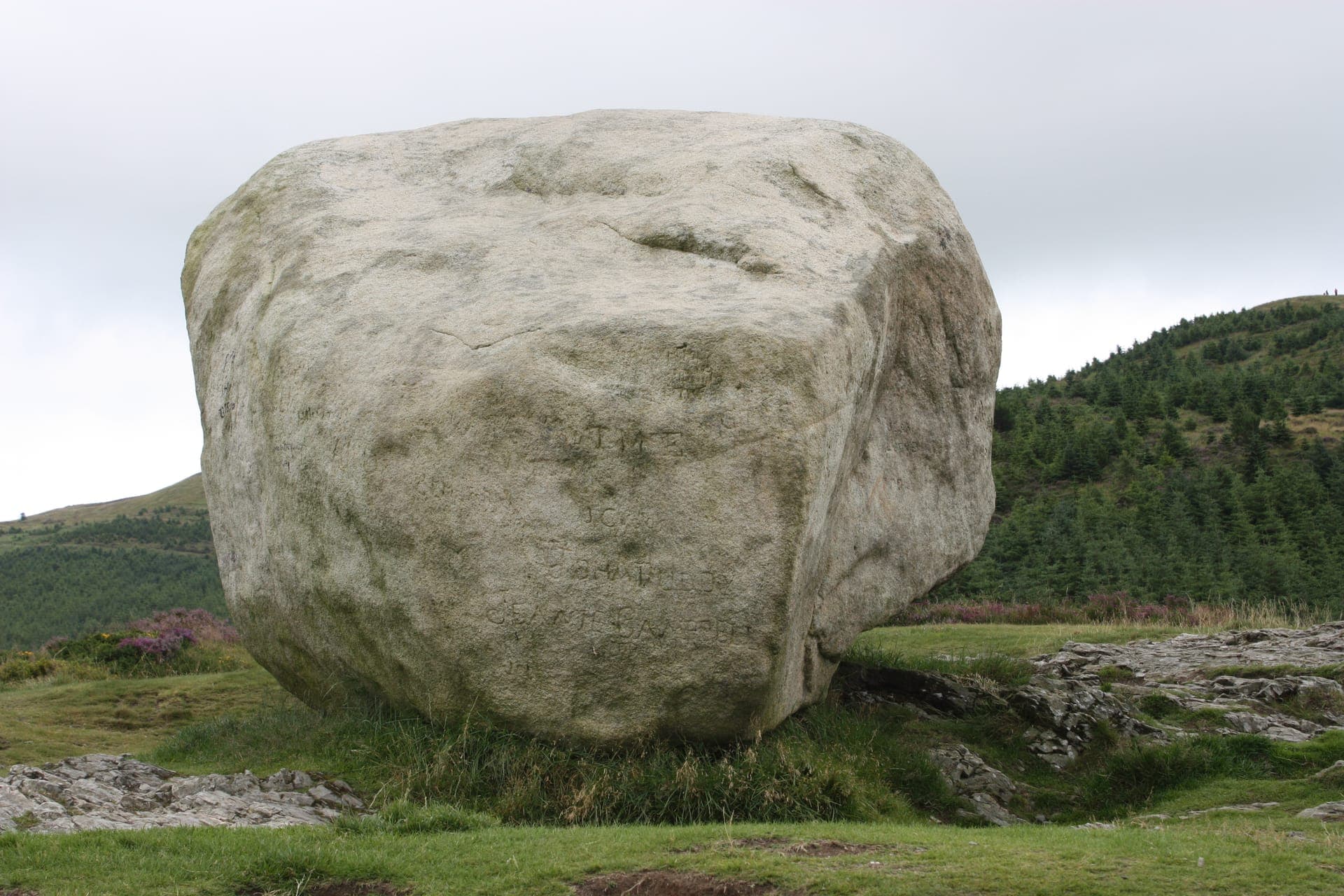
The Giant Who Lost His Hair
A warrior dived into a summit lake for a maiden's ring. He surfaced as an old man. The goddess had tricked him — and the lake is still there.
Location
Slieve Gullion, Ring of Gullion
Time Needed
4–5 hours (summit trail)
Difficulty
Moderate (573m summit)
Best Season
Spring–Autumn
Distance
~10 km round trip
The Story
The Dare at the Summit
The legend begins with a beautiful young woman sitting at the edge of a dark lake on the summit of Sliabh gCuillinn (Slieve Gullion). She was weeping, and she told the warrior Fionn Mac Cumhaill that she had dropped her golden ring into the water. Would he dive in and retrieve it for her? Fionn — the greatest hero of the Fianna, the giant who had built a causeway to Scotland — was not the sort to refuse.
He dived into the lake. The water was black and cold, as summit lakes in these mountains always are. But when Fionn surfaced, ring in hand, he was no longer himself. His golden hair had turned white. His broad shoulders had narrowed. His skin hung loose on his bones. He had entered the lake as a warrior in his prime and emerged as a frail old man. The young maiden was gone. In her place stood the Cailleach Beara — the hag goddess, ancient and terrible — and she was laughing.
“He entered the lake as a warrior in his prime and surfaced as an old man. The golden hair was gone. In the maiden's place stood the Cailleach — and she was laughing.”
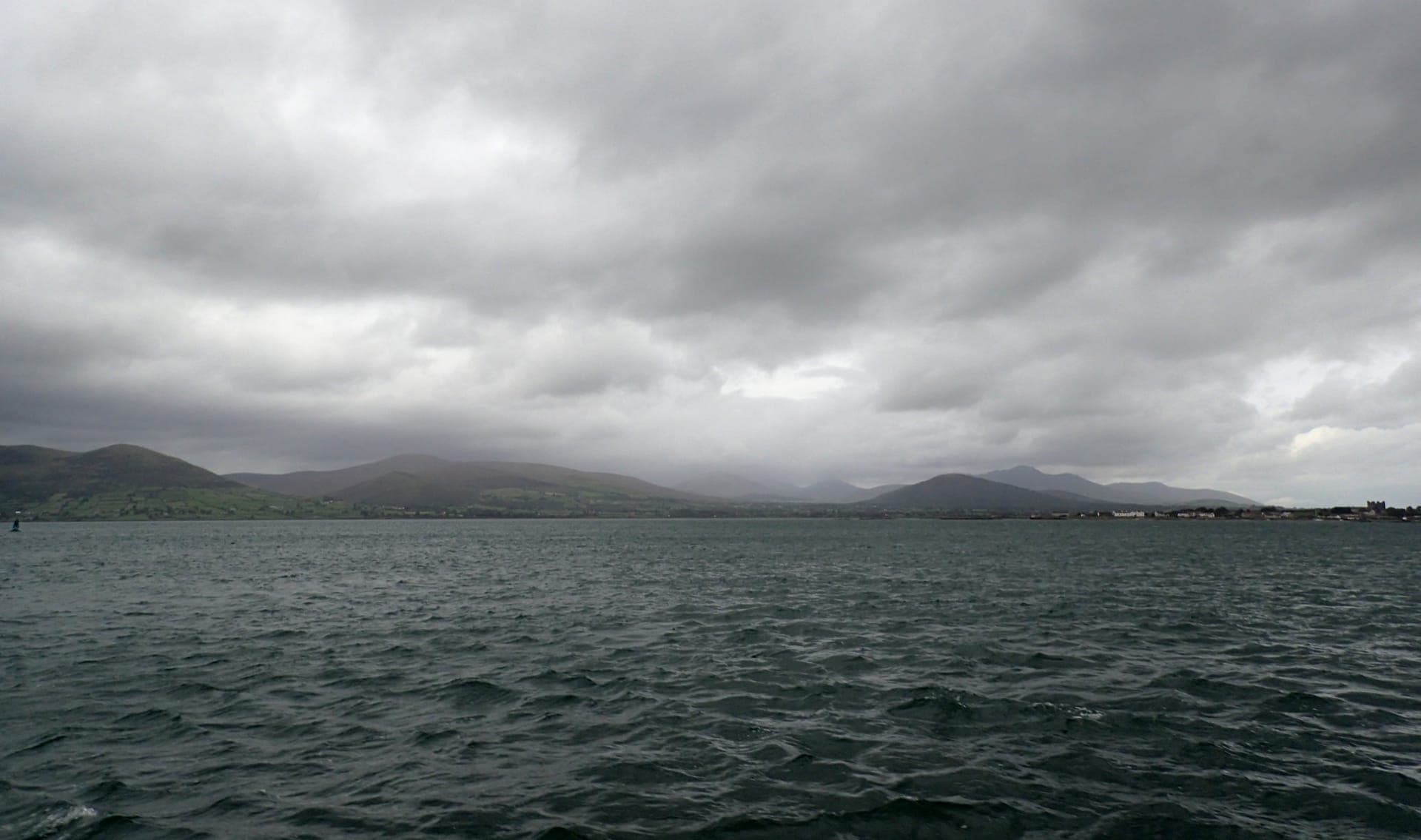
The Trick of a Goddess
The Cailleach Beara was no ordinary figure. In Irish mythology, she is the goddess of winter, the shaper of landscapes, the one who hammered mountains into existence and filled valleys with rivers. She is old beyond reckoning — older than the ring dyke that forms the Ring of Gullion, older than the passage tomb on the summit nearby. And she had a grudge against Fionn.
The Fianna, Fionn's warrior band, were horrified. They forced the Cailleach to brew a potion that would restore him. It worked — mostly. Fionn recovered his strength and his youth. But his hair never changed back. It stayed white for the rest of his life, a permanent mark of the trick at the summit lake. The storytellers say that Fionn means “fair” or “white” in Irish — and this is why.
“The Fianna forced the goddess to brew a restorative potion. Fionn recovered his youth — but his hair stayed white forever. The storytellers say this is how Fionn got his name.”
What Remains on the Summit
The thing about this story is that the place is real and visitable. The summit lake — Calliagh Berra's Lake — is still there, dark and still at 573 metres above sea level. It sits in a shallow bowl near the top of Slieve Gullion, encircled by heather and bog cotton. On a clear day, the views stretch from the Mourne Mountains to the Cooley Peninsula. On a misty day, the water is black and the silence is absolute. You can see why the storytellers set their tale here.
And just metres from the lake stands the south cairn — a Neolithic passage tomb built around 3000 BC. Five thousand years old, older than the pyramids, perched on a mountaintop in South Armagh. You can crouch down and enter the chamber. The lintel stones are low. Inside it is dark and cool and extraordinarily old. Between the lake and the tomb, you are standing in a place where myth and archaeology press against each other, and neither gives way.
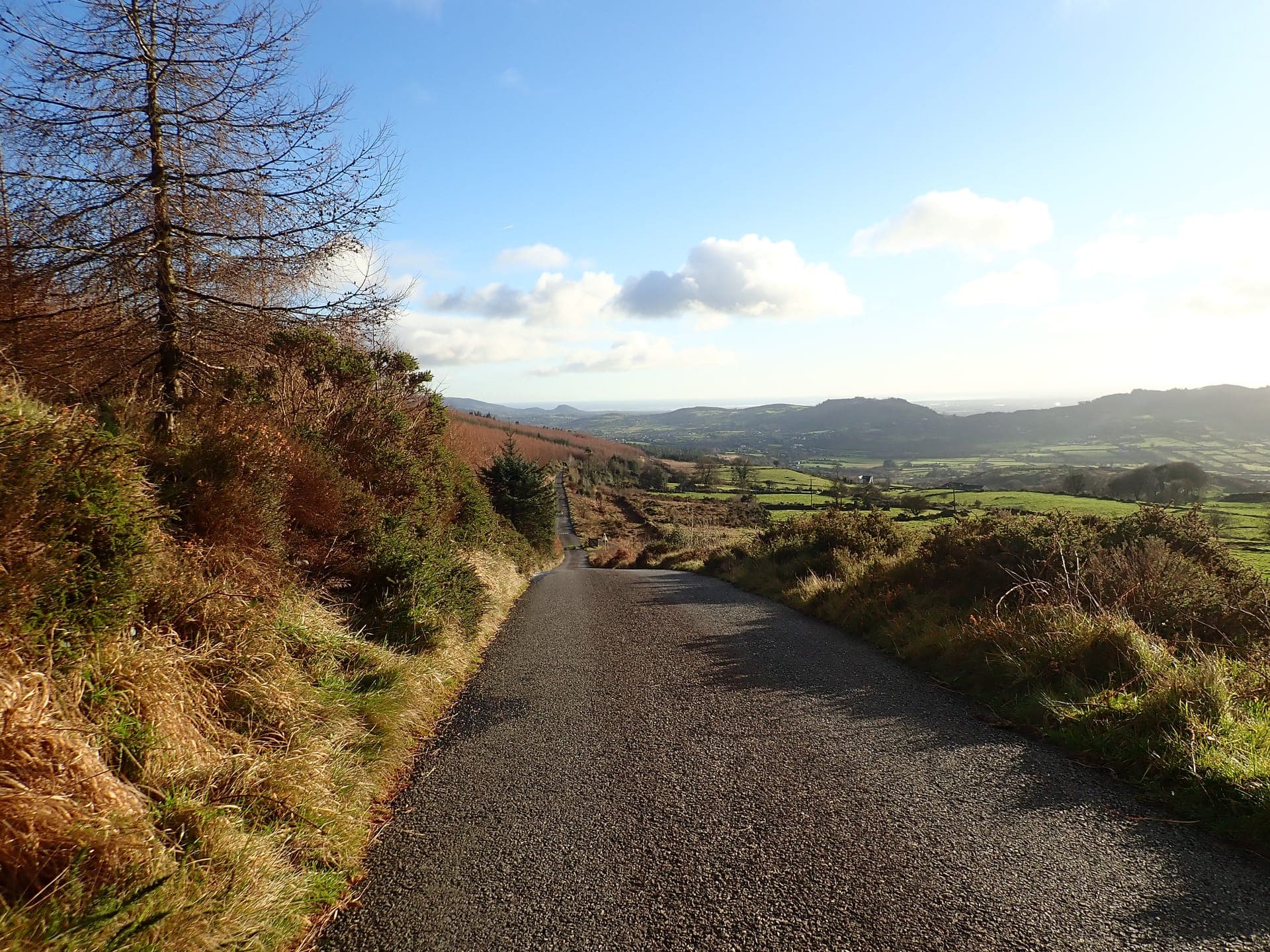
“Between the lake and the passage tomb, you are standing in a place where myth and archaeology press against each other, and neither gives way.”
The Place
Loading map...
Slieve Gullion Forest Park to the summit — the lake and passage tomb sit near the top, roughly 4–5 km into the ascent.
<em>Sliabh gCuillinn</em> (Slieve Gullion) rises to 573 metres at the heart of the Ring of Gullion — a volcanic ring dyke formed 60 million years ago. The mountain is the centrepiece of the Ring of Gullion Area of Outstanding Natural Beauty and a UNESCO Global Geopark.
The walk to the summit starts from Slieve Gullion Forest Park, where there is ample parking, a visitor centre, a café, and the family-friendly <em>Fionn's Giant Adventure</em> trail. The summit trail climbs steadily through forestry and open moorland before reaching the lake and the passage tomb near the top. It is not technical — just persistent.
Coordinates
Summit Lake:
54.1200°N, 6.4200°W
Forest Park Car Park:
54.1290°N, 6.3920°W
Parking
Slieve Gullion Forest Park:
Free parking at the forest park, off the B113 road south of Newry. The scenic drive takes you partway up the mountain — park at the upper car park to shorten the walk.
Sat Nav:
Search “Slieve Gullion Forest Park” or use BT35 postcode area.
The Visit
This is a proper half-day walk. The summit trail is roughly 10 km round trip from the forest park and takes 4–5 hours at a relaxed pace. The reward is the lake, the passage tomb, and views that span four counties on a clear day. Arrive knowing the legend, and the place takes on a different weight.
Slieve Gullion Forest Park
Slieve Gullion Forest Park, off the B113 south of Newry. Follow the scenic drive to the upper car park, then take the marked summit trail. The path is well-maintained for the first section and becomes rougher on the open mountain.
Duration
4–5 hours round trip. Families with younger children can enjoy the lower forest trails and Fionn's Giant Adventure instead.
Difficulty
Moderate. Free to visit. The forest park is open year-round. The summit trail is moderate — no scrambling, but some steep sections and exposed ground above the treeline. Boots recommended. Dogs welcome on leads. The passage tomb is open and freely accessible.
What to Bring
- •Walking boots — the summit trail is rough in places, boggy after rain
- •Waterproof jacket and an extra layer — it is exposed above the treeline
- •Water and snacks — there is nowhere to buy food on the mountain
- •A torch if you want to see inside the passage tomb properly
- •Camera — the summit views are extraordinary in any weather
What to Look For
- •The summit lake — dark, still, and eerily quiet
- •The passage tomb entrance — a low stone doorway, 5,000 years old
- •The Ring of Gullion spread out below you — a 60-million-year-old volcanic ring dyke
- •The Mourne Mountains to the east and the Cooley Peninsula to the south
- •Bog cotton and heather around the lake — particularly beautiful in late summer
The passage tomb on the summit. It is one of the highest surviving passage tombs in Ireland — older than the Egyptian pyramids. Crouch through the low entrance and step inside. The chamber is small, dark, and profoundly ancient. Whatever you believe about Fionn and the Cailleach, standing inside a structure that was built here 5,000 years ago, on top of a mountain, is something you will not forget.
Make a Day of It
The summit walk takes a full morning. Afterward, explore the lower forest trails or drive the scenic Ring of Gullion loop through ancient villages and medieval ruins.
While You're Here
Three places worth exploring once you’ve visited.
More Stories to Discover
Every mountain, bridge, and ruin has a story. Here are a few more.
Discover
Discover More Stories
Giants, goddesses, ghost lights, and smugglers — the Mourne and Gullion landscape is layered with stories older than the maps.
Explore All Stories