The Stone a Giant Threw Across the Lough
Fifty tonnes of granite, perched 1,000 feet above Rostrevor. Was it a glacier or a giant? Stand next to it and decide for yourself.
Location
Above Rostrevor, Kilbroney Park
Walk Time
~40 min from Kilbroney Park
Elevation
~1,000 ft (305m)
Weight
~50 tonnes
Best Time
Clear day for the views
The Story
What the Storytellers Say
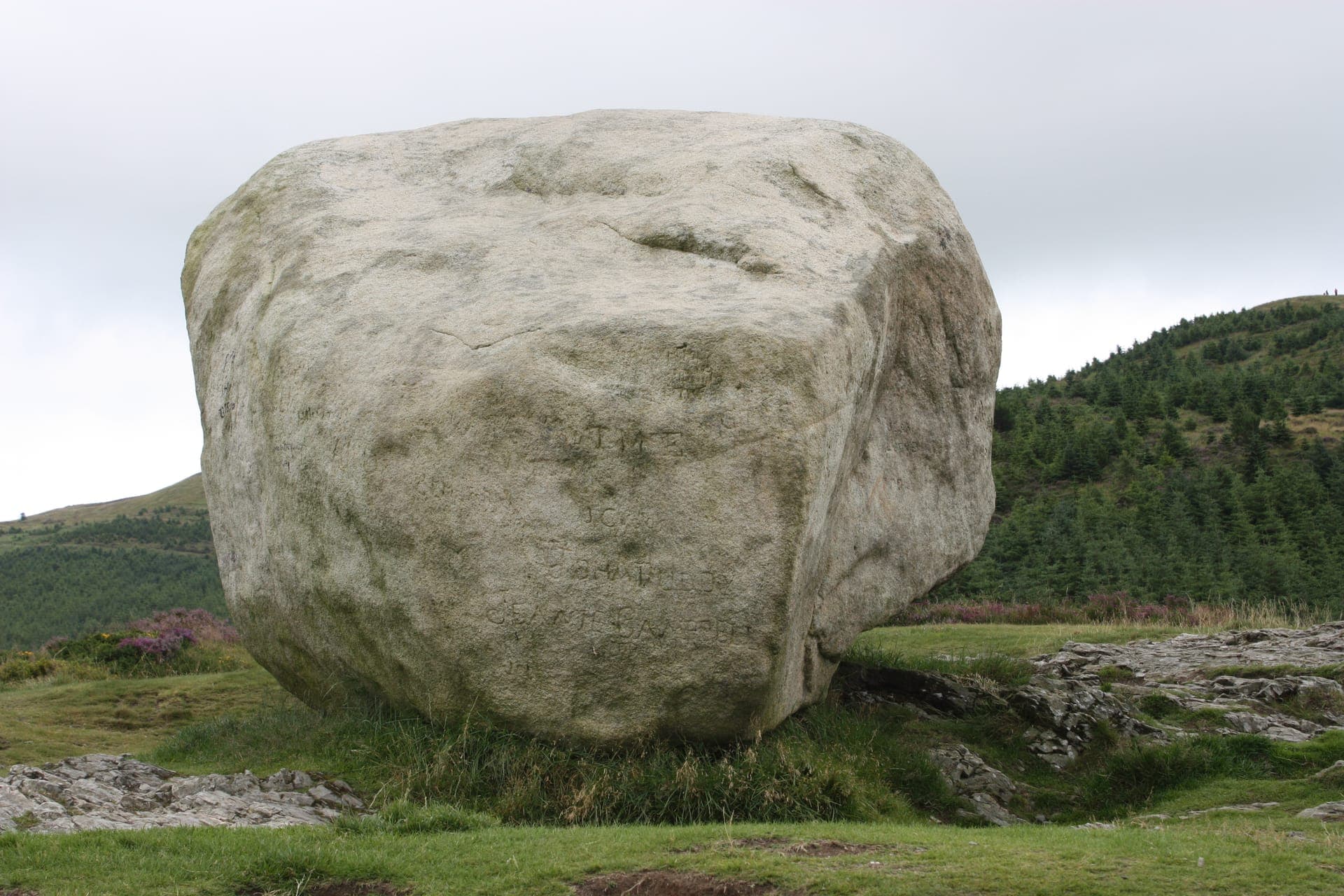
High on the hillside above Rostrevor, where the land rises steeply from the shore of Carlingford Lough (Loch Cairlinn), a boulder the size of a small house sits on the open mountain. It is made of granite. It weighs approximately 50 tonnes. And it has no business being there.
According to the oldest stories, the stone was thrown across Carlingford Lough by Fionn Mac Cumhaill — the giant warrior of Irish mythology whose legends saturate every mountain and lake in this landscape. Fionn, so the story goes, was locked in a feud with a rival giant called Ruscaire, who lived on the hillside above Rostrevor. From his camp in the Cooley Mountains on the far shore, Fionn picked up a boulder, hurled it across the lough, and it landed here — 1,000 feet up the mountainside, where it has sat ever since.
“Fionn picked up a boulder from the Cooley shore, hurled it across Carlingford Lough, and it landed 1,000 feet up the mountain. It hasn’t moved since.”
What the Scientists Say
Geologists have a different explanation, though it is no less dramatic. The Cloughmore Stone is what they call a glacial erratic — a rock transported far from its origin by the movement of ice sheets during the last glacial period, roughly 15,000 to 20,000 years ago. As the ice retreated, the boulder was deposited on the hillside, stranded in a place where it does not geologically belong. The granite of the stone does not match the rock beneath it. Something moved it here. The question is only whether it was ice or a giant.
Both stories share the same essential truth: something impossibly large was moved an impossible distance and left on a mountainside where it does not belong. The scientists explain it with ice sheets and millennia. The storytellers explain it with a giant and a grudge. Standing next to it, 1,000 feet above the lough, either version feels equally plausible.
“Fifty tonnes. Perched on an open hillside where it does not geologically belong. The scientists say ice. The storytellers say Fionn. Standing next to it, either feels equally plausible.”
A Walk Through the Trees
The walk to the Cloch Mhór begins in Kilbroney Forest Park — a place that has its own stories. C.S. Lewis spent childhood holidays in Rostrevor and is said to have drawn inspiration from these woods for the landscapes of Narnia. The Narnia Trail through Kilbroney brings The Lion, The Witch and The Wardrobe to life with carved wooden sculptures among the ancient oaks.
From the main car park, a well-marked path climbs steadily through the forest. The trees thin as you gain height. After roughly 40 minutes, you emerge onto open hillside and there it is — a massive boulder, alone on the slope, with Carlingford Lough spread out below and the Cooley Mountains across the water. The sense of exposure is sudden and exhilarating. You have been in dense woodland for half an hour and now the whole lough opens up before you.
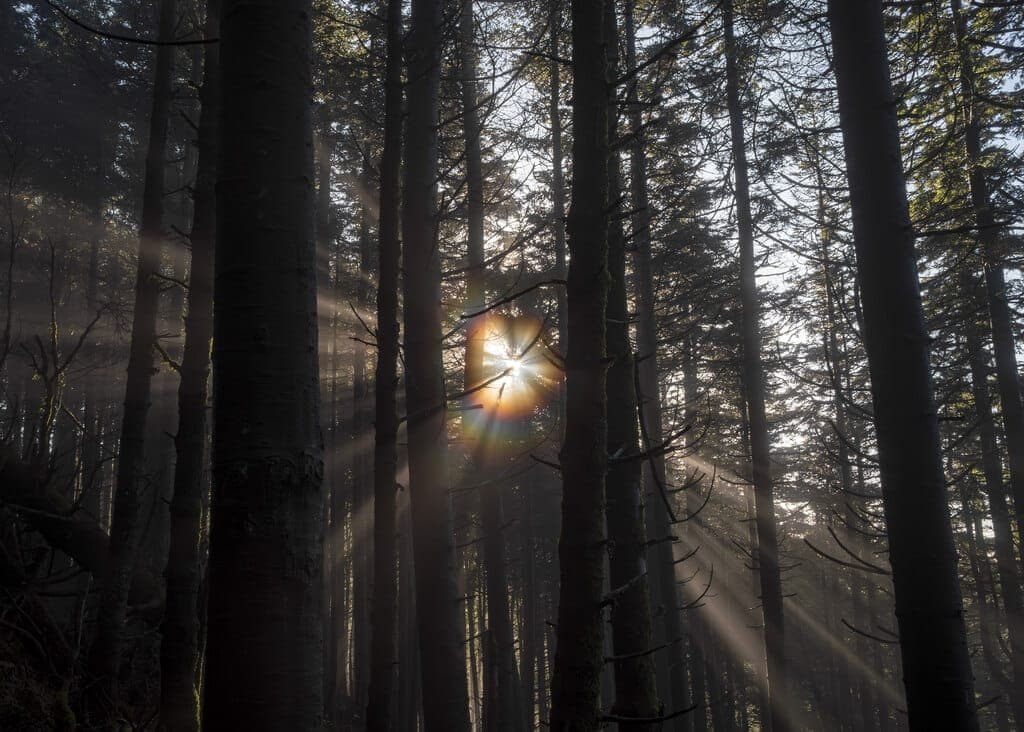
“You walk through Narnia for half an hour, then the trees fall away and you are standing next to a 50-tonne boulder with all of Carlingford Lough at your feet.”
The Place
Loading map...
The walk from Kilbroney Forest Park to the Cloughmore Stone — approximately 40 minutes uphill through the forest.
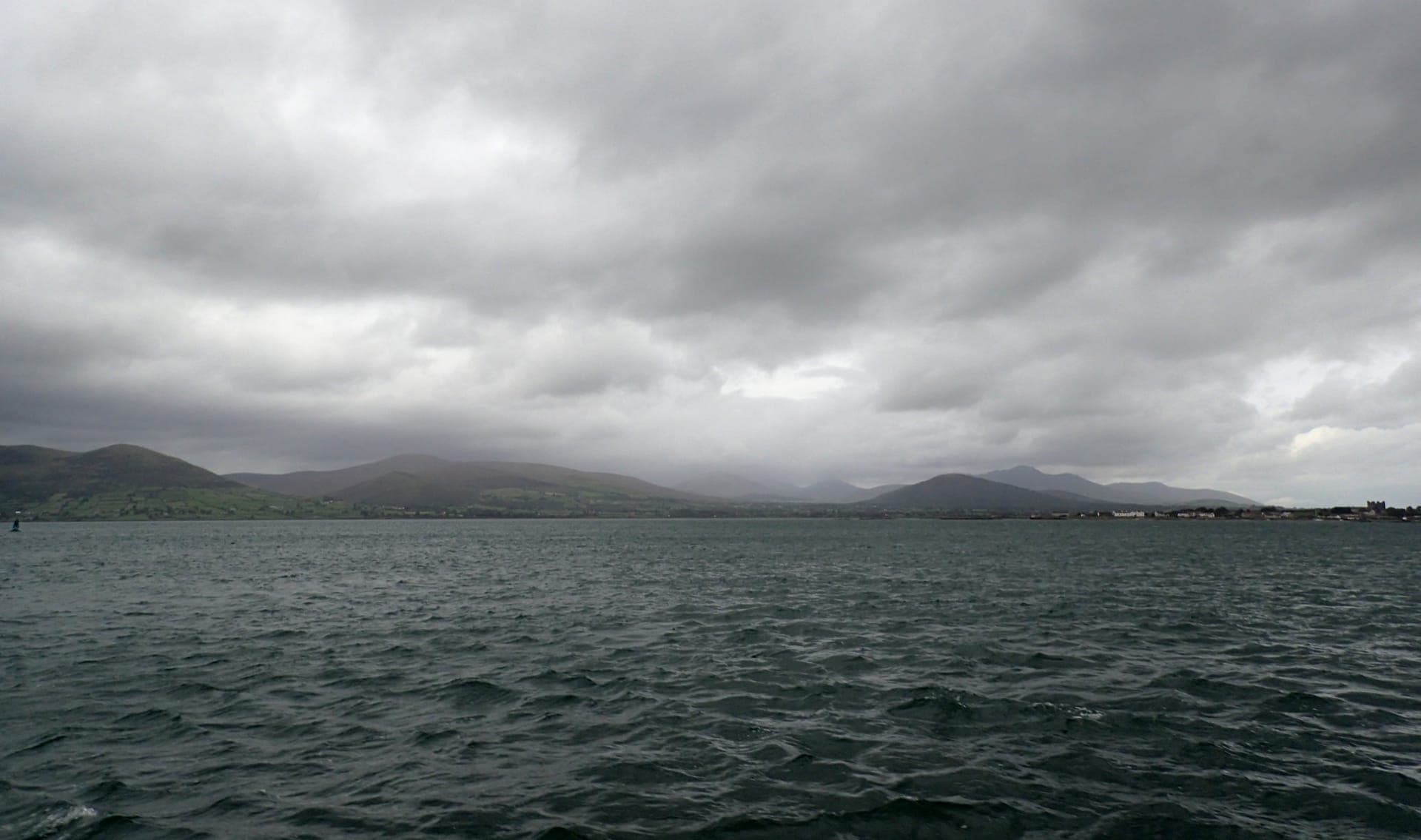
The Cloughmore Stone sits on the open hillside above Rostrevor (<em>Ros Treabhair</em>), at an elevation of approximately 1,000 feet (305 metres). Below, the village drops to the shore of Carlingford Lough. Across the water, the Cooley Mountains rise on the County Louth side — the landscape of the <em>Táin Bó Cúailnge</em>, Ireland’s great cattle raid epic.
The walk starts at the main car park in Kilbroney Forest Park, on the edge of Rostrevor village. Follow the signposted trail through the forest, climbing steadily. The path is well-surfaced for most of the route, becoming rougher as you near the stone. The final stretch crosses open hillside with no tree cover — bring a layer for wind.
Coordinates
Cloughmore Stone:
54.1000°N, 6.1900°W
Kilbroney Car Park:
54.1160°N, 6.1950°W
Parking
Kilbroney Forest Park:
Large car park at the main entrance. Pay & display. Facilities include toilets and a picnic area. Well-signposted from Rostrevor village.
Rostrevor Village (Alternative):
Street parking available in Rostrevor village, a short walk from the forest park entrance.
The Visit
The walk to the Cloughmore Stone is a proper outing — not a stroll, but nothing technical either. A steady 40-minute climb through beautiful forest, rewarded with one of the finest viewpoints in the Mournes. Allow about two hours for the return trip at a relaxed pace.
Kilbroney Forest Park
Kilbroney Forest Park main car park, Rostrevor. Follow the signposted Cloughmore Trail through the forest. The path climbs steadily — moderate fitness required.
Duration
~2 hours return. About 40 minutes up, 30 minutes down. Allow two hours for a relaxed return trip with time to sit at the stone and take in the views across the lough.
Difficulty
Easy to Moderate. Free to visit. The forest park car park has a small parking fee. Open year-round. Dogs welcome on leads. The trail is suitable for anyone with moderate fitness — it is uphill but not steep.
What to Bring
- •Good walking shoes — the path is rough in places near the top
- •A windproof layer — the stone sits on exposed hillside
- •Water and a snack — there are no facilities at the stone
- •Camera — the views across the lough are spectacular
What to Look For
- •The sheer size of the boulder — stand next to it for scale
- •The Cooley Mountains across the lough — Fionn’s throwing arm
- •The granite type — it does not match the rock beneath it
- •The Narnia Trail carvings in the forest on the way up
- •Rostrevor village below, tucked between mountain and lough
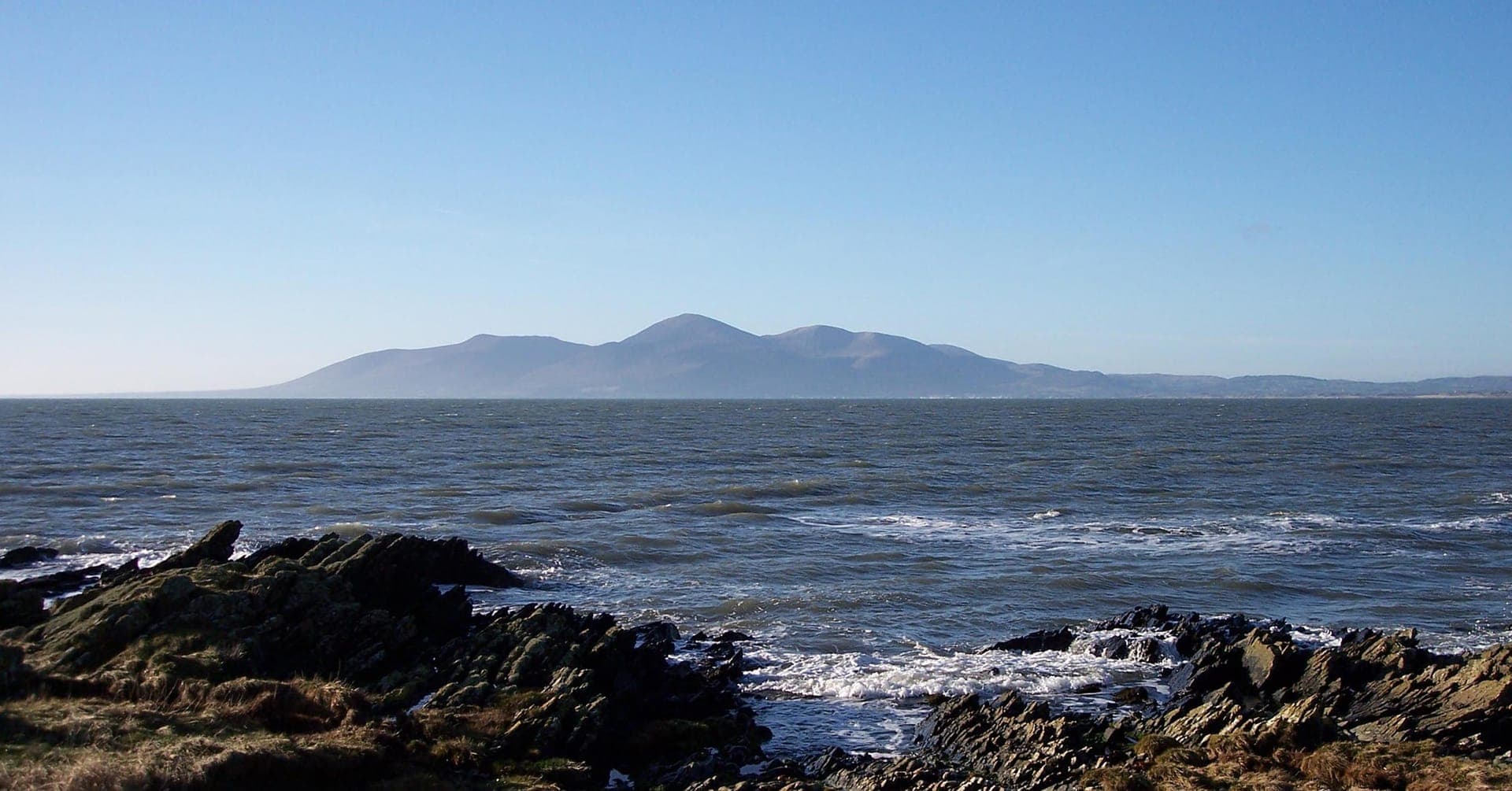
The view from the stone. On a clear day, Carlingford Lough stretches out below you and the Cooley Mountains rise on the far side — close enough that you can imagine a giant standing there, hefting a 50-tonne boulder, and thinking: <em>I can make that throw</em>. It is one of the finest viewpoints in the Mournes, and you earned it with every step of the climb.
Make a Day of It
The Cloughmore Stone walk is a short but rewarding climb above Rostrevor. Combine it with the Narnia Trail in Kilbroney Forest, lunch in the village, and a drive along Carlingford Lough.
While You're Here
Three places worth exploring once you’ve visited.
More Stories to Discover
Every mountain, bridge, and ruin has a story. Here are a few more.
Discover
Discover More Stories
The Mourne Mountains are full of giants, ghosts, and fairy thorns — ancient tales that live in the landscape. Every summit has a story older than the maps.
Explore All Stories