Eight Pubs on One Street
A tiny village at the end of a smuggling route. The contraband came over the mountains. The pubs were the distribution network. Nobody pretended otherwise.
Location
Hilltown, County Down
Time Needed
1–2 hours to explore
Terrain
Village street (flat)
Best Season
Year-round
Good For
History, culture, craic
The Story
End of the Line
Hilltown is a one-street village perched in the foothills of the Mourne Mountains. It’s quiet now — a post office, a church, a scattering of houses climbing a gentle hill. But in the 18th and 19th centuries, this tiny settlement was the busiest black-market hub in County Down. At its peak, eight pubs lined a single main street. Not because the locals were unusually thirsty. Because Hilltown was where the contraband arrived.
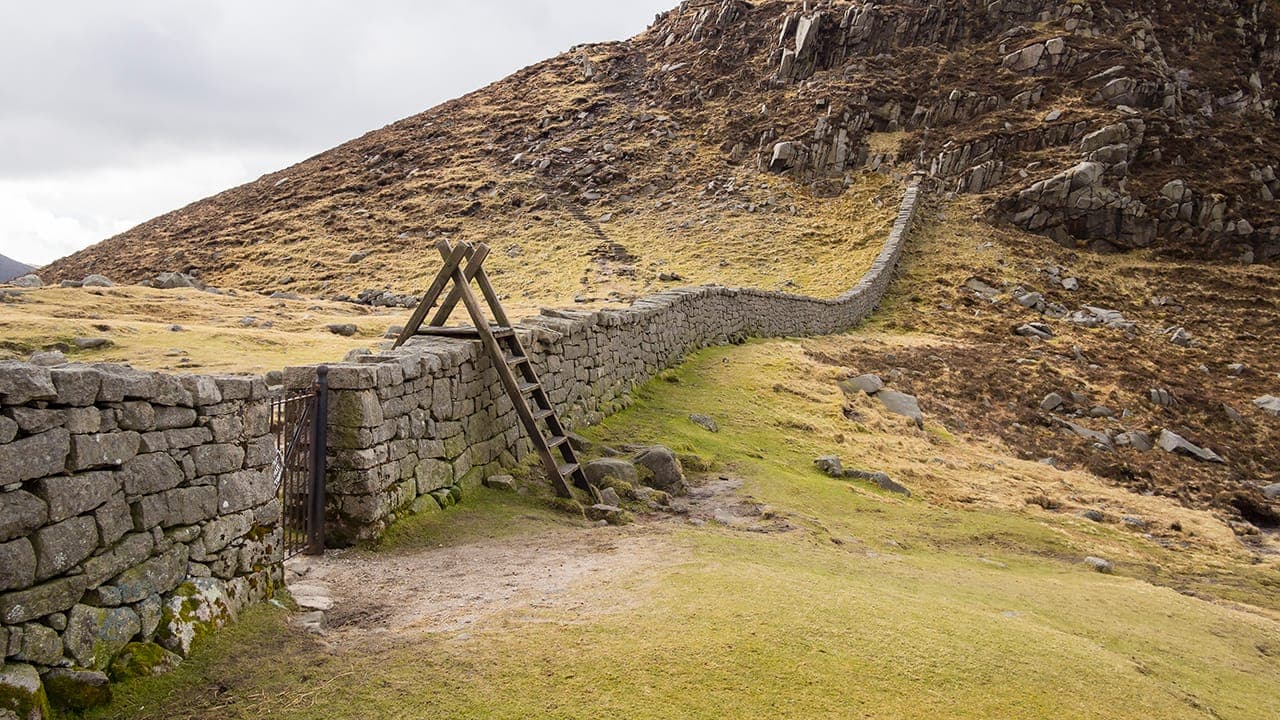
The goods came over the mountains from the coast. French brandy, tobacco, silks, tea — anything that carried an excise duty — was landed at Bloody Bridge on the shore south of Newcastle. From there, packhorses carried it up through the High Mournes, over Bealach Mór (Hare’s Gap — ‘the great pass’), down through the Trassey valley, and into Hilltown. The journey took a single night if you knew the path. And the smugglers knew it very well.
“Eight pubs on one street — and every one of them had a reason to be there.”
The Distribution Network
The pubs weren’t just drinking establishments. They were warehouses, banks, and negotiating rooms rolled into one. A publican might buy a barrel of French brandy in the back room at midnight and sell it by the measure across the bar the next evening. Everyone in the village knew. Nobody was telling. The excise men had to travel from Newry, and by the time they arrived, the goods had already moved on — split between cellars, barns, and the back rooms of those eight pubs.
Hilltown was perfectly placed. Remote enough to be awkward for the authorities, close enough to the mountains to receive goods quickly, and well-connected enough by road to distribute them onward to Newry, Rathfriland, and beyond. It was a logistics operation dressed up as a village. The main street was essentially a supply chain with front doors.
“A logistics operation dressed up as a village. The main street was essentially a supply chain with front doors.”
A Culture of Craic
What makes Hilltown’s story remarkable isn’t the illegality — smuggling was common across Ireland. It’s that the village never bothered to hide it. The smuggling was woven into everyday life, into the music, the storytelling, and the social fabric. The pubs were where deals were done, but they were also where the craic happened. Fiddle sessions, songs, tall tales — the whole culture of a community that lived between the law and the mountains.
This wasn’t a criminal underworld. It was an open conspiracy. The entire community benefited, from the publicans to the farmers who lent their ponies, to the women who packed goods into false-bottomed carts. The excise duty was seen as an English imposition, and dodging it was a point of local pride. Buying smuggled brandy wasn’t a shameful secret — it was practically a civic duty.
Still Standing
The smuggling trade faded through the 19th century as excise enforcement tightened and the economics shifted. Eight pubs became fewer. But Hilltown didn’t disappear — it just got quieter. Several of the original pub buildings still stand along the main street, some repurposed, some still trading. The village keeps its shape: a single street climbing a gentle hill, the mountains rising behind it, the same road the packhorses walked.
Walk the main street today and you’re walking the end of a smuggling route that stretched from the coast, over Northern Ireland’s highest peaks, and down into this improbable little hub of commerce and craic. The contraband is gone. The buildings remember.
“The contraband is gone. The buildings remember.”
The Place
Loading map...
The smuggling route: from Bloody Bridge on the coast, over <em>Bealach Mór</em> (Hare’s Gap), through the Trassey valley, and into Hilltown. Goward Dolmen is just outside the village.
Hilltown sits on the western edge of the Mourne Mountains, about 10 miles south of Rathfriland and 8 miles from Rostrevor. It’s a single-street village on the B27 road, easy to drive through in a minute — which is why most people do exactly that. Stop instead. Park up and walk the street. Look at the buildings.
The village is also the gateway to Spelga Dam and the mountain road into the heart of the Mournes. From Hilltown, you can drive up to the Spelga Pass and into some of the wildest scenery in Northern Ireland — the same landscape the smugglers crossed on foot in the dark.
Coordinates
Hilltown Village:
54.2000°N, 6.1000°W
Goward Dolmen:
54.1900°N, 6.1200°W
Parking
On-street Parking:
Hilltown is on the B27, about 30 minutes from Newry and 20 minutes from Kilkeel via the Spelga Pass. On-street parking is available along the main street.
The Visit
Hilltown isn’t a ticketed attraction — it’s a living village. The pleasure is in walking the main street with the smuggling story in your head and seeing the place differently. Look at the buildings. Count the pubs (or what used to be pubs). Picture the packhorses arriving after dark.
Hilltown Main Street
Walk from one end to the other. It takes about 10 minutes. Several of the original pub buildings are still visible — some with their original frontages.
The Brandy Pad (for the full story)
A serious mountain walk (12 km, 5–6 hours) from Bloody Bridge over Hare’s Gap. It follows the exact path the smugglers used. The trail is still visible.
Duration
1–2 hours. For the village itself. Add 5–6 hours if walking the Brandy Pad.
Difficulty
Easy (village), Moderate to Challenging (Brandy Pad). The village is flat. The Brandy Pad is serious mountain terrain.
What to Bring
- •Comfortable shoes for walking the village street
- •A waterproof layer — it’s the Mournes, it will rain
- •A camera — the village against the mountain backdrop is worth a photo
- •An appetite — you may find somewhere to eat in the village
What to Look For
- •The old pub frontages along the main street — count how many you can spot
- •The view back toward the mountains — that’s the direction the contraband came from
- •The width of the street — wide enough for carts (and packhorses laden with brandy)
- •The road heading east toward the Mournes — the Spelga Pass road
- •Signage for the Goward Dolmen — an easy detour on the way in or out
Walk the full length of Hilltown’s main street and look up at the buildings. Several of the original pub buildings still stand — look for the wider frontages, the yard gates, and the buildings that are just a bit too large for an ordinary house. Each one was a node in the smuggling network, receiving goods that had crossed the highest mountains in Ulster the night before.
Make a Day of It
Start in Hilltown, then drive up through the Spelga Pass into the mountains. Visit the Goward Dolmen on the way, or head to Rostrevor for lunch and a walk through Kilbroney Forest.
While You're Here
Three places worth exploring once you’ve visited.
More Stories to Discover
Every mountain, bridge, and ruin has a story. Here are a few more.
Discover
Follow the Smugglers
From Bloody Bridge to Hilltown, the smuggling routes through the Mourne Mountains are still there — worn into the landscape by two centuries of moonlit trade.
Explore the Smugglers Trail