The Monk Who Lived on the Summit
Fifteen hundred years ago, a man walked to the top of Northern Ireland’s highest mountain and decided to stay. The cairns where he prayed are still there.
Location
Summit of Slieve Donard (850m)
Walk Time
4–5 hours return
Difficulty
Strenuous (steep ascent)
Best Season
May–September
Distance
~9 km return (Glen River)
The Story
Patrick’s Convert
In the 5th century, when Christianity was still new to Ireland, a young man named Domhanghart became a follower of Saint Patrick. The historical sources are sparse — they always are for this era — but the tradition is consistent: Patrick baptised him, blessed him, and Domhanghart chose a life of solitary prayer. Not in a monastery. Not in a church. On the summit of the highest mountain in the land.
The mountain was already old beyond reckoning. At 850 metres, Sliabh Donard — Donard’s Mountain — is the highest peak in what is now Northern Ireland, the crown of the Mourne range. Long before Donard climbed it, Neolithic people had built cairns on the summit. These ancient stone mounds became the foundation of something unexpected: a hermit’s cell, where one man would live, pray, and endure the wind and rain for the rest of his life.
“He chose the highest point in the land and stayed there. Not for a season. For a lifetime. The summit was his monastery, the sky his roof.”
A Life on the Summit
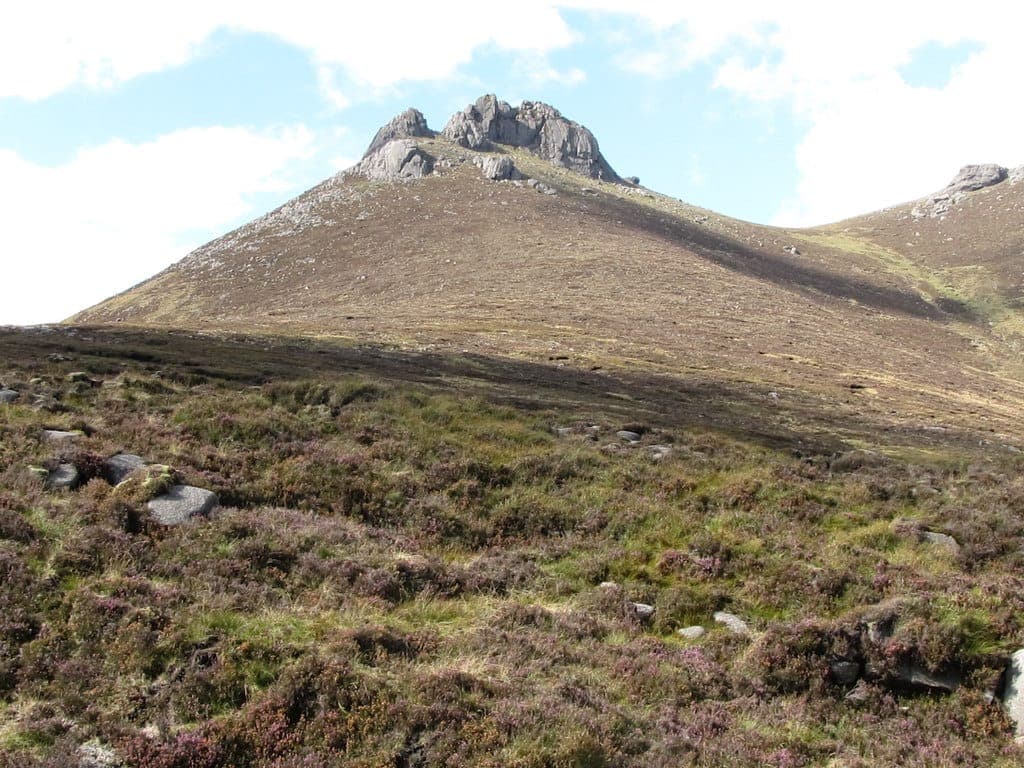
What does it mean to live on the summit of a mountain? At 850 metres, Sliabh Donard is above the clouds more often than it is below them. Winter temperatures drop well below freezing. The wind is relentless. There is no shelter, no fresh water at the top, no soil to grow anything. Donard would have depended entirely on what he could carry or what was brought to him — a life pared back to the absolute essentials.
He converted the ancient summit cairns into a rudimentary cell — a shelter of dry stone, just enough to break the wind and keep the rain off while he prayed. The tradition says he lived there until his death in 506 AD. That’s decades on the summit. The idea is almost unimaginable. But the early Irish church was full of such figures: men and women who sought God in the wildest, most inhospitable places they could find. Skellig Michael, off the coast of Kerry, is the most famous example. Slieve Donard was the Mourne version — equally extreme, but rooted in the earth rather than surrounded by the sea.
“The early Irish hermits didn’t retreat from the world. They climbed to the highest, wildest places they could find — and stayed.”
The Cave That Runs From Shore to Summit
Folklore, as it always does, added layers to the story. One persistent legend says that a cave runs all the way from the shore at Newcastle to the summit of Sliabh Donard, and that Saint Donard still lives inside it. He never died — he simply went underground, waiting. Some versions say he retreated into the cave when the world grew too noisy; others say he was granted immortality as a reward for his devotion.
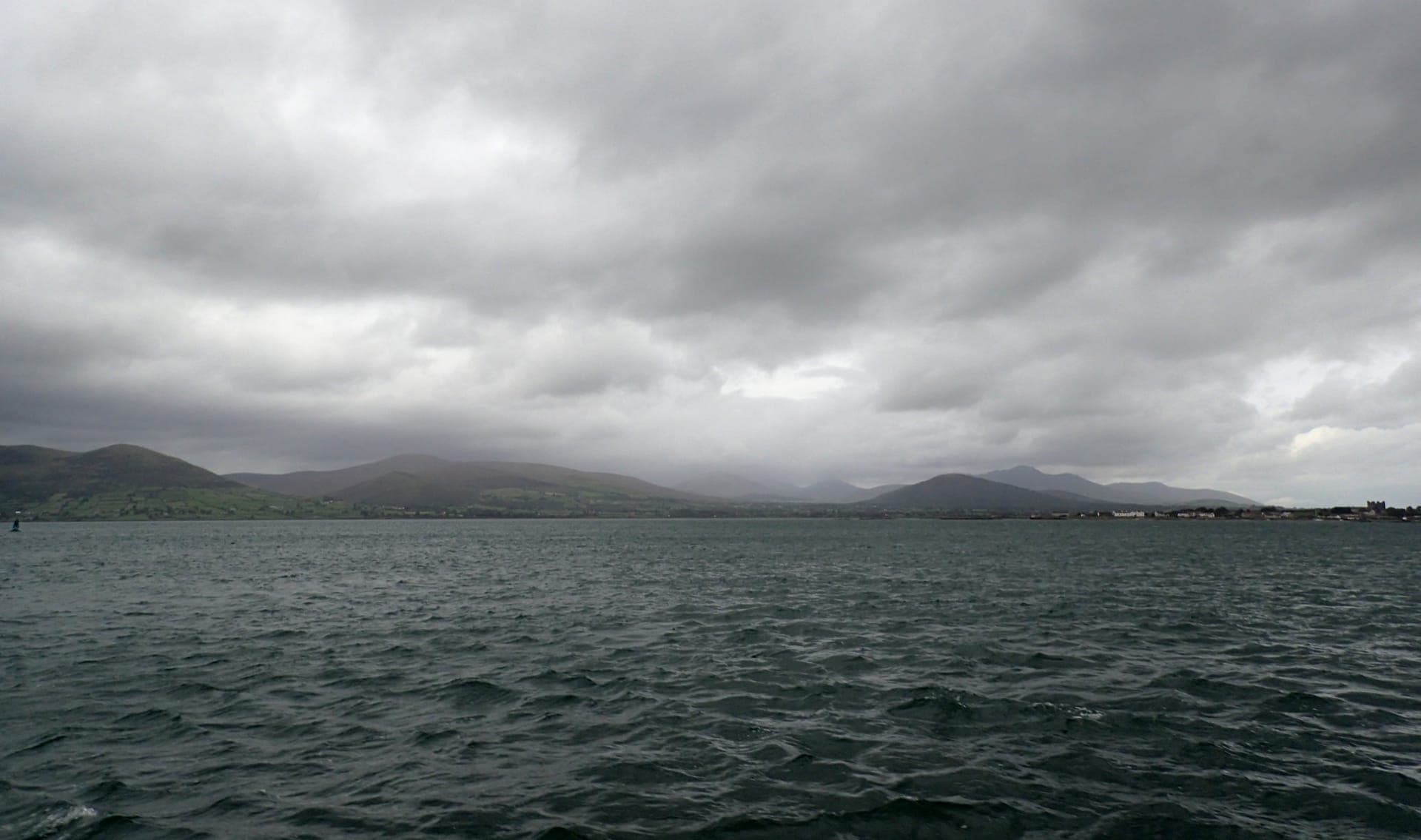
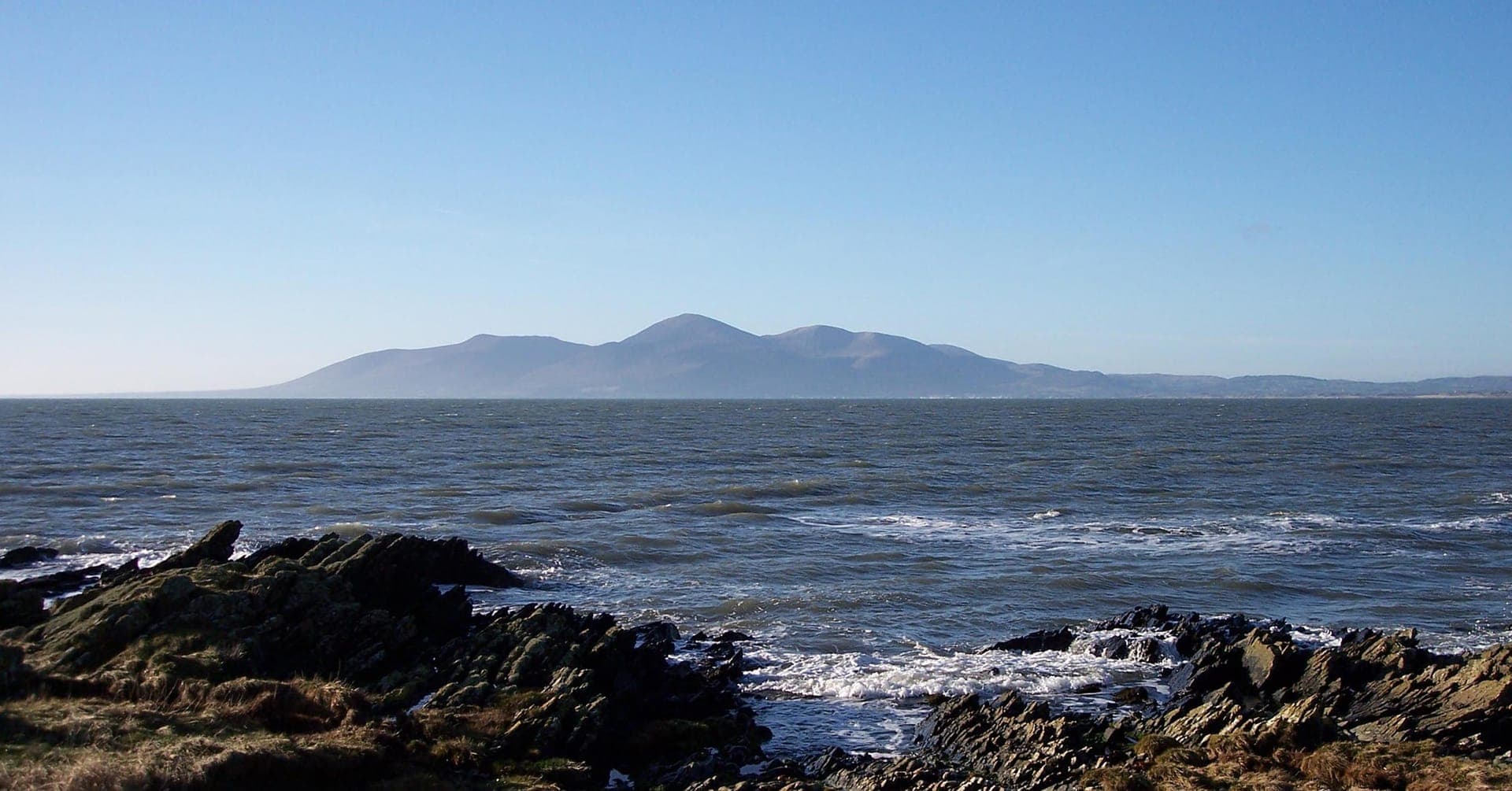
It’s a beautiful idea. The mountain that bears his name is the most visible landmark on the coast of County Down — you can see it from Belfast, from the Ards Peninsula, from halfway across the Irish Sea on a clear day. And somewhere inside it, the story says, the man who named it is still there.
The Pilgrims Who Followed
Donard’s hermitage became a place of pilgrimage. For over a thousand years, people climbed Sliabh Donard not for exercise or scenery but as an act of devotion. The annual pilgrimage to the summit cairns continued well into the 19th century — the last recorded pilgrimages took place in the 1830s, which means this tradition endured for roughly 1,300 years.
Today, tens of thousands of people climb Slieve Donard every year. Most come for the view, the exercise, or the bragging rights of standing on Northern Ireland’s highest point. Very few know they are walking an ancient pilgrim path, or that the stone cairns on the summit — the ones you sit beside to eat your sandwiches — were once the cell of a 5th-century hermit who gave the mountain its name.
“The cairns are still there. Hikers sit beside them eating sandwiches, not knowing they’re resting against the walls of a 1,500-year-old hermitage.”
The Place
Loading map...
The Glen River route from Donard car park in Newcastle to the summit of <em>Sliabh Donard</em> — the most popular path and the ancient pilgrim route.
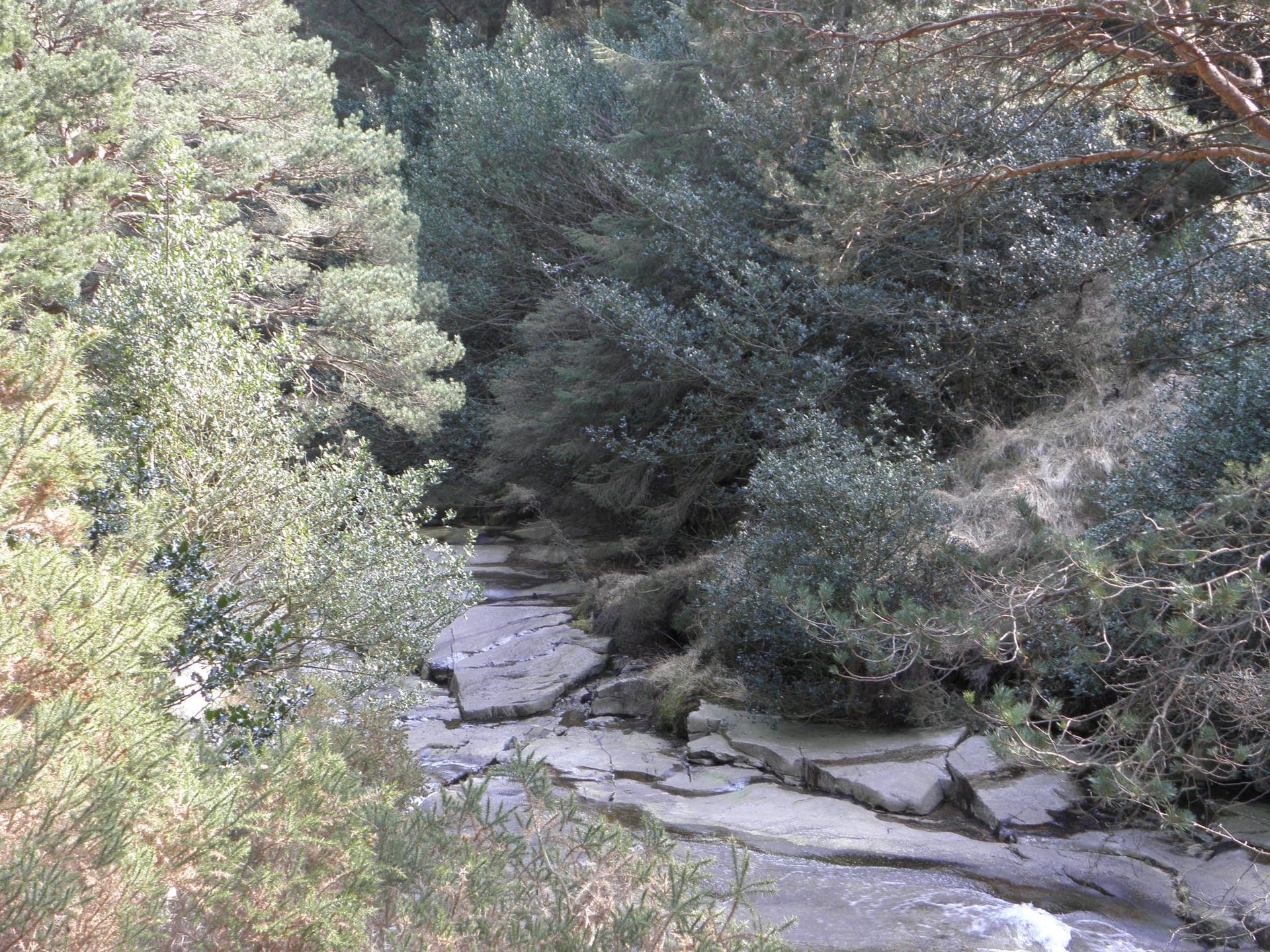
The Glen River route is the classic approach. Start at Donard car park at the end of Donard Park in Newcastle. The path follows the Glen River uphill through woodland, past the Ice House, and onto open mountainside. At the col between Donard and Slieve Commedagh, you meet the Mourne Wall — the extraordinary dry-stone wall that crosses 15 summits — and follow it to the top.
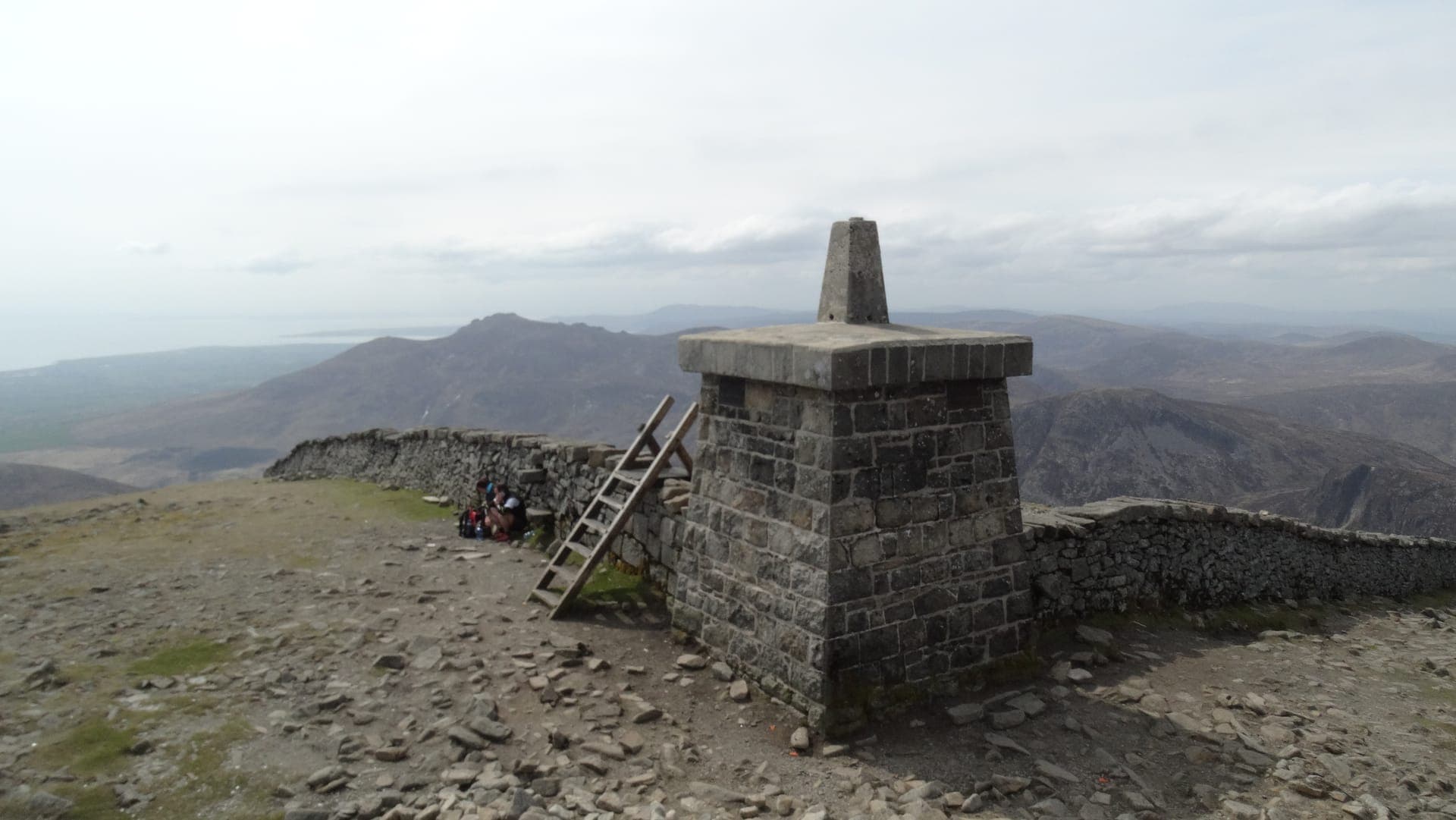
The summit is crowned by two stone cairns. The larger one, to the south, is the Great Cairn — traditionally identified as the remains of Donard’s oratory. On a clear day, the views stretch to the Isle of Man, the Welsh coast, Scotland, the Wicklow Mountains, and Donegal. On a cloudy day, you may see nothing at all — and that, in its own way, is closer to what Donard experienced.
Coordinates
Slieve Donard Summit:
54.1800°N, 5.9200°W
Donard Car Park:
54.1968°N, 5.8795°W
Parking
Donard Car Park:
At the end of Donard Park in Newcastle. Pay & display. Fills early on weekends and summer mornings — arrive before 9am for a guaranteed space.
Alternative:
Bloody Bridge car park (south approach) offers a quieter, more dramatic route to the summit.
The Visit
This is a proper mountain walk — 850 metres of ascent, exposed ground above the treeline, and weather that can change in minutes. But the path is well-trodden and the route is clear. Thousands of people climb it every year, from experienced hillwalkers to determined beginners. Allow 4–5 hours for the return trip via the Glen River route.
The Route
From Donard car park, follow the Glen River path through the forest. At the col between Donard and Commedagh, turn right and follow the Mourne Wall to the summit. The path is clear but steep in the final section.
At the Summit
Two stone cairns crown the top. The larger, southern cairn is traditionally identified as Donard’s cell — the remains of his hermitage. The Mourne Wall meets at the summit trig point. Take your time here. This is where he lived.
Duration
4–5 hours return. The ascent takes about 2–2.5 hours depending on fitness. Spend at least 20 minutes at the summit to take in the views and explore the cairns.
Difficulty
Strenuous. A strenuous but non-technical walk. Good fitness required. The ground above the treeline is exposed — mountain weather can change fast. Check the forecast and bring layers, waterproofs, and enough food and water. Sturdy walking boots are essential.
What to Bring
- •Sturdy walking boots with ankle support — the upper path is rocky
- •Waterproof jacket and extra layers — the summit is exposed and cold, even in summer
- •Plenty of water and food — there’s nothing at the top
- •A map or navigation app — cloud can close in quickly above the treeline
- •Camera — on a clear day, the summit views are extraordinary
What to Look For
- •The two summit cairns — the larger southern one is Donard’s cell
- •The Mourne Wall arriving at the summit — 22 miles of dry stone, hand-built over 18 years
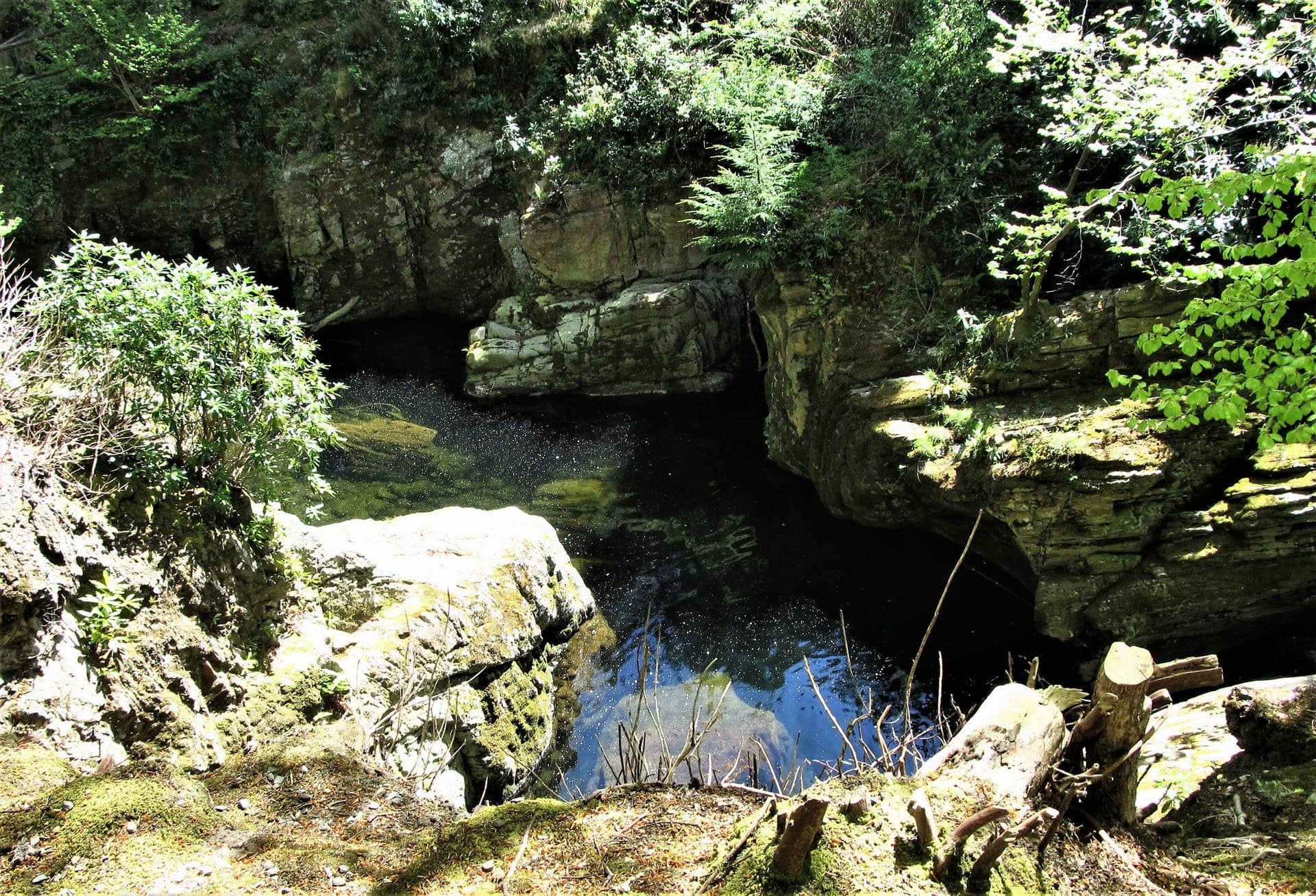
- •The Ice House on the way up — a Victorian cold store buried in the hillside
- •Views to the Isle of Man, Wales, Scotland, and the Wicklow Mountains on a clear day
- •The silence. When the wind drops, the summit is one of the quietest places in Northern Ireland
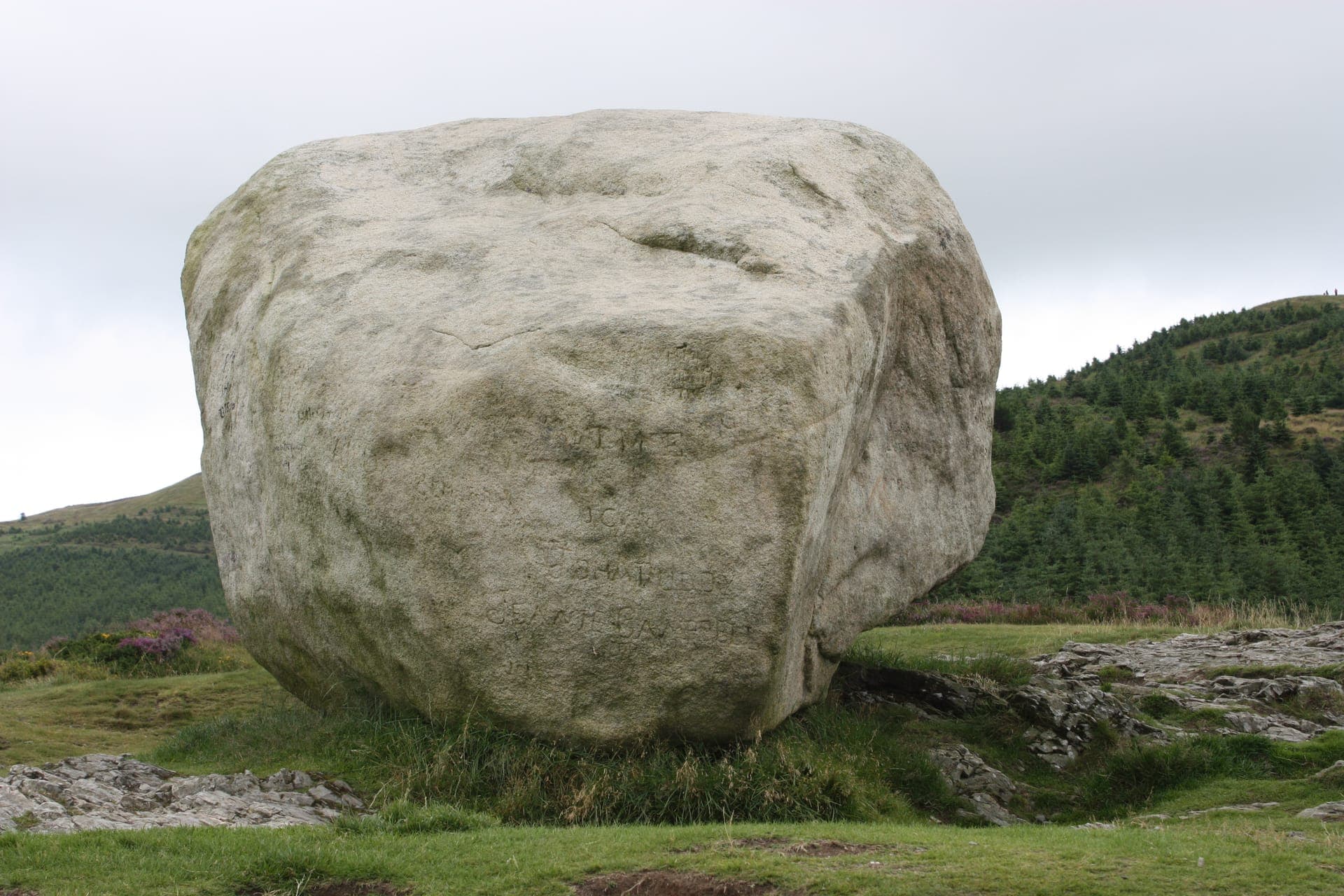
The two stone cairns on the summit. The larger cairn, on the southern side, is traditionally identified as the remains of Saint Donard’s hermit cell — the stones that sheltered a man who chose to live on this exposed summit for decades. Sit beside it. Look at the view he woke to every morning. Then remember: pilgrims climbed here for 1,300 years.
Make a Day of It
The Donard climb is a full day’s adventure. Start early from Newcastle, take the Glen River route up, and reward yourself with the town’s beaches and pubs afterward.
While You're Here
Three places worth exploring once you’ve visited.
More Stories to Discover
Every mountain, bridge, and ruin has a story. Here are a few more.
Discover
Discover More Stories
Saints, giants, smugglers, and ghosts — the Mournes hold stories that have been told for thousands of years. Every mountain has a name. Every name has a reason.
Explore All Stories