Where They Buried a Saint
A granite slab on a hilltop in County Down. Beneath it — tradition says — lies the man who changed Ireland forever.
Location
Down Cathedral, Downpatrick
Time Needed
1–2 hours
Terrain
Flat — paved paths, cathedral grounds
Best Season
Year-round (St Patrick’s Day: 17 March)
Admission
Free (cathedral & grave)
The Story
The Hill Above the Marshes
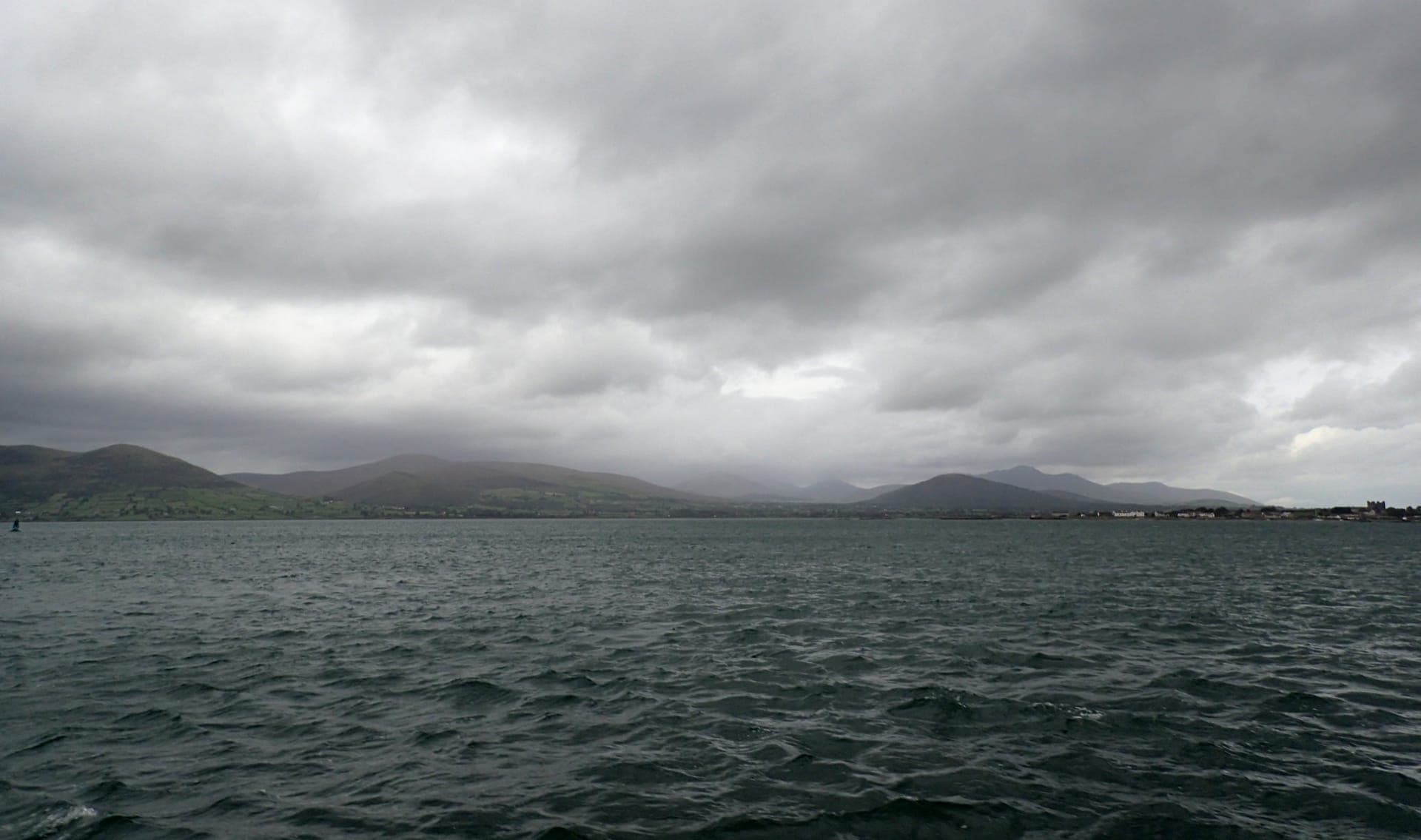
Dún Pádraig — Patrick’s Fort. The name itself tells you everything. This is the place most closely associated with Naomh Pádraig, Ireland’s patron saint, and it has been for over fifteen centuries. The town sits at the southern end of the Lecale peninsula in County Down, where a low cathedral hill rises above the flat marshlands of the Quoile estuary. It is a quiet place now. But for 1,500 years, people have walked here to stand on this hill.
The story begins in the 5th century. Patrick — a Romano-British captive turned missionary — arrived in Ireland by boat, entering through Strangford Lough. He made his first church at Saul, just two miles from where Downpatrick now stands. He preached across the north. He lit a fire that never went out. And when he died, around 461 AD, tradition says they brought his body here, to the hill above the marshes, and buried him.
“They brought his body to the hill above the marshes — and for 1,500 years, people have kept walking here to stand where he was laid to rest.”
The Granite Slab
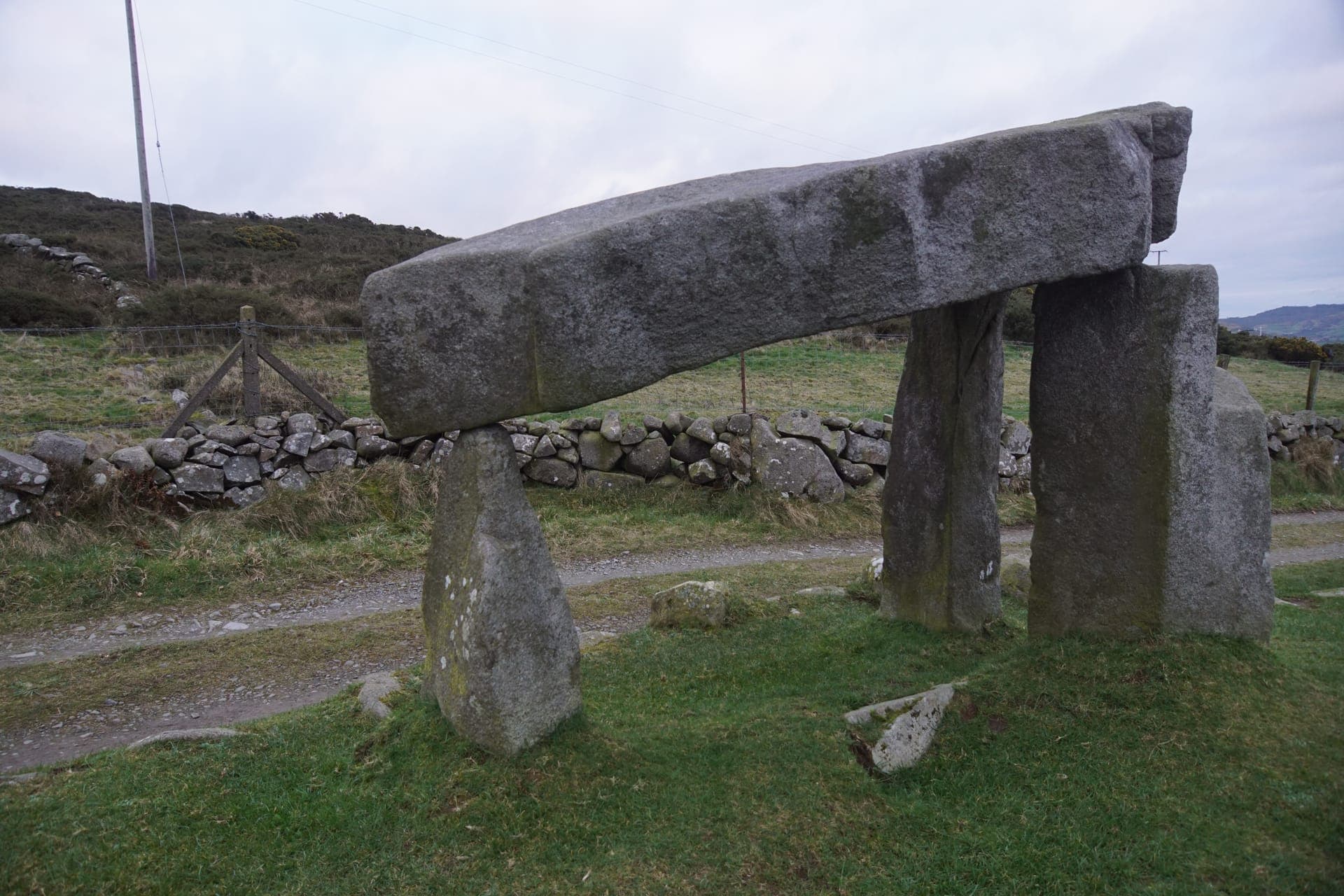
Walk through the cathedral grounds and you will find it: a rough-cut granite slab laid into the earth, inscribed simply with the word PATRIC. No grand monument. No gold. No marble. Just a heavy piece of Mourne granite, placed here in 1900 to mark the spot where tradition says the saint lies. The restraint of it is what makes it powerful. This is the burial place of a man who shaped the identity of an entire island, and the marker is a single word carved in stone.
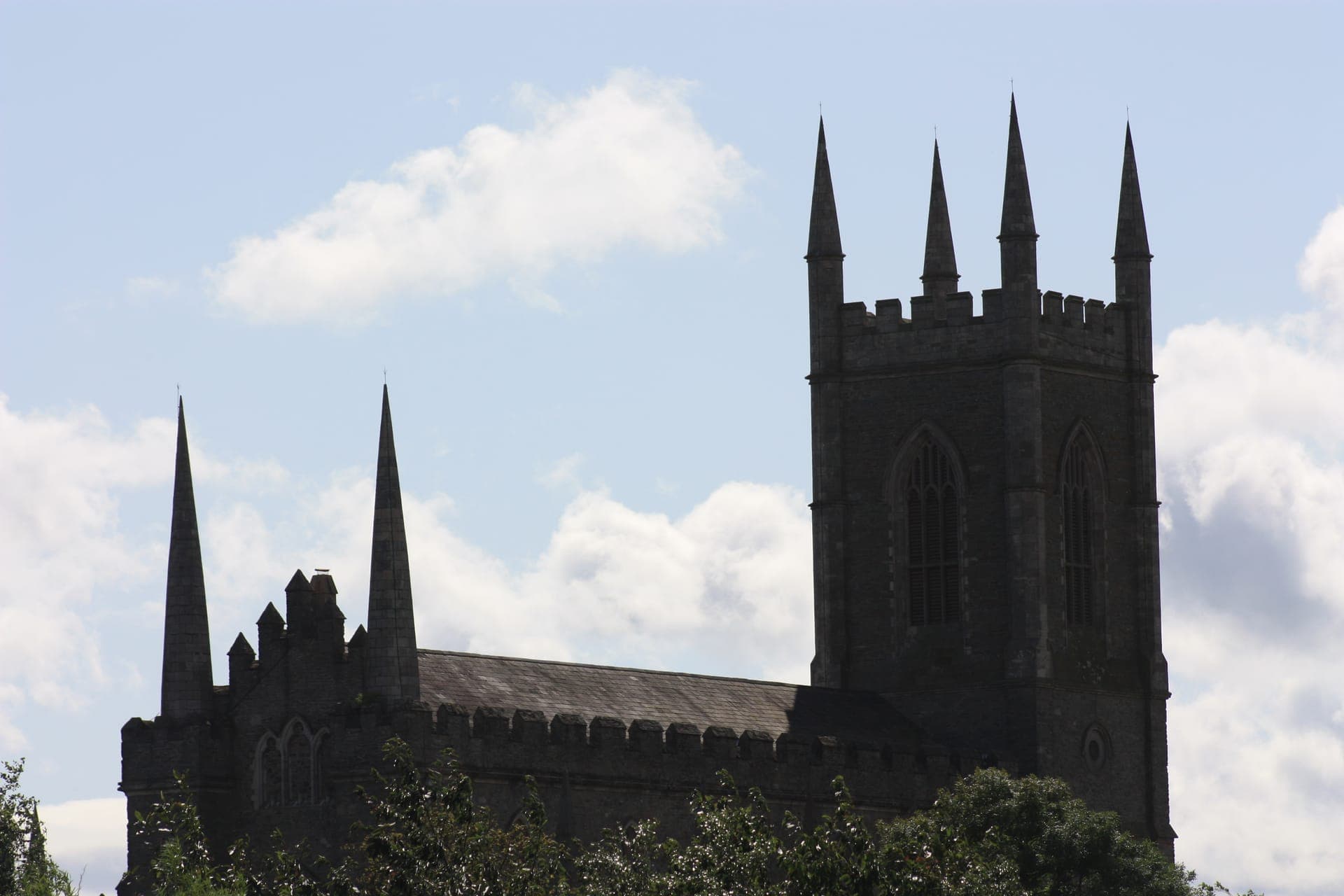
The cathedral itself has been rebuilt several times since the 12th century. The present building dates largely from the 1790s restoration, incorporating elements of a Benedictine monastery that once stood here. But the site is far older than any of these structures. This hilltop was significant long before the cathedral walls went up — and it will be significant long after they fall.
“No grand monument. No gold. Just a heavy piece of Mourne granite and a single word: PATRIC. The restraint of it is what makes it powerful.”
Fifteen Centuries of Pilgrimage
For centuries, Downpatrick was a place of pilgrimage. Monks, kings, and ordinary people walked to this hill. In 1176, the Norman adventurer John de Courcy claimed to have discovered the relics of Saints Patrick, Brigid, and Columba buried together at the site — a move that was as much political as spiritual, designed to establish Downpatrick as the supreme holy site of Ireland. Whether or not you believe the relics are authentic, the devotion they inspired was very real.
The pilgrimage tradition continues today. Every year on 17 March, thousands gather in Downpatrick for the St Patrick’s Day celebrations — one of the only places in Northern Ireland where the festival is centred on the actual saint, not just the spectacle. The town takes on a carnival atmosphere, but the heart of it is still the walk up Cathedral Hill and the quiet moment at the graveside. Some visitors pray. Others simply stand. The weight of the place does the rest.
“Some visitors pray. Others simply stand. The weight of the place does the rest.”
The Place
Loading map...
Down Cathedral and the key Patrician sites around Downpatrick. Struell Wells is a short drive southeast.
Down Cathedral sits on Cathedral Hill in the centre of Downpatrick, about 23 miles south of Belfast and 30 miles northeast of Newcastle. The grave marker is in the cathedral grounds, freely accessible at any time. The Saint Patrick Centre — the world’s only permanent exhibition dedicated to the saint — is a few minutes’ walk downhill in the town centre.
<em>Dún Pádraig</em> translates literally as “Patrick’s Fort” — the town has carried his name for over a thousand years. The Lecale peninsula, on which it sits, is sometimes called “Patrick’s Country”: the landscape where he first preached, first built a church at Saul, and was finally laid to rest.
Coordinates
Down Cathedral:
54.3280°N, 5.7180°W
Saint Patrick Centre:
54.3290°N, 5.7140°W
Parking
Downpatrick town centre:
Free public car parks in the town centre, a short walk from Cathedral Hill.
The Visit
This is not a hike or a hidden gem — it is a place of quiet significance. You walk up a hill, you stand at a graveside, and you feel the weight of fifteen centuries of devotion pressing gently on your shoulders. Allow time. There is no rush here.
Down Cathedral
The cathedral is an active Church of Ireland parish. The building is open to visitors during daylight hours. The grave marker is in the grounds outside the east end — freely accessible at all times. Allow 30 minutes for the cathedral and grounds.
Saint Patrick Centre
The world’s only permanent exhibition about Ireland’s patron saint. Interactive displays, IMAX-style film, and the full story from Romano-British captive to national icon. Small admission fee. Allow 45–60 minutes.
Duration
1–2 hours. Allow 1–2 hours for the cathedral, grave, and Saint Patrick Centre combined. If you add Inch Abbey and Struell Wells, make it a half-day. If you walk the Saint Patrick’s Way trail from Saul, make it a full day.
Difficulty
Easy. Flat, paved paths through cathedral grounds and town centre. Fully accessible.
What to Bring
- •Comfortable shoes for walking Cathedral Hill and the town
- •A light jacket — the hilltop can be breezy
- •Camera — the views from the cathedral grounds across Lecale are beautiful
- •Time — this is a place for standing still, not ticking off a list
What to Look For
- •The granite grave slab inscribed simply “PATRIC”
- •The high crosses and ancient headstones in the cathedral grounds
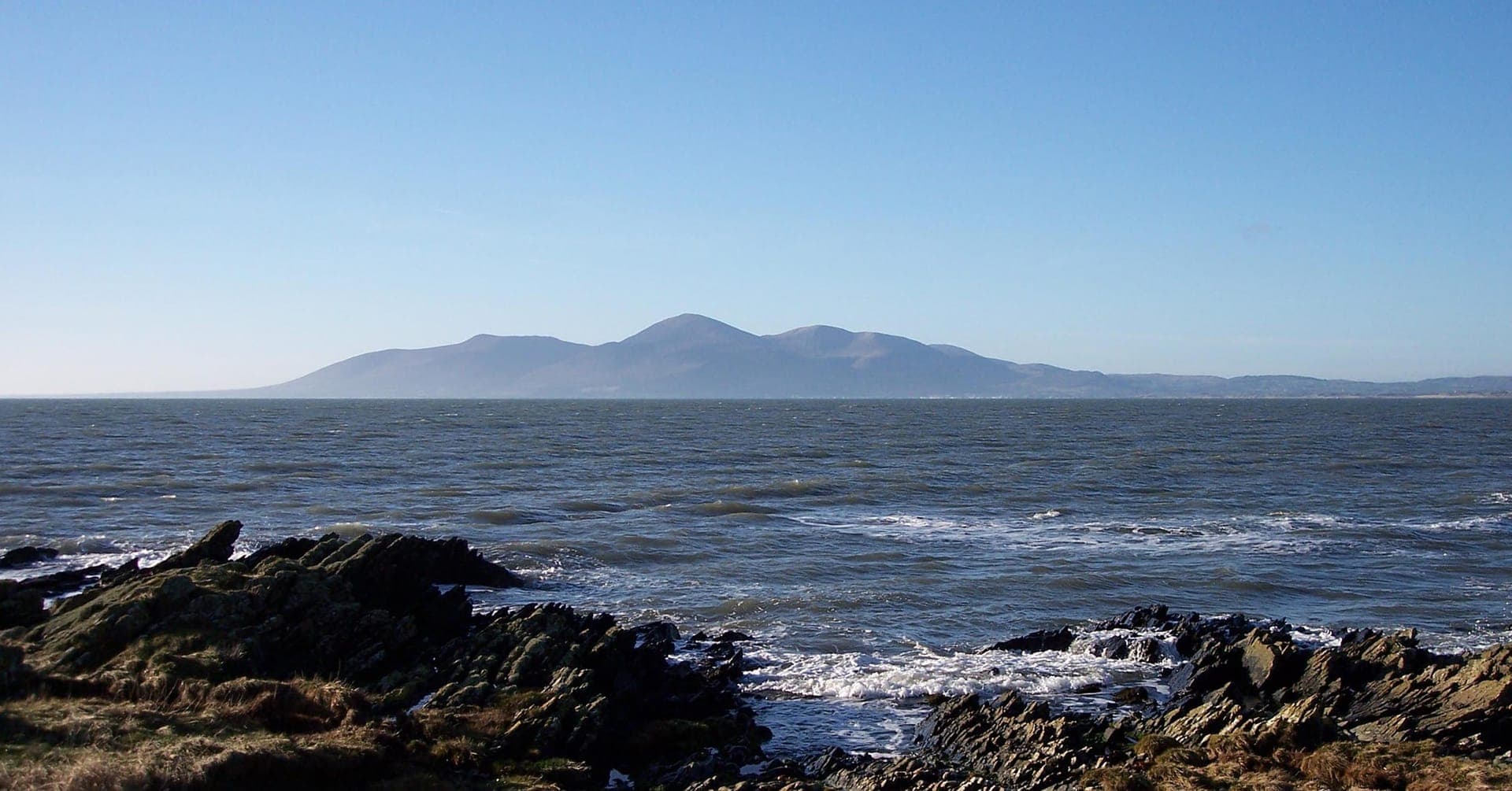
- •The view south toward the Mourne Mountains from Cathedral Hill
- •The Quoile marshlands below — the waterway Patrick sailed to reach this land
- •The atmosphere — there is a stillness on this hilltop that feels earned
The grave marker itself. Walk around the east end of the cathedral and find the rough granite slab inscribed “PATRIC” — Mourne granite, quarried from the mountains on the horizon. Stand there. Read the single word. Feel the weight of what it means that a plain stone in a graveyard in County Down marks the resting place of a man who changed an island.
Make a Day of It
Downpatrick pairs beautifully with a wider tour of the region. Combine the cathedral with nearby Inch Abbey — a Game of Thrones filming location — or make it part of a classic Mourne weekend.
While You're Here
Three places worth exploring once you’ve visited.
More Stories to Discover
Every mountain, bridge, and ruin has a story. Here are a few more.
Discover
Discover More Stories
From ancient holy wells to mountain summits where monks lived alone — these are stories that connect you to places you can still visit today.
Explore All Stories