The Wells They Visited at Midnight
Two wells, two bathhouses, and a ruined church in a sheltered valley. For centuries, hundreds came here on Midsummer Eve — and the rituals lasted until dawn.
Location
Near Downpatrick, Co. Down
Time Needed
30–45 min to explore
Difficulty
Easy (flat site, short walk)
Features
Two wells, two bathhouses
Best Time
Midsummer for atmosphere
The Story
Patrick’s Wells
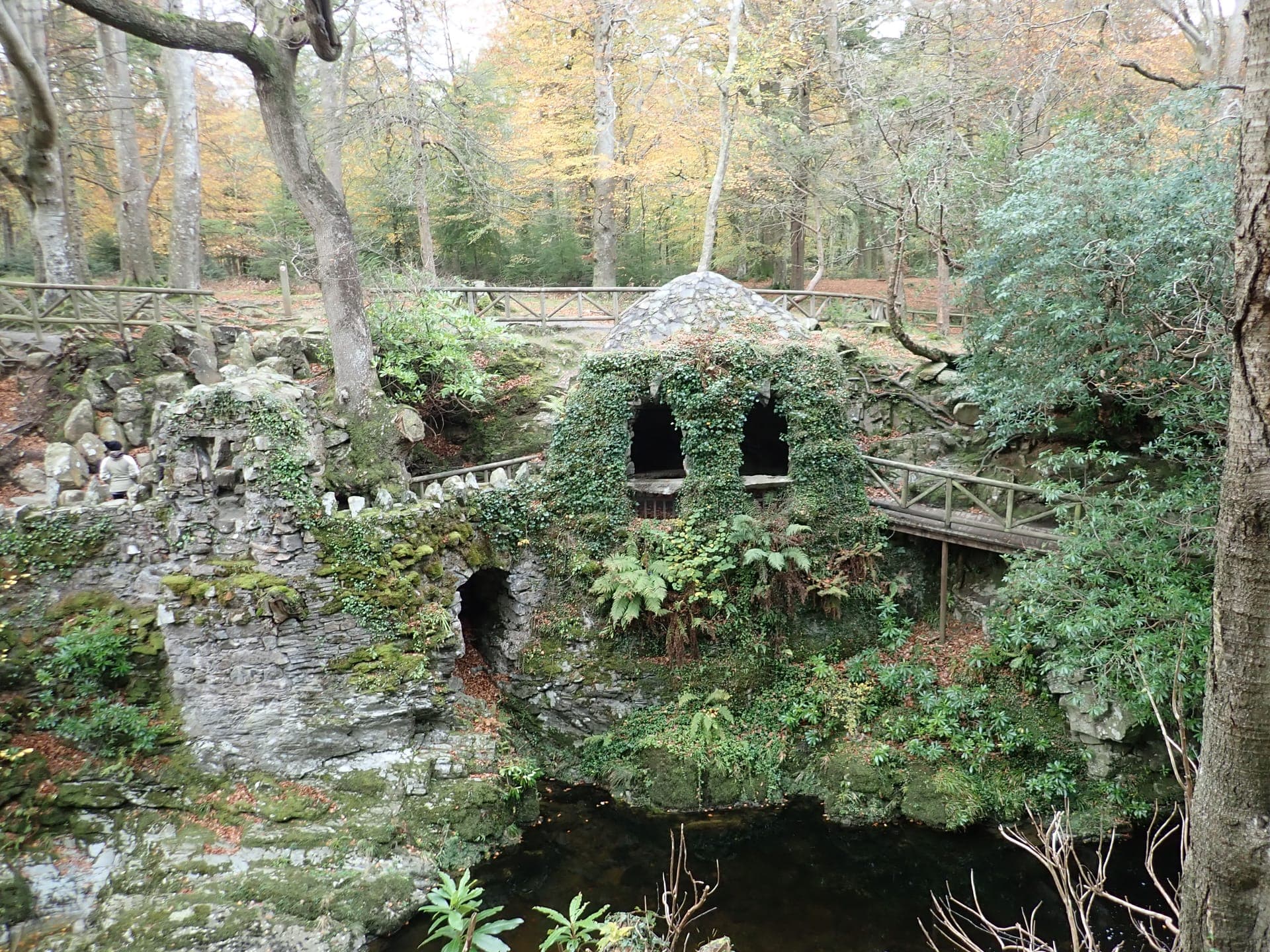
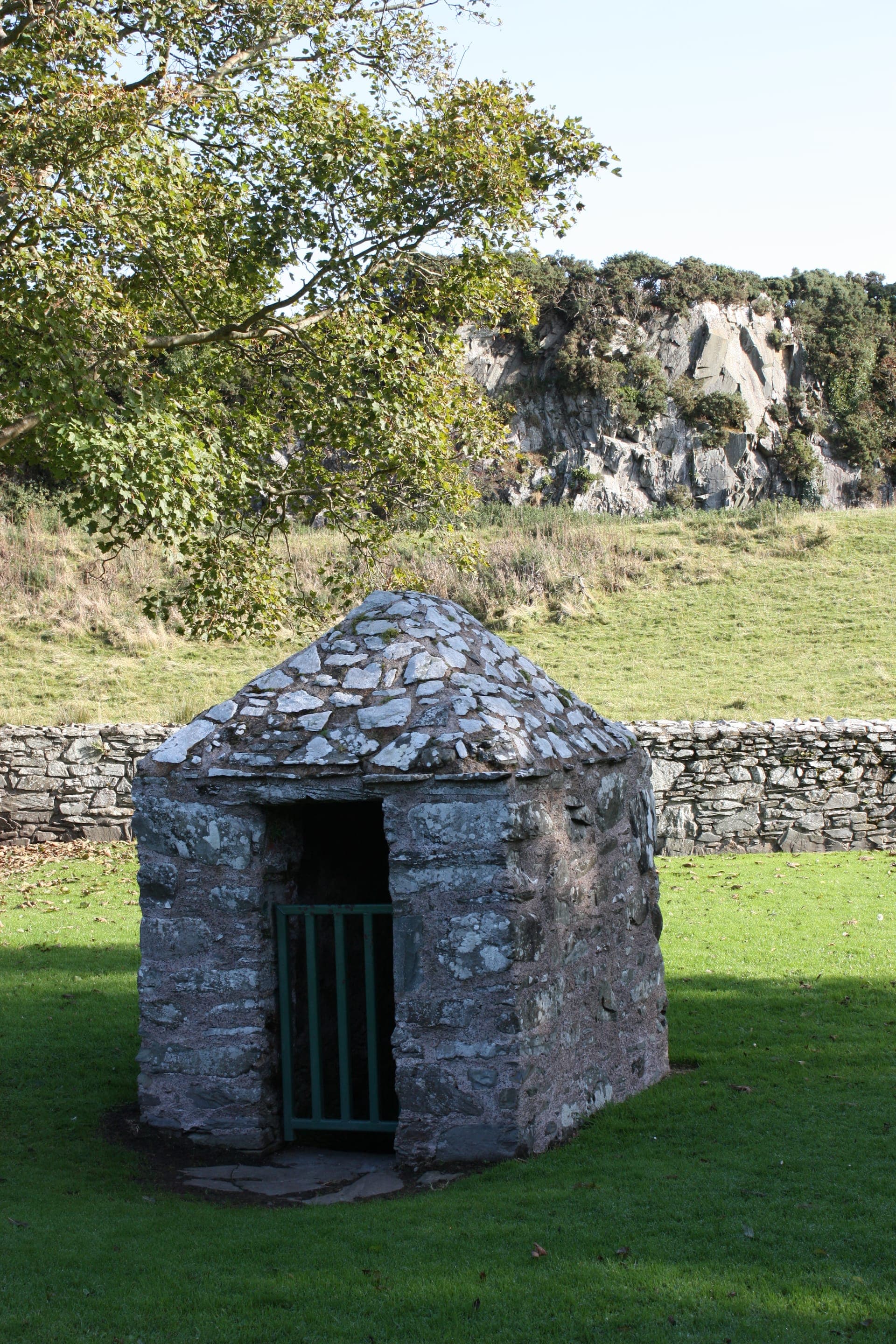
Two kilometres east of Dún Pádraig (Downpatrick), a narrow lane drops into a sheltered valley where the ground stays damp and the air hangs still. At the bottom, arranged around a stream, sit two stone-roofed wells, two bathhouses, and the stump of a ruined church. This is Struell Wells — Tobar Struthaíl — the most extensive holy well complex in Ireland.
Tradition connects the wells to Saint Patrick himself. The story goes that Patrick came here to pray, drawn by the healing waters that bubbled from the earth in this hidden hollow. Whether Patrick stood here in the 5th century is unprovable — but people have been coming for a very long time. The earliest written reference dates from 1306, and the site was almost certainly sacred long before Christianity arrived. Wells like these were holy places in pre-Christian Ireland, and the Church absorbed them rather than abandoned them.
“The wells were sacred before Patrick. They were sacred after him. What changed was the name people called out as they knelt by the water.”
Midsummer Madness
What makes Struell extraordinary is not just the wells themselves, but what happened here every year on Midsummer Eve. Until the 1840s, the site hosted a week-long pilgrimage that was part prayer, part carnival, and part something much older. Hundreds of people — sometimes thousands — descended on this small valley on the evening of 23rd June. They came on foot, on horseback, in carts from across County Down and beyond.
Imagine the scene. Midsummer darkness — barely dark at all this far north — and the valley is full of people. Tents are pitched on the slopes, selling whiskey, poteen, and food. Fiddlers are playing. Children are running between the fires. And at the wells themselves, the rituals are happening: pilgrims circling the wells on their knees, bathing in the freezing water of the bathhouses, praying at the ruined church. The drinking well and the eye well each had their own purpose. The drinking well healed ailments of the body. The eye well, as the name suggests, cured afflictions of sight.
“Whiskey tents on the hillside, fiddlers in the firelight, and at the wells below, pilgrims circling on their knees in the midsummer darkness. Prayer and carnival, side by side.”
Cold Water, Ancient Stones
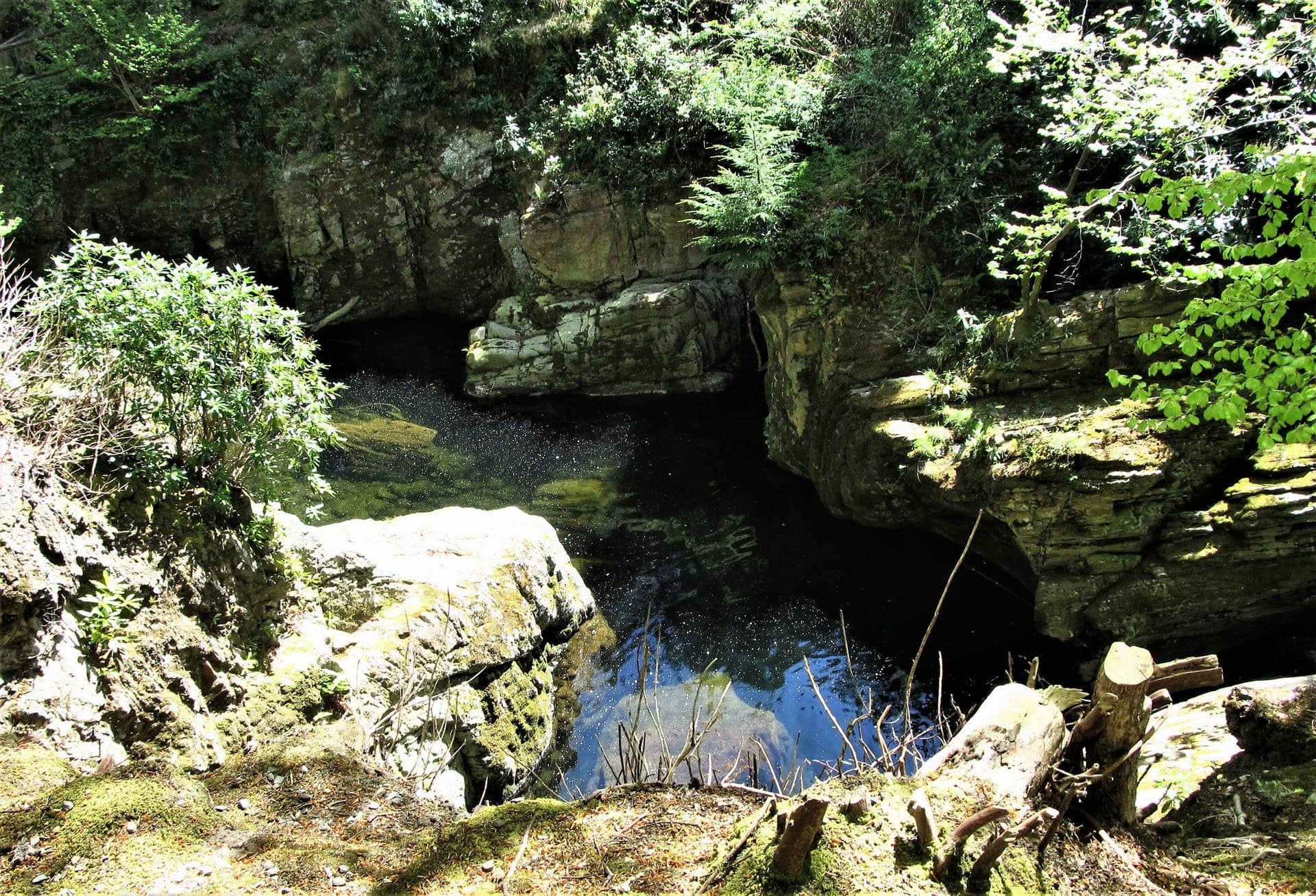
The two bathhouses are remarkable structures. The larger of the two — the men’s bathhouse — is a rectangular building with a corbelled stone roof, a changing area, and a plunge pool fed by the stream. The water is cold. It was meant to be. The shock of immersion was part of the ritual — a physical act of penance, a jolt that was supposed to cleanse body and soul alike. The women’s bathhouse is smaller but follows the same design: stone walls, stone roof, cold water.
Stand in the doorway of either bathhouse today and you can feel what made this place work. The stone ceiling presses low. The air is cold and damp. The water gleams dark in the plunge pool. It feels subterranean, even though it isn’t. There is a deliberate theatricality to these structures — they were designed to make you feel like you were entering another world. And at midnight, by firelight, surrounded by hundreds of other pilgrims, the effect must have been overwhelming.
The Quiet That Came After
By the mid-19th century, the Church and civil authorities had grown increasingly uncomfortable with the midsummer gatherings. The mix of devotion and revelry, the whiskey, the all-night socialising — it all felt too close to the pagan festivals that the wells had hosted before Patrick’s name was ever attached to them. The pilgrimages were suppressed. The tents came down. The fiddlers stopped playing.
Today, Struell Wells is quiet. Birdsong and running water. The bathhouses are intact but empty. The wells still flow. Occasionally, you will find a rag tied to a branch near the eye well — a clootie, a tradition older than any written record — left by someone who still comes here looking for something the modern world cannot quite provide. The contrast between what this place was and what it is now is the most powerful thing about it. Stand in the valley at dusk and you can almost hear the fiddlers.
“Stand in the valley at dusk and you can almost hear the fiddlers. The wells still flow. The bathhouses still stand. Only the people are gone.”
The Place
Loading map...
Struell Wells lies about 2 km east of Downpatrick, signposted from the Ardglass Road. Down Cathedral and Saint Patrick’s Grave are a short drive north.
Struell Wells sits in a small, sheltered valley about 2 kilometres east of <em>Dún Pádraig</em> (Downpatrick). The site is signposted from the Ardglass Road (B1). A narrow lane leads down into the hollow, ending at a small car park beside the wells. You are there in minutes from the centre of Downpatrick.
The complex is compact — you can see everything in half an hour — but it rewards a slower visit. Walk between the structures. Look inside the bathhouses. Read the interpretation panel. Sit on the slope above and imagine what this valley looked like when it was full of people, tents, firelight, and music. The stream that feeds the wells still runs through the site, and the two stone-roofed wells are among the best-preserved holy wells in Ireland.
Coordinates
Struell Wells:
54.3100°N, 5.7000°W
From Downpatrick:
54.3280°N, 5.7180°W
Parking
On-site:
Small free car park at the end of the lane, beside the wells. Space for 6–8 cars. Rarely full.
Alternative:
Downpatrick town centre is a 5-minute drive. Combine with a visit to Down Cathedral.
The Visit
This is one of the easiest heritage sites in the region to visit. No hills to climb, no trails to follow. Drive down the lane, park, and you are standing among structures that have been drawing people for at least 700 years. The atmosphere does the rest.
Getting There
From Downpatrick, take the Ardglass Road (B1) south-east. After about 1.5 km, the wells are signposted on the left. A narrow lane drops into the valley and ends at the car park. The site is immediately visible.
What to See
The drinking well and the eye well (both stone-roofed), the men’s and women’s bathhouses (with plunge pools), and the stump of a ruined church on the slope above. An interpretation panel at the entrance explains the history.
Duration
30–45 minutes. Allow longer if you want to sit and absorb the atmosphere. There is no rush — the site is rarely crowded.
Difficulty
Easy. Free to visit. Open year-round. The site is mostly flat with short grass — accessible for most visitors. Dogs welcome on leads. No facilities on site; Downpatrick is a 5-minute drive.
What to Bring
- •Waterproof shoes — the ground around the wells is often damp
- •A waterproof jacket — the valley is sheltered but this is County Down
- •A torch for peering into the bathhouse interiors
- •Camera — the stone structures photograph beautifully in low light
What to Look For
- •The corbelled stone roofs on the wells — remarkably intact
- •The plunge pool inside the men’s bathhouse — peer in and imagine the cold
- •<em>Clooties</em> (rags) tied to branches near the eye well — a living tradition
- •The ruined church on the slope above — a good vantage point over the whole site
- •The stream running through — the water source that made this place sacred
The bathhouses. Step into the doorway of the men’s bathhouse and look down at the plunge pool. The stone ceiling presses low, the air is cold, and the water gleams dark. Now imagine this at midnight on Midsummer Eve, with firelight flickering outside and hundreds of pilgrims circling the wells on their knees. This is not a ruin. It is a place that still holds its atmosphere like the stones hold the cold.
Make a Day of It
Struell Wells is five minutes from Downpatrick. Start at Down Cathedral, walk the heritage trail, then drive to the wells in the afternoon. Inch Abbey is 10 minutes north.
While You're Here
Three places worth exploring once you’ve visited.
More Stories to Discover
Every mountain, bridge, and ruin has a story. Here are a few more.
Discover
Discover More Stories
Holy wells, midnight pilgrimages, and legends that refuse to fade — the Mourne region is saturated with stories that lead to real places you can visit.
Explore All Stories