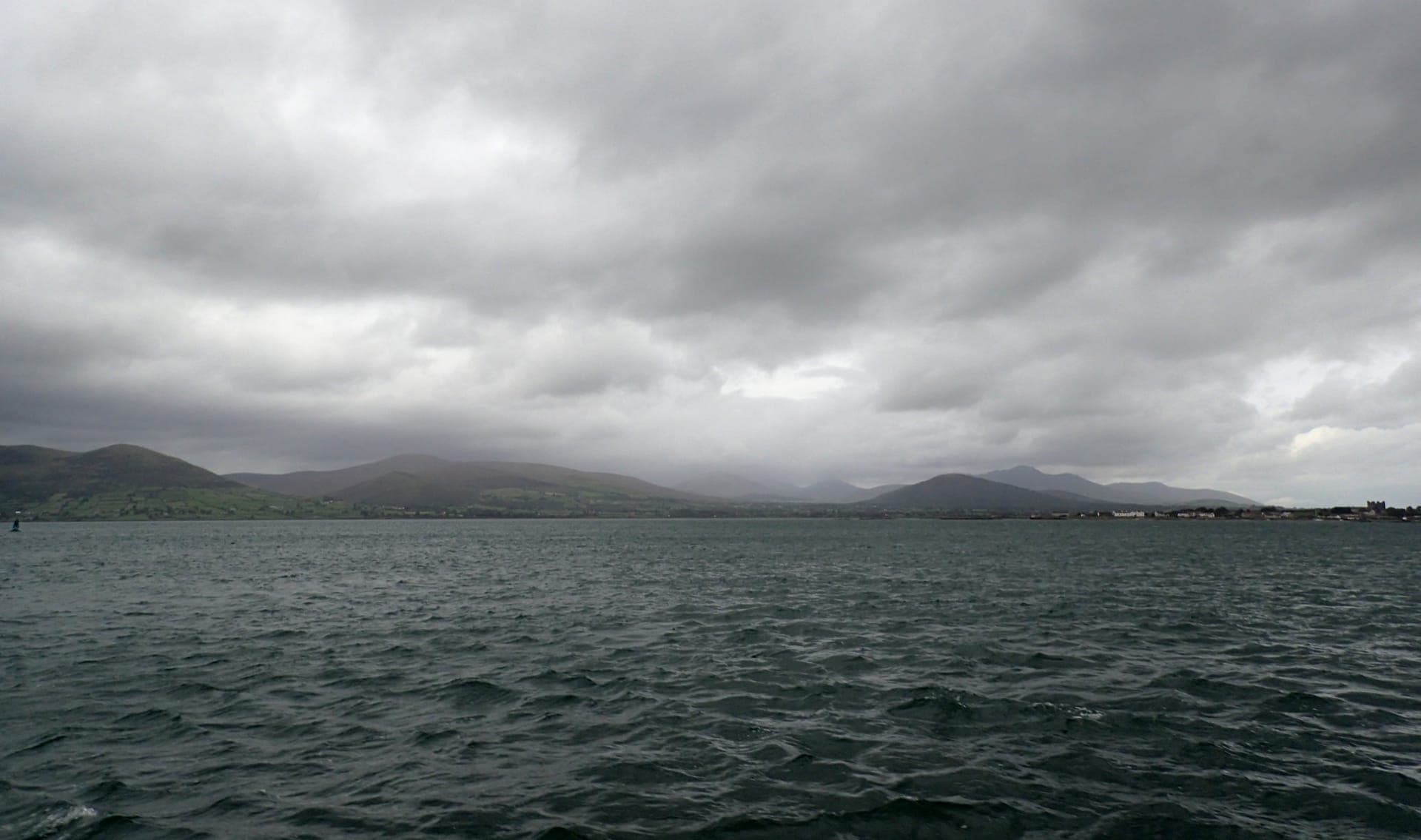
The Ringfort in the Fields
An oval stone fort in a County Down field, its walls still shoulder-height after 1,500 years. The underground passage is intact. You can crawl through it.
Location
Near Castlewellan, Co. Down
Time Needed
30–45 min to explore
Difficulty
Easy (flat field, short walk)
Era
Early Christian (5th–9th C.)
Best Time
Year-round, clear days for views
The Story
A Fort in the Grass
Drive south-west from Castlewellan on the Hilltown road and after about three kilometres, a brown heritage sign appears at the roadside. There is no drama. No cliff edge, no castle ruin on a hilltop. Just a lane through farmland, a gate, and then — rising from the grass like something the field itself decided to grow — an oval wall of dry stone, shoulder-height, enclosing a space roughly the size of a tennis court. This is Drumena Cashel. Droim Éanach — the ridge of the birds.
It has been standing here since the early Christian period — roughly the 5th to 9th century, though nobody can pin it to a single decade. When this fort was occupied, the Roman Empire had already fallen, Patrick had come and gone, and the people living in these hills were farmers, herders, and occasional raiders. They built their homesteads to last. The oval stone enclosure held a small settlement — a house or two, storage, maybe livestock — surrounded by walls thick enough to discourage wolves, cattle thieves, and neighbours with grievances.
“It rises from the grass like something the field itself decided to grow — an oval wall of dry stone, shoulder-height, enclosing a space the size of a tennis court.”
The Passage Underground
What makes Drumena more than just a wall in a field is what lies beneath it. Built into the structure is a souterrain — an underground passage constructed from stone slabs, running beneath the enclosure wall and extending outward. The word comes from the French sous terrain, literally “under the earth.” The passage is low and narrow — you will need to crouch, then crawl — and it feels older than anything you have touched with your hands.
What were they for? Archaeologists have debated this for decades. Cold storage is the most practical explanation — the temperature underground stays constant, making it ideal for keeping food cool through the summer. But refuge is equally plausible. If raiders appeared on the horizon, women and children could slip into the passage and wait in the dark until the danger passed. The entrance is small enough that a single person with a weapon could defend it. Some souterrains have creeps — constrictions so narrow that you can only pass through one at a time, on your belly. Drumena's passage is tight but manageable. You emerge on the other side with grass-stained knees and the quiet thrill of having been somewhere most visitors never go.
“The passage is low and narrow. You crouch, then crawl. The stone slabs press close. You emerge with grass-stained knees and the thrill of having been somewhere most people never go.”
Still Standing
Drumena is a state-care monument, managed by the Department for Communities. It was partially restored in the 1920s — some of the interior features were reconstructed — but the walls themselves are substantially original. Stand inside the enclosure and you can see the foundations of buildings that once stood here: a T-shaped house, a second smaller structure. The layout is clear enough that you can trace the outline of rooms, doorways, and the narrow entrance passage that controlled access through the wall.
What strikes you most, though, is not the archaeology. It is the setting. Drumena sits in open farmland, with the Mourne Mountains rising to the south and the fields stretching away in every direction. Cows graze nearby. The wind moves through the grass. There is no visitor centre, no gift shop, no queue. Just you, a stone fort, and a landscape that looks remarkably like it must have looked when the people who built this place were still living inside it. That is the magic of Drumena — it has not been packaged. It sits in the field, exactly where it has always been, and it lets you come to it on its own terms.
“There is no visitor centre, no gift shop, no queue. Just you, a stone fort, and a landscape that has barely changed in fifteen centuries.”
The Place
Loading map...
Drumena Cashel lies about 3 km south-west of Castlewellan on the Hilltown road. Signposted from the roadside.
Drumena Cashel sits in farmland about three kilometres south-west of Castlewellan, just off the road to Hilltown. The site is signposted with a brown heritage sign. A short lane leads from the road to a small pull-in area, and from there it is a two-minute walk across a field to the cashel itself.
The enclosure is an oval of dry-stone wall, roughly 25 metres by 20 metres. The entrance is on the south-east side — a narrow passage through the thick wall. Inside, you can see the foundations of two buildings and the entrance to the souterrain. The underground passage runs beneath the wall and emerges outside the enclosure. On a clear day, the Mourne Mountains fill the southern horizon.
Coordinates
Drumena Cashel:
54.2700°N, 5.9300°W
From Castlewellan:
54.2440°N, 5.9370°W
Parking
Roadside:
A small lay-by/pull-in at the end of the access lane. Space for 3–4 cars. Rarely busy — you may have the place entirely to yourself.
Alternative:
Castlewellan town centre is a 5-minute drive. Easy to combine with Castlewellan Forest Park.
The Visit
This is not a hike. It is a two-minute walk from the road across a grazed field. The pleasure is in the intimacy of it — stepping through the entrance passage, tracing the building foundations with your eyes, and then getting on your hands and knees to crawl through an underground passage that has been here since the Dark Ages.
Getting There
From Castlewellan, take the B25 toward Hilltown. After about 3 km, look for the brown heritage sign on the left. Turn down the short lane and park at the end. A gate leads into the field — the cashel is visible immediately.
Duration
30–45 minutes. Allow longer if you want to sit inside the enclosure and take in the views. There is no rush and rarely another visitor in sight.
Difficulty
Easy. Flat field, short walk from roadside. The field may be muddy after rain. The souterrain entrance is low — not suitable for anyone with mobility issues or claustrophobia.
What to Bring
- •Sturdy shoes or wellies — the field can be soft underfoot
- •Clothes you don't mind getting muddy if you crawl through the souterrain
- •A torch for the souterrain — it is dark inside
- •Camera — the views toward the Mournes are excellent on clear days
What to Look For
- •The entrance passage — narrow enough that one defender could hold it
- •The T-shaped house foundation — trace the room layout in the grass
- •The souterrain entrance — look for the low opening near the inner wall
- •The wall thickness — nearly two metres wide at the base
- •The Mourne Mountains on the southern horizon — the same view the builders had
The souterrain. Get on your hands and knees and crawl through it. The stone slabs above your head were placed there more than a thousand years ago. The air is cool, the passage is narrow, and when you emerge blinking into the daylight on the other side, you will have done something that most visitors to County Down never know is possible. Bring a torch. Wear old clothes. Do not skip this.
Make a Day of It
Drumena is a perfect morning stop before a bigger day out. Drive to Castlewellan for the forest park, or combine it with a classic weekend exploring the Mournes.
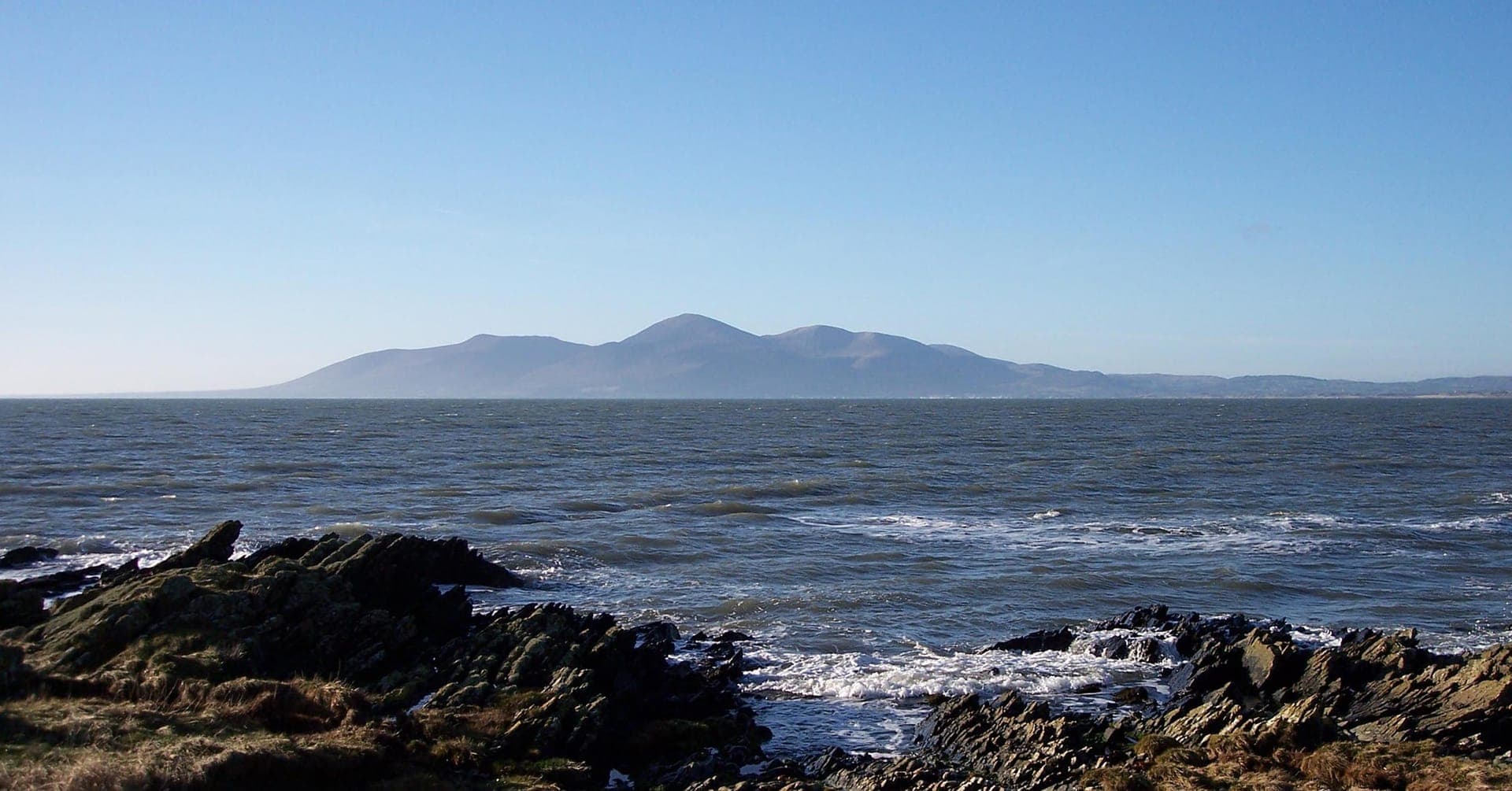
While You're Here
Three places worth exploring once you’ve visited.
More Stories to Discover
Every mountain, bridge, and ruin has a story. Here are a few more.
Discover
Discover More Stories
Ringforts, holy wells, underground passages, and ancient stones — the Mourne region has been lived in, prayed in, and fought over for thousands of years. The stories are still in the ground.
Explore All Stories