The Treasure Hunt in Tollymore Nobody Told You About
Game of Thrones fans come here for the Haunted Forest. They walk past 300 years of architectural gems without knowing.
Location
Tollymore Forest Park
Time Needed
2–3 hours
Difficulty
Easy (forest paths)
Best Season
Year-round
Park Size
630 hectares
The Story
An Earl’s Grand Design
In 1719, the Earls of Clanbrassil began reshaping the landscape around the River Shimna (An tSiomha — ‘the river of rushes’) into something extraordinary. Over the next eighty years, they commissioned ornamental bridges, follies, gatehouses, and viewing platforms that turned a stretch of river valley at the foot of the Mourne Mountains into one of the finest designed landscapes in Ireland.
They brought in Thomas Wright of Durham — astronomer, architect, and one of the most original minds of the 18th century — to design the follies. Wright was the man who first proposed that the Milky Way was a disc-shaped structure. Between stargazing, he designed garden buildings across Britain and Ireland. His work at Tollymore (Tulaigh Mór — ‘the great hillock’) was among his finest.
“The man who designed these follies also figured out the shape of the Milky Way. Between mapping galaxies, he built bridges over a river in County Down.”
A Bridge for Every Generation
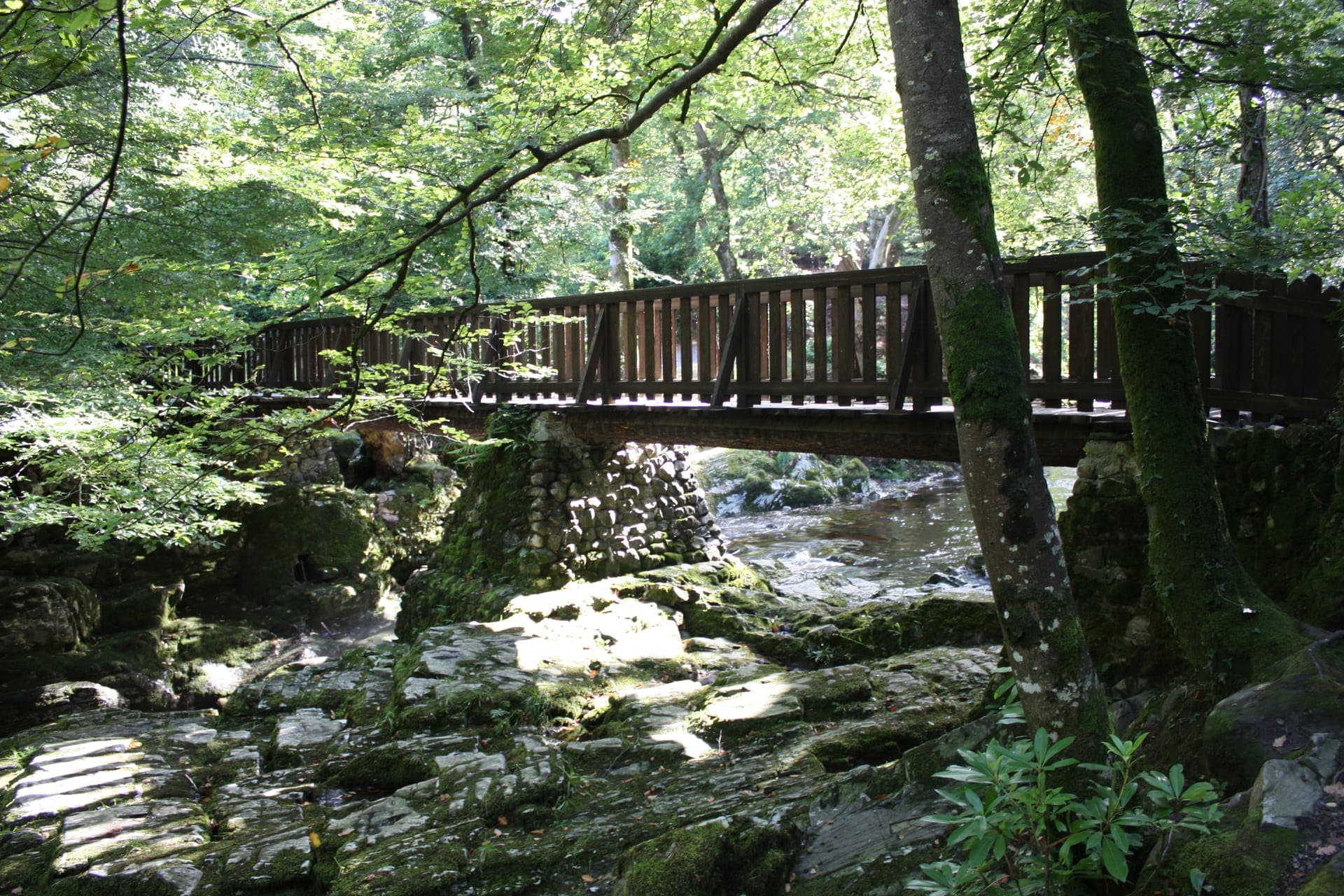
The bridges were built across more than a century, each one reflecting the taste and ambition of whoever held the estate at the time. The Old Bridge (1726) came first — plain, elegant, and quietly confident. Then Ivy Bridge (1780), half-hidden beneath trailing ivy and overhanging trees, deliberately designed to look like a ruin even when it was new. The 18th century loved a romantic ruin.
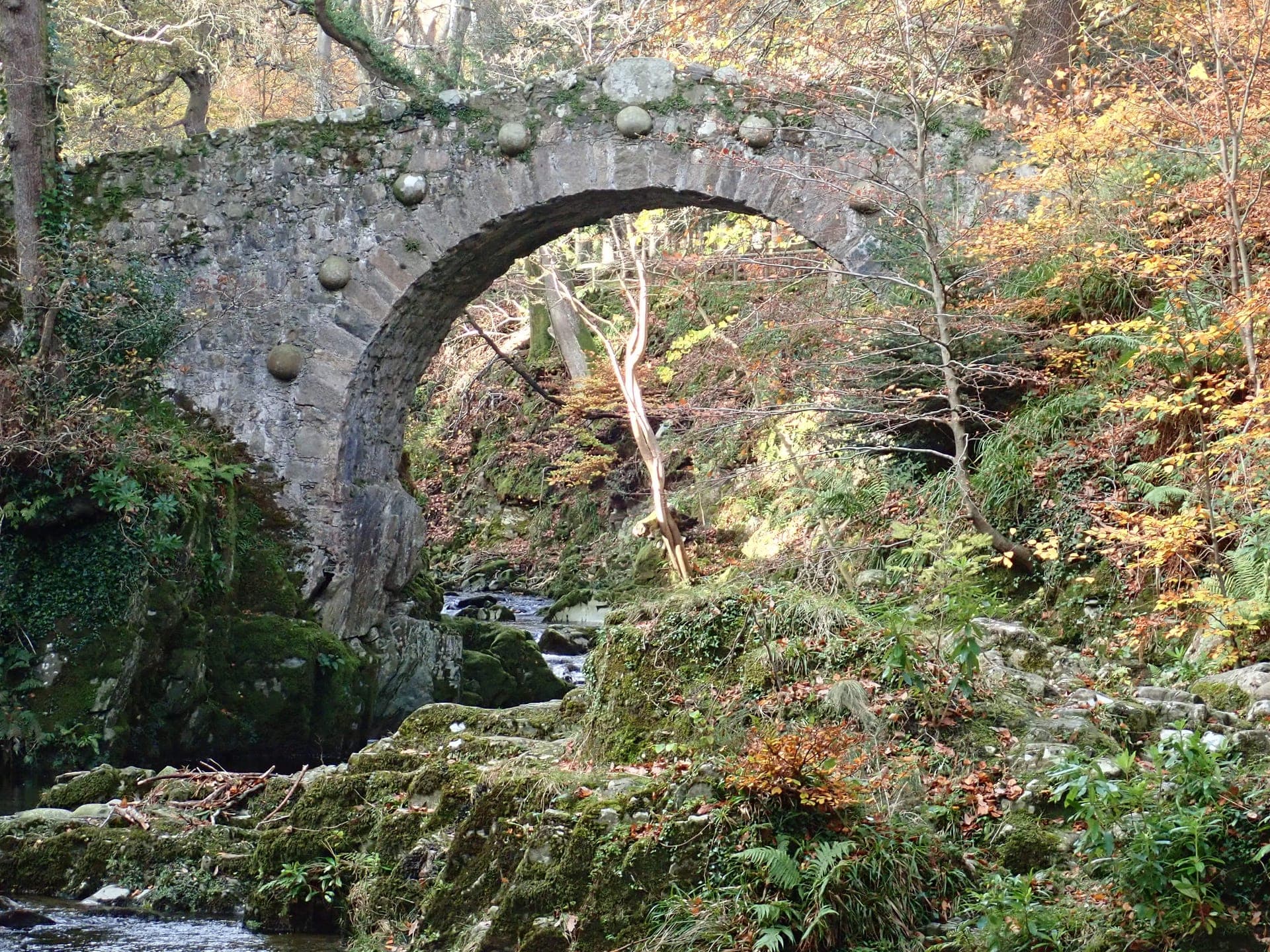
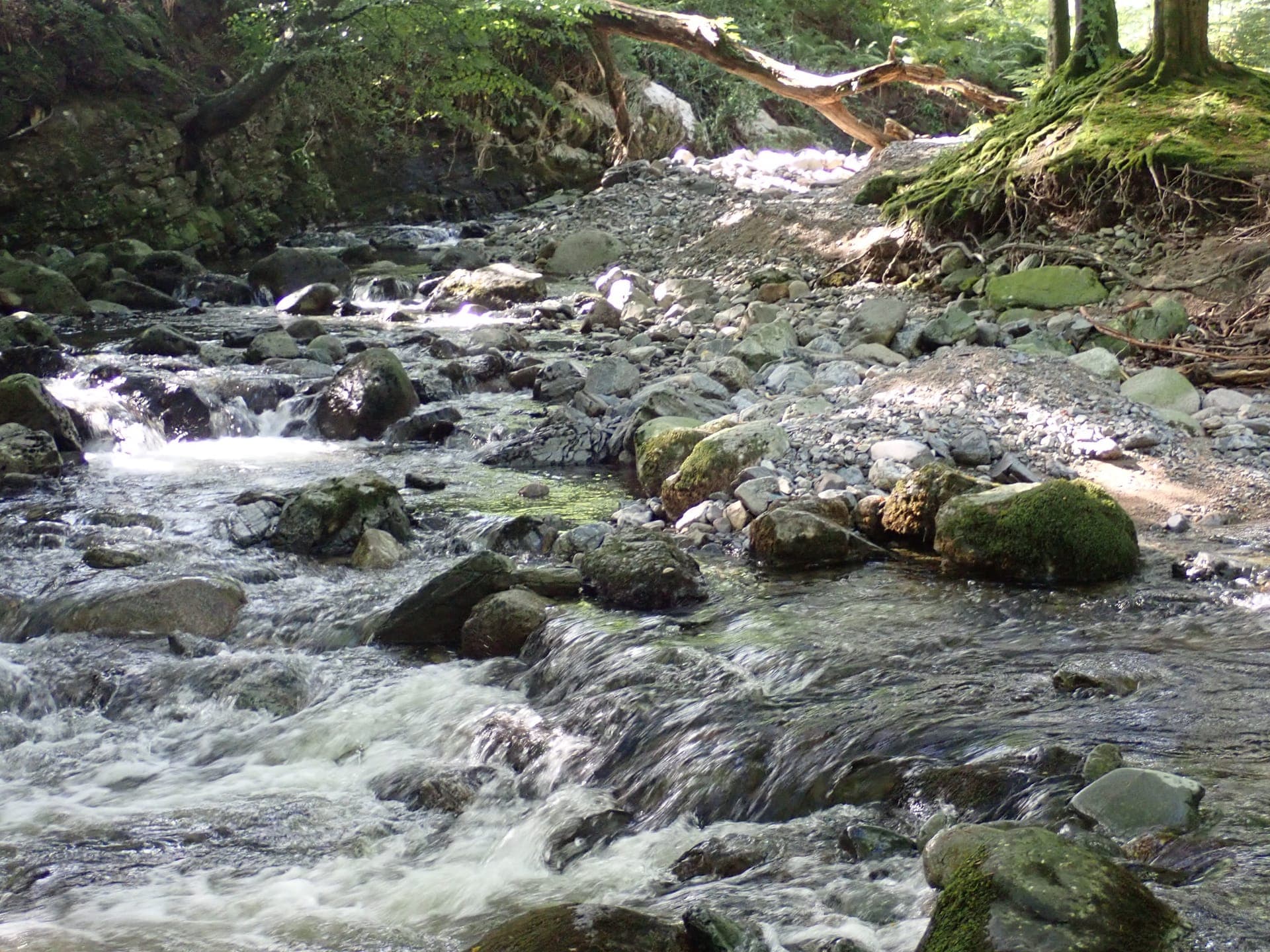
Foley’s Bridge (1787) is the one most people photograph without knowing its name — a single arch over a stretch of the Shimna where the river pools dark and still beneath the canopy. It’s the bridge that Game of Thrones location scouts noticed when they chose Tollymore as the Haunted Forest. The atmosphere around it is extraordinary: the sound of water, the cathedral-like tree cover, the sense that you’ve stepped out of the 21st century entirely.
The last bridge, Parnell Bridge (1842), arrived after the Roden family had taken over the estate. By then, the age of grand follies was fading, but the instinct to build something beautiful over moving water endured.
“Seven bridges and follies, built across 120 years, hiding in a forest that 200,000 people visit every year. Most of them never look up from the trail.”
The Hermitage
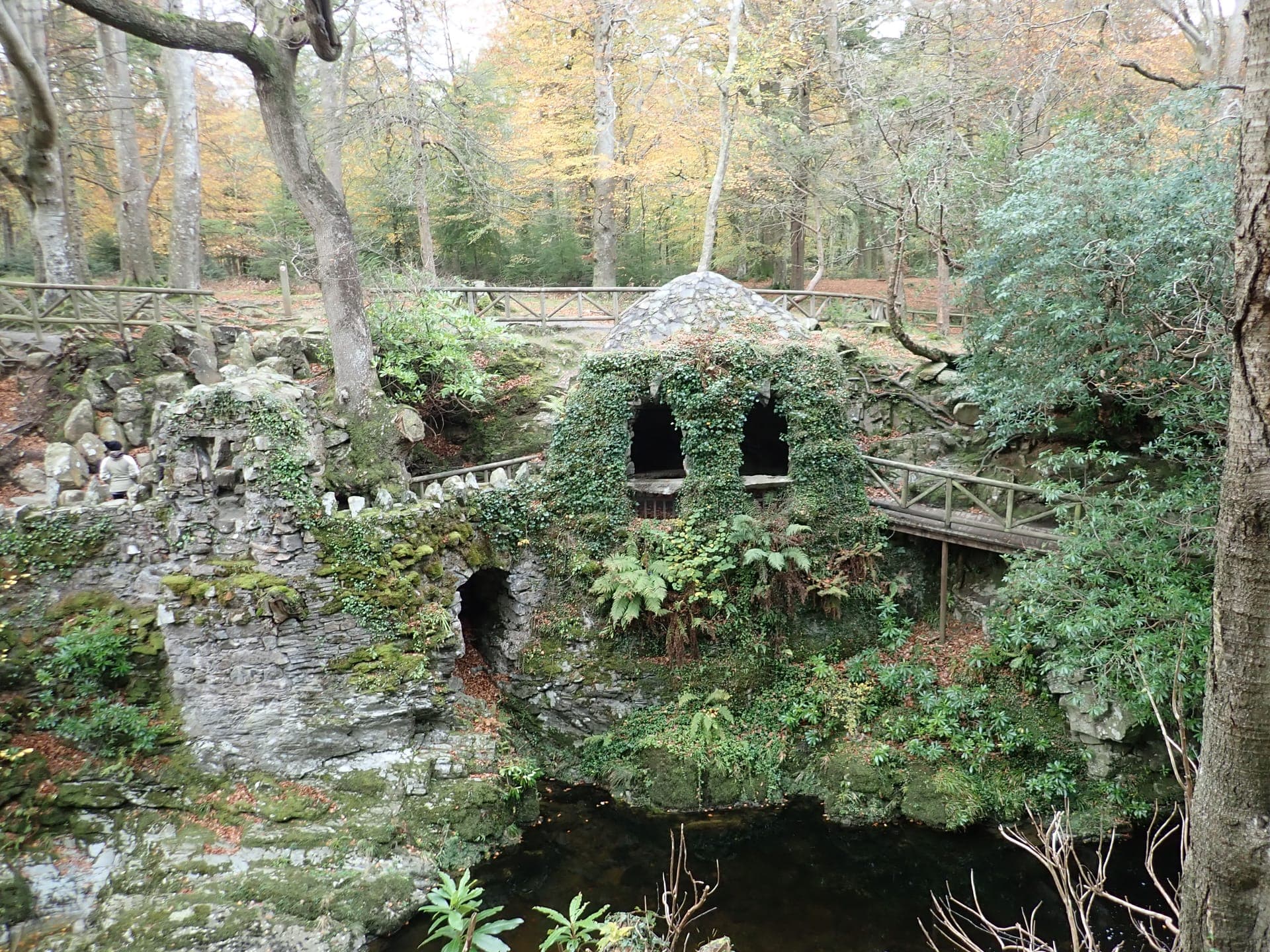
The most remarkable structure in Tollymore isn’t a bridge at all. The Hermitage was built in the 1770s on a rocky outcrop overlooking the River Shimna — a small stone building designed as a place of contemplation, built in memory of a friend. It perches above the river, half-hidden by trees, and the sound of water below fills the space. The Clanbrassils didn’t build it for show. They built it for grief, and for quiet.
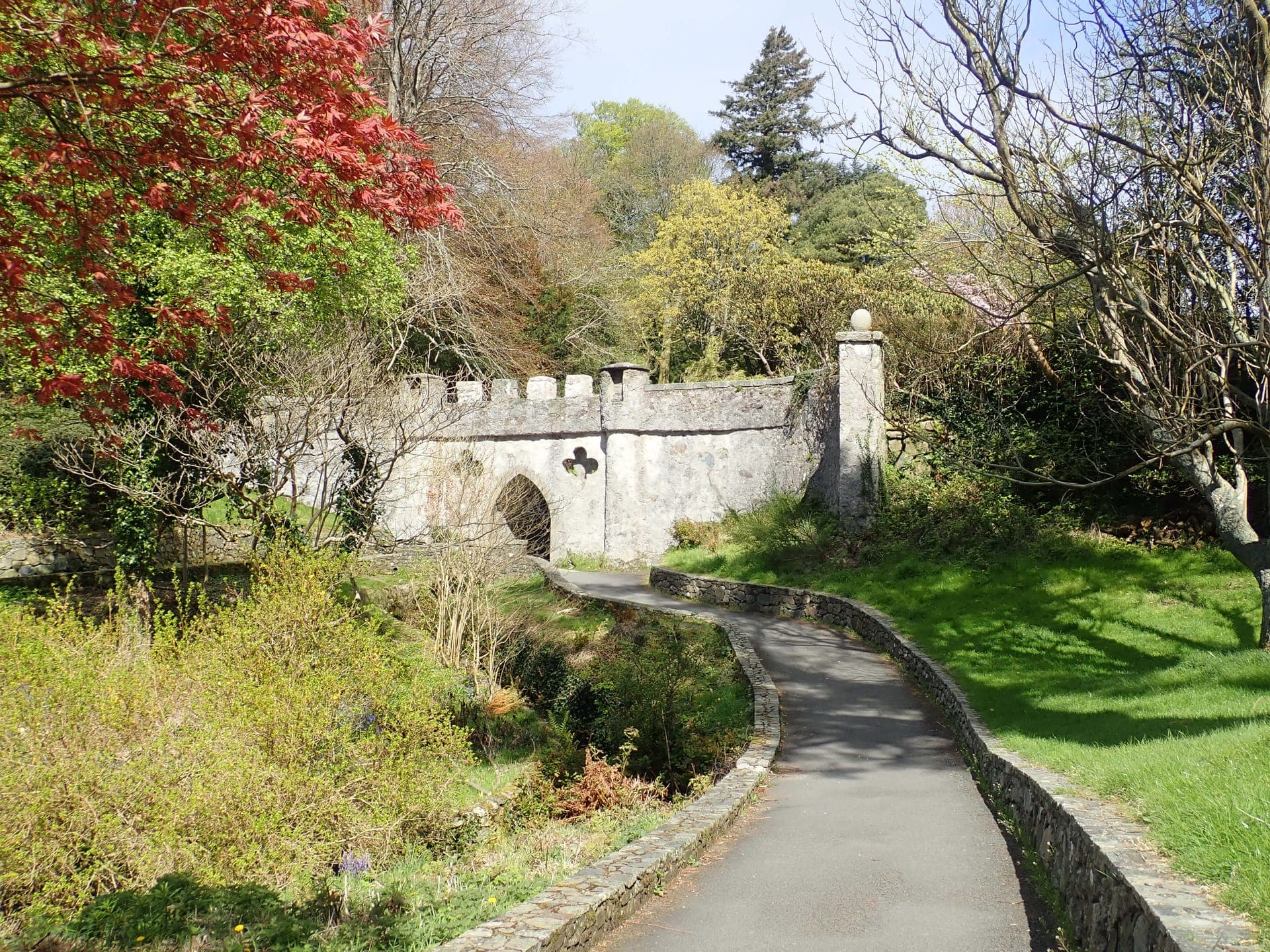
The Barbican Gate is the first thing you see — a gothic archway that marks the entrance to the park like a castle gatehouse. It was designed to set the tone: you are not entering a forest, you are entering an estate with pretensions. Everything beyond it was meant to surprise, from the bridges to the follies to the carefully framed views of the Mourne peaks above the treeline.
“The Hermitage wasn’t built for show. It was built for grief, and for quiet — a stone room over a river, in memory of a friend.”
The Place
Loading map...
Tollymore Forest Park — the follies and bridges are spread across the river walks. The Barbican Gate marks the main entrance.
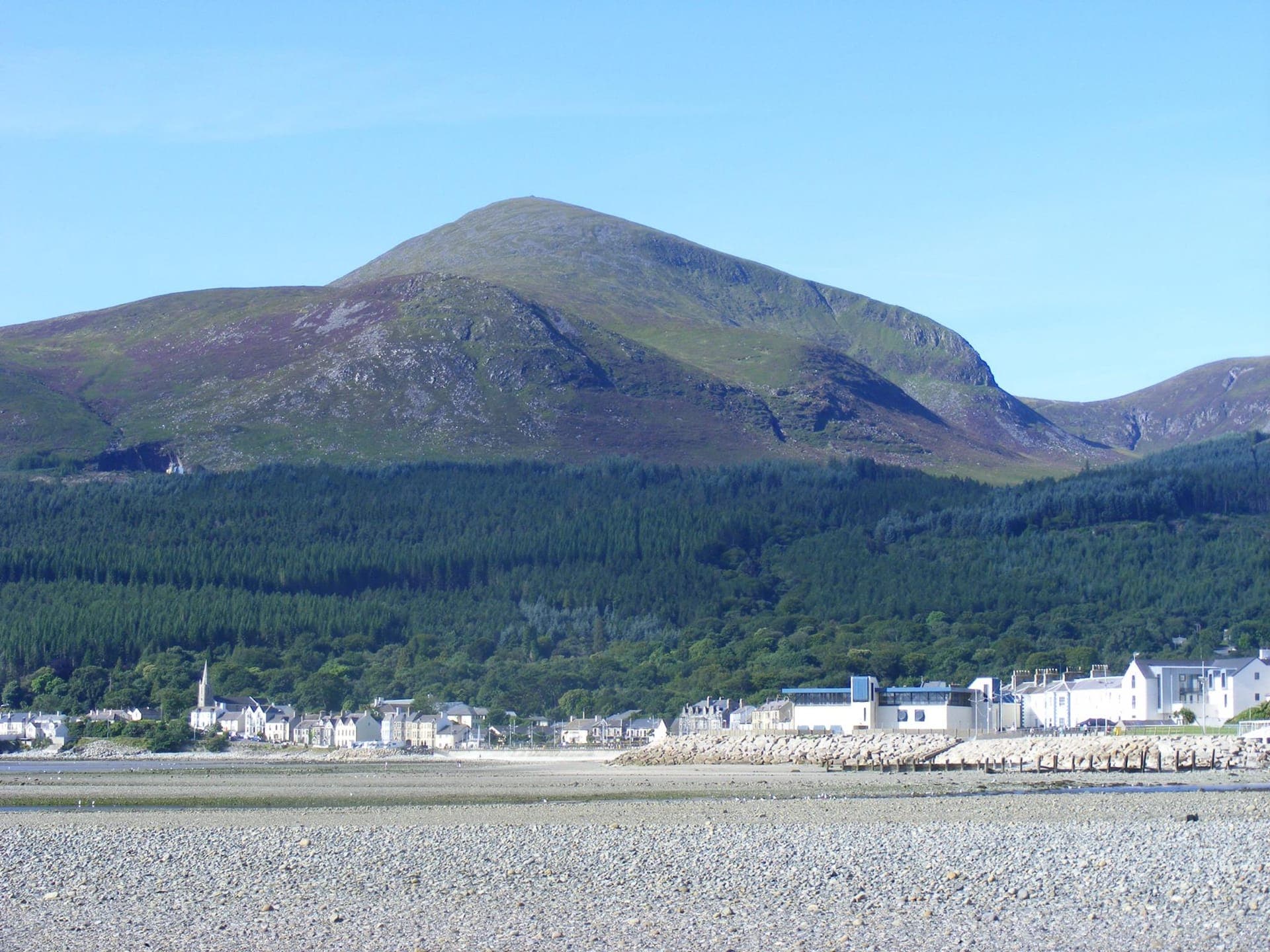
Tollymore Forest Park sits at the foot of the Mourne Mountains, two miles from Newcastle on the Bryansford road. The River Shimna runs through its heart, and the follies and bridges are spread along the river walks that loop through the park.
The park covers 630 hectares of forest, parkland, and riverside paths. The main folly walk follows the river and can be done in a comfortable two to three hours, but allow longer if you want to find every bridge and stop at each one. They’re not all signposted — that’s part of the treasure hunt.
Coordinates
Park Entrance:
54.2315°N, 5.9365°W
Foley’s Bridge:
54.2245°N, 5.9280°W
The Hermitage:
54.2255°N, 5.9345°W
Parking
Car Park:
Large car park inside the park gates. Vehicle entry fee applies (pay at the barrier).
Facilities:
Toilets, picnic areas, and an information point at the main car park. Well-maintained paths throughout.
The Visit
Think of it as an architectural treasure hunt. The bridges and follies are spread along the river walks, and not all of them are signposted. Bring a map from the information point and see how many you can find.
The Folly Trail
Follow the river walks to find each bridge and folly. Start at the Barbican Gate and work your way along the Shimna. The main riverside loop covers most of the structures in about 2–3 hours.
Best Approach
Pick up a trail map from the information point at the car park. The follies are along the river walks — the longer ‘River Trail’ loop passes them all. Don’t rush — take the side paths.
Duration
2–3 hours. For the full river loop and all the follies. Allow extra time for photography — the light through the canopy is extraordinary, especially in the morning.
Difficulty
Easy. Well-maintained forest paths, mostly flat along the river. Suitable for families and all fitness levels. Some short slopes near The Hermitage. Pushchair-friendly on main paths.
What to Bring
- •Camera — the bridges and light are exceptional
- •Comfortable walking shoes (paths can be muddy after rain)
- •A light waterproof — the canopy drips long after the rain stops
- •Picnic supplies — there are beautiful spots by the river
- •A sense of curiosity — not everything is signposted
What to Look For
- •Barbican Gate — the gothic entrance that sets the tone
- •Old Bridge (1726) — the park’s oldest structure
- •Ivy Bridge (1780) — designed to look like a ruin
- •Foley’s Bridge (1787) — the most photographed
- •The Hermitage (1770s) — the quiet memorial above the river
- •Parnell Bridge (1842) — the last bridge built
<strong>The Hermitage.</strong> Most visitors stick to the main river paths and miss it. It’s a small stone building perched on a rocky outcrop above the Shimna, built in the 1770s as a place of quiet remembrance. Stand inside and listen to the river below. It’s the most moving thing in the park — and it’s not on most trail maps.
Make a Day of It
Tollymore is the forest that launched a thousand fan pilgrimages. Combine it with a classic Mourne weekend or a full day tracing Game of Thrones filming locations.
While You're Here
Three places worth exploring once you’ve visited.
More Stories to Discover
Every mountain, bridge, and ruin has a story. Here are a few more.
Discover
Discover More Stories
The Mourne Mountains are full of stories that most visitors never hear. Hidden follies, smugglers’ trails, ice houses, and ghost lights — every path has a tale.
Explore All Stories