The Ultimate Mourne Road Trip
Five days. One summit. Three harbours. Two dolmens. A distillery. And the views that stay with you forever.
Duration
5 Days / 4 Nights
Theme
Complete
Transport
Driving
Best Season
May - September
Base
Newcastle + Rostrevor
The Drive at a Glance
This is the definitive Mourne experience. Five days that take you from the summit of Northern Ireland's highest mountain to the oldest passage tombs in the land, through fishing harbours where the boats still work, along a coast road that inspired Ireland's most famous song, into hidden mountain lakes, across 5,000 years of heritage, and to a distillery at the foot of the mountains where the whiskey tastes of the landscape. You'll need a car, good walking boots, and an appetite — for food, for views, and for stories.
Who It's For
Couples, friends, or solo adventurers who want to see everything the Mournes have to offer. Moderate fitness for Days 1 and 3.
What It Covers
1 summit, 3 harbours, 2 castles, 2 dolmens, 1 distillery, hidden lakes, holy wells, forest follies, and 200+ miles of driving
What to Bring
Walking boots, waterproofs, camera, sunglasses, layers for the mountains, and a notebook — you'll want to remember the stories
“I have travelled the world over and I have never seen anything more beautiful than the silent heart of the Mourne Mountains.”
C.S. Lewis
Day 1
Newcastle & Slieve Donard
Summit the highest peak, explore a Haunted Forest, and stroll the seafront at dusk. This is the day that sets the tone.
Breakfast in Newcastle
45 min - 1 hourYou're starting the definitive Mourne trip — five days that cover everything. Begin on Newcastle's promenade with Slieve Donard filling the sky ahead of you. Grab a table at Niki's Kitchen Cafe for a full Ulster fry, or try the Great Eastern for something lighter. You'll need the fuel — today you're going to the top of Northern Ireland.
Summit Slieve Donard
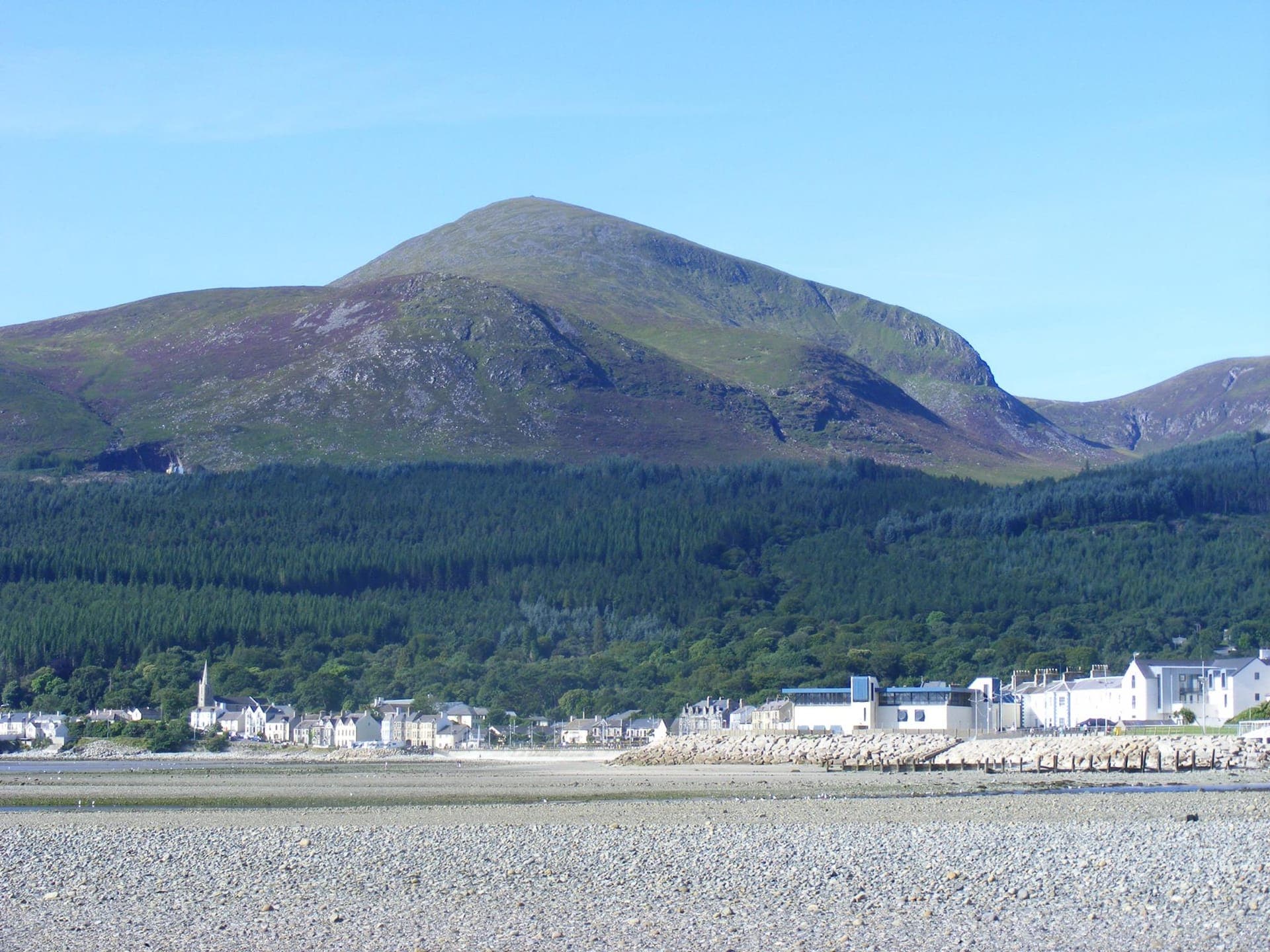
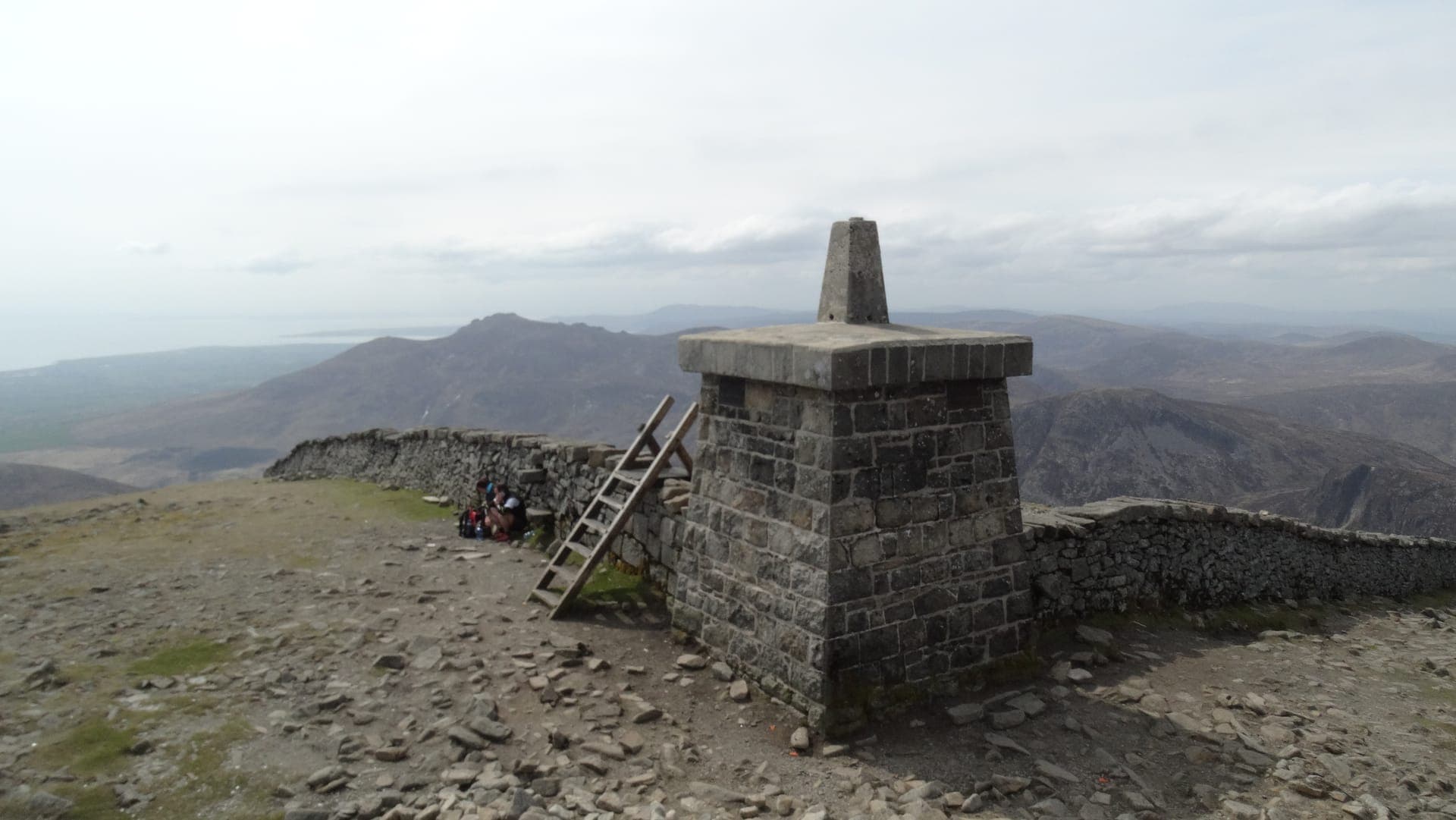
4-5 hours (return)The Glen River path starts at Donard Park on the edge of town — no driving needed. Follow the river upstream through ancient oak woodland, past the ice house hidden in the hillside, and up onto the open mountain. The Mourne Wall meets you at the col between Donard and Commedagh, and you follow it to the summit cairn at 850 metres. On a clear day you can see Scotland, the Isle of Man, Wales, and across Ireland to the Wicklow Mountains. Saint Donard (*Domhanghart*) built a stone oratory up here in the 5th century. The remains are still visible beside the trig point.
The monk who lived on the summitLate Lunch in Newcastle
1 hourYou'll come off the mountain ravenous. Head for a restaurant on the main street for a proper sit-down meal, or try a local cafe for hearty portions and good craic. You've earned it — you've just stood on the highest point in Northern Ireland.
Tollymore Forest Park
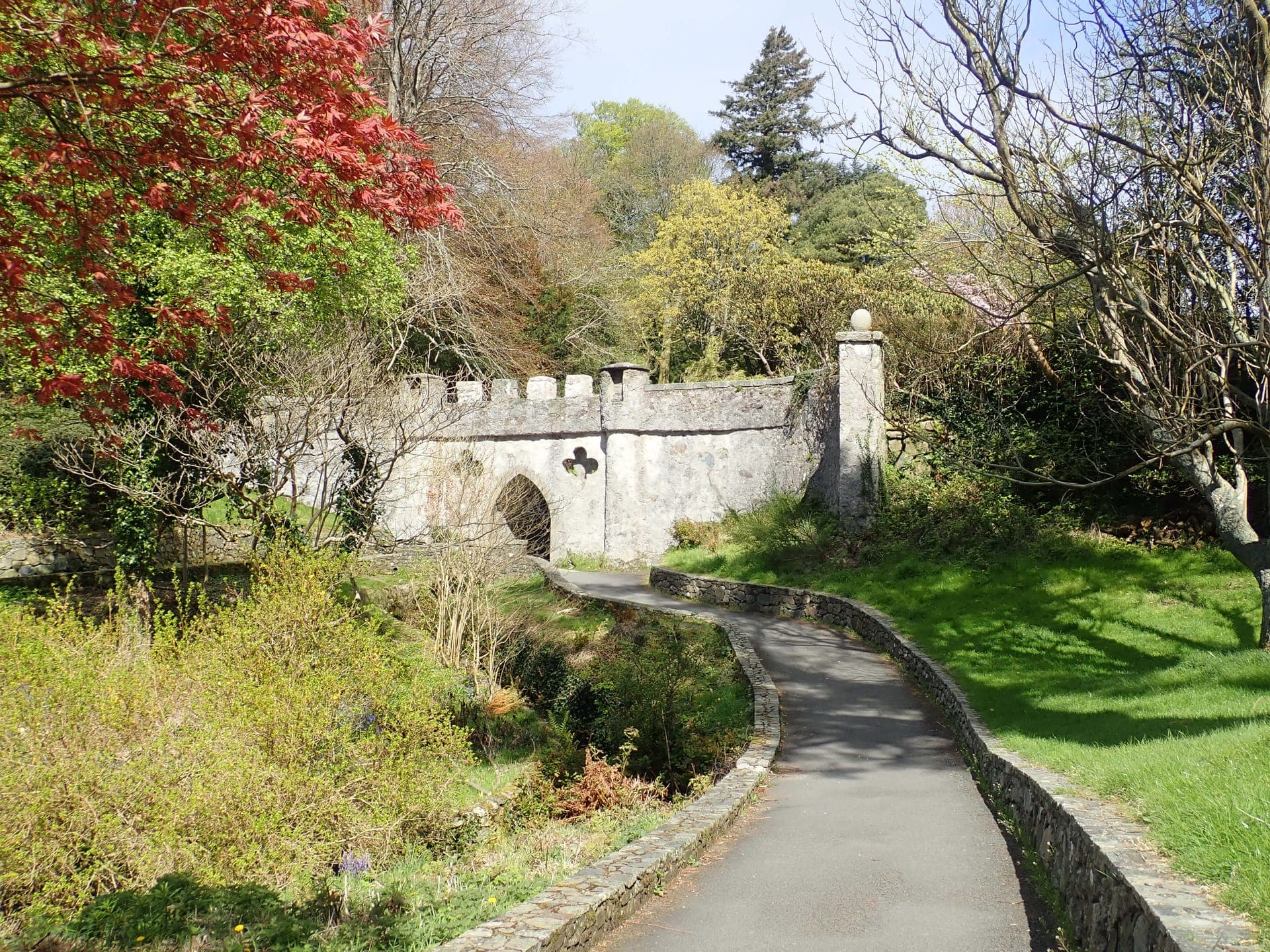
1.5-2 hoursFifteen minutes from Newcastle, Tollymore is the most atmospheric forest in Ireland — 630 hectares of ancient woodland along the Shimna River. Game of Thrones fans will recognise it as the Haunted Forest where the White Walkers first appear. But the real treasure hunt is the Georgian follies hidden throughout the park: the Clanbrassil Barn, the Hermitage, four ornamental bridges, and a Gothic gate that looks like something from a fairy tale. The Shimna river walk is gorgeous — dark pools, mossy boulders, and Sequoia trees that have no business being in Northern Ireland.
The hidden follies of TollymoreNewcastle Seafront Stroll
30-45 minBack in Newcastle, walk the promenade as the light softens. The town comes alive in the evening — families on the beach, the smell of fish and chips, the mountains turning gold behind you. Walk south along the beach towards the Donard Park boundary and back. It's the perfect wind-down after a summit day.
Dinner in Newcastle
1.5-2 hoursFor your first night, try the Briers Country House restaurant for locally sourced food in an elegant setting, or Hugh McCann's for a pub dinner with character. If you want something more casual, Brunel's on the main street does good pizza and burgers. Early bed — tomorrow you're driving the coast.
More restaurantsDay 2
The Coastal Drive
Bloody Bridge, Annalong, Kilkeel, Greencastle — the road where the mountains really do sweep down to the sea.
Breakfast in Newcastle
45 minSecond morning, different cafe. Try Caffolla's for a window seat overlooking the beach, or the Olive Tree Deli for something lighter. Today is all about the coast — Percy French's coast — so pack a light jacket and make sure your camera is charged.
Bloody Bridge
20 minFive minutes south of Newcastle on the A2, the road crosses *Droichead Fuilteach* — Bloody Bridge. The name comes from a 1641 massacre, when prisoners were slaughtered and thrown over the bridge. It was also the coastal landing point where smugglers hauled contraband ashore before loading ponies for the trek inland over the Brandy Pad. Pull into the small car park and walk a few minutes along the river. The mountains close in around you immediately.
The smugglers' storyMaggie's Leap
10-15 minKeep your eyes on the left as you drive south. A deep chasm cuts through the cliffs to the sea — this is Maggie's Leap (*Leim Mhairgead*). The story goes that Maggie, chased by a soldier, leapt across the gap carrying a basket of eggs. In one telling she made it across without breaking a single egg. In another, she fell. Pull into the layby, peer over the edge, and feel the spray coming up from below.
The full story of the leap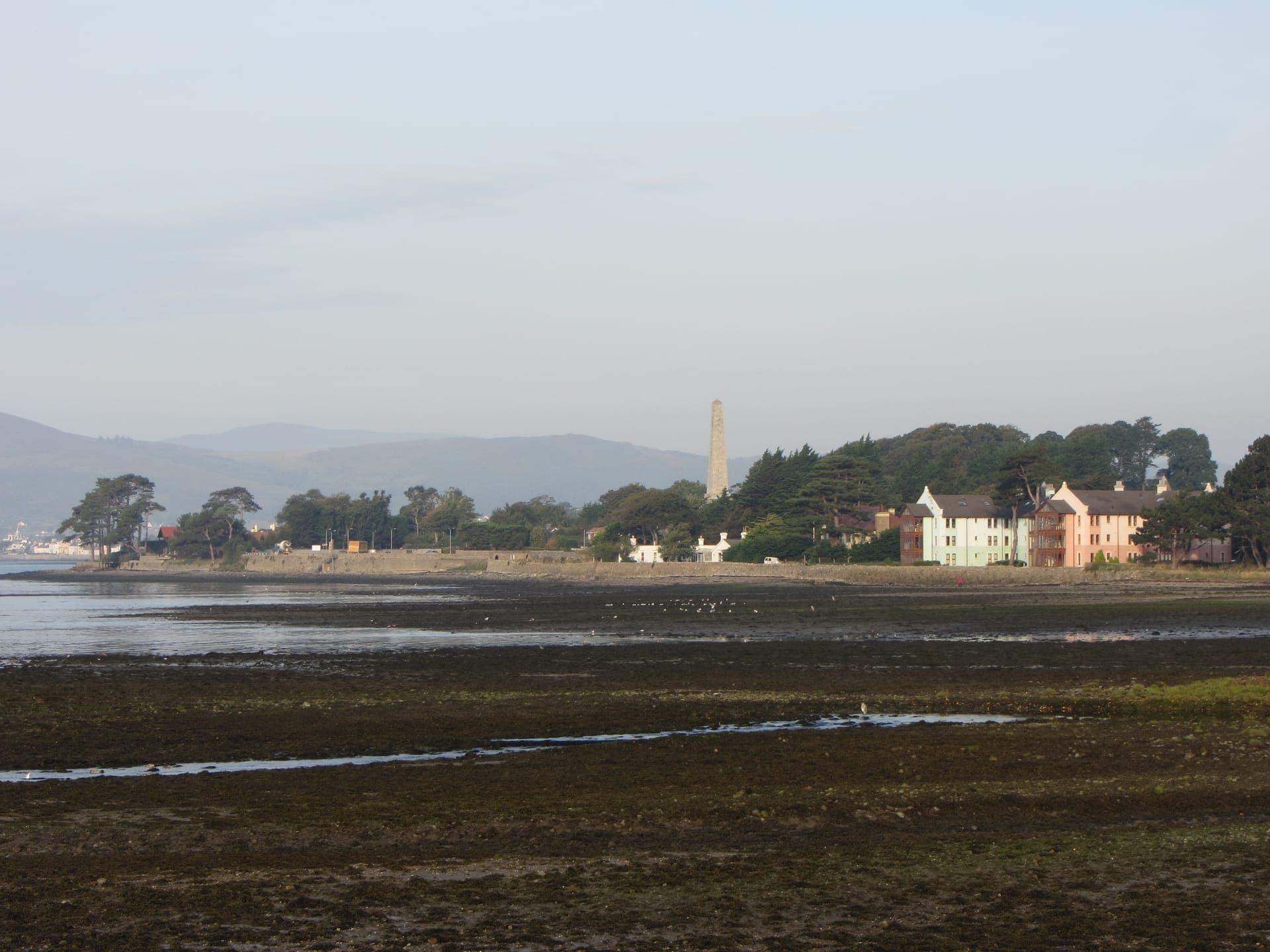
Annalong Harbour & Cornmill
30-45 minThe road drops into Annalong (*Ath na Long* — "ford of the ships"), a harbour village built on granite. At the peak of the stone trade, 18 boatloads of Mourne granite sailed from here every month — the stone that paved Liverpool and clad Stormont. The harbour is tiny and photogenic. Walk across to the Annalong Cornmill, an early-1800s watermill with a 15-foot waterwheel still intact. Three floors of exhibitions cover the milling, the granite export, and the stone workers' lives.
Annalong's granite story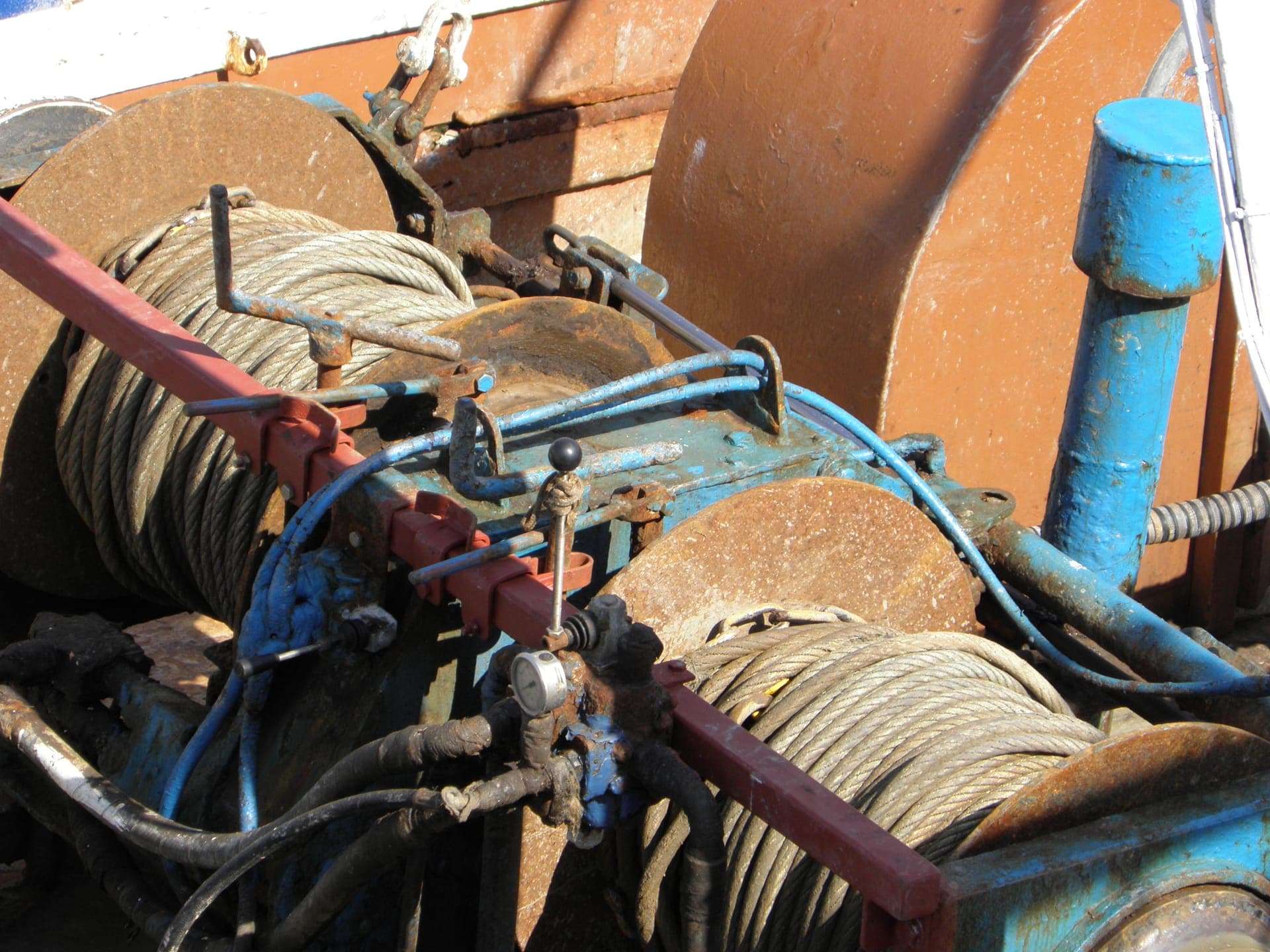
Lunch at Kilkeel Harbour
1 - 1.5 hoursKilkeel (*Cill Chaoil* — "the narrow church") is home to Northern Ireland's biggest fishing fleet. More than 100 boats still work from this harbour — prawns, crab, lobster, and whatever the Irish Sea offers up. The harbour is the star. Watch the boats, smell the salt, and eat the freshest fish you'll find anywhere. Try the Fisherman's Catch for fish and chips right on the harbour, or the Kilkeel Cafe for something more leisurely.
Kilkeel's fishing heritageGreencastle Royal Castle
30-45 minSouth of Kilkeel, the road swings along the shore of Carlingford Lough (*Loch Cairlinn*). Pull off at Greencastle to see the ruins of a 13th-century royal castle built by Hugh de Lacy around 1230 to guard the lough entrance. Four storeys of stone still stand. From the castle walls you can see Carlingford Castle directly across the water on the Republic side — two fortresses staring at each other across the lough for nearly 800 years. Free to visit, and rarely crowded.
The castle that guarded two kingdomsCarlingford Lough Shore
10-15 minThe drive from Greencastle to Warrenpoint hugs the northern shore of Carlingford Lough with the Cooley Mountains of County Louth across the water. This is where the landscape shifts — from rugged coast to lough-side gentleness. The light on the water in the afternoon is extraordinary. Find a layby, breathe it in.
Dinner in Warrenpoint or Rostrevor
1.5-2 hoursTonight, base yourself in Warrenpoint or Rostrevor. Try the Whistledown Hotel in Warrenpoint for something upmarket, or the Restaurant at Lockkeeper's Inn for waterside dining. In Rostrevor, the Kilbroney Bar does hearty pub food with lough views. Pick your base for the next two nights — you'll be exploring the mountains and heritage from here.
Explore WarrenpointDay 3
Into the High Mournes
Silent Valley, Spelga, Blue Lough, and the Brandy Pad. The mountains at their most dramatic and remote.
Breakfast
45 minFuel up properly — today is the big mountain day. Try the Corner Bakery in Kilkeel for fresh pastries and strong coffee, or Bennett's in Warrenpoint for a full fry. You're heading into the heart of the Mournes, and you'll need the energy.
Silent Valley Reservoir
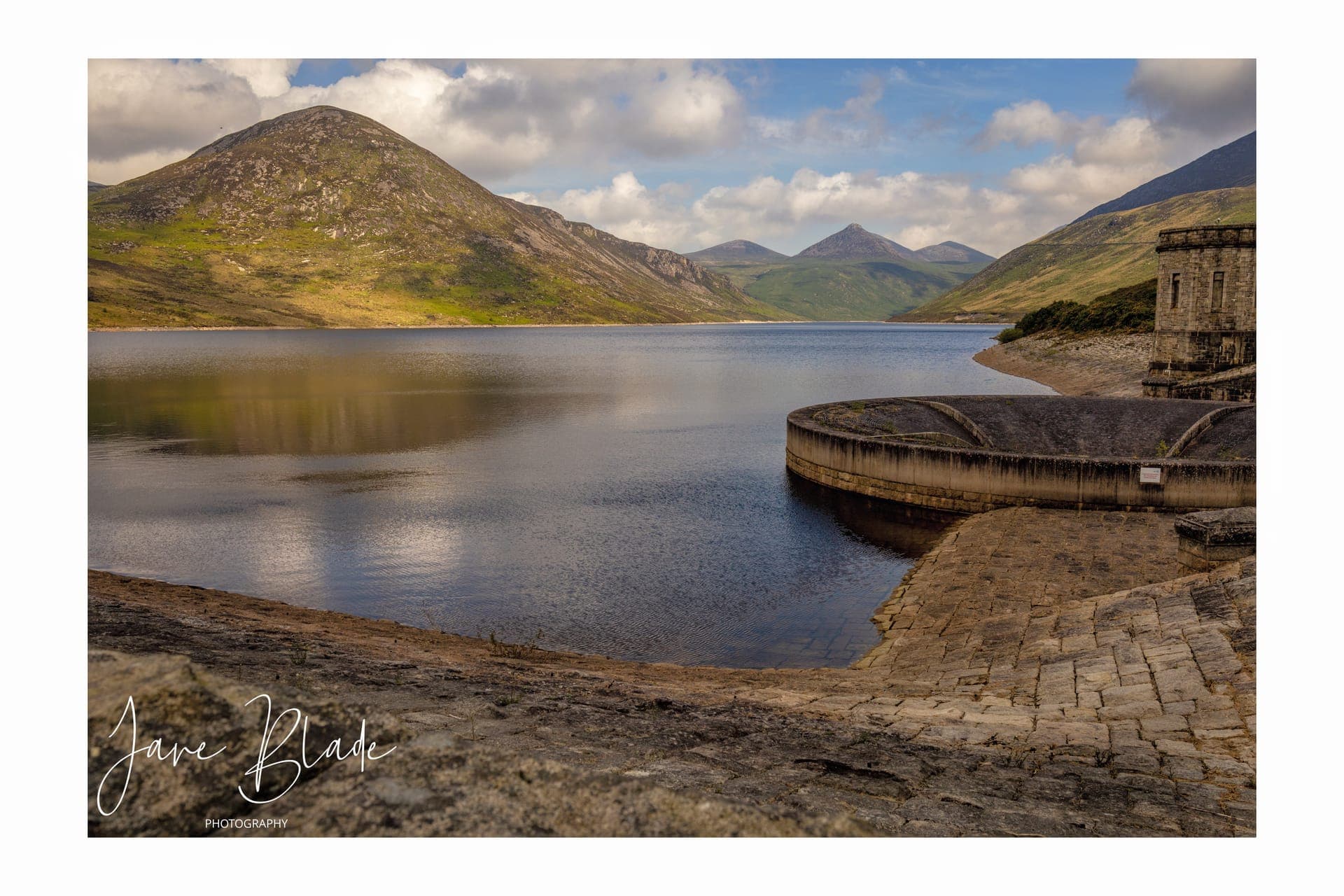
1.5-2 hoursDrive up the Head Road from Kilkeel into the mountains. Silent Valley is one of the most extraordinary places in the Mournes — a reservoir built between 1923 and 1933 by a thousand workers who blasted through solid granite. Nine men died during the construction. The silence gave the valley its name: when the workers left, the birdsong returned, and nothing else. Walk the Viewpoint Trail for panoramic views of Ben Crom reservoir and the surrounding peaks, or take the shuttle bus up to Ben Crom Dam for a closer look at the engineering.
The valley that fell silent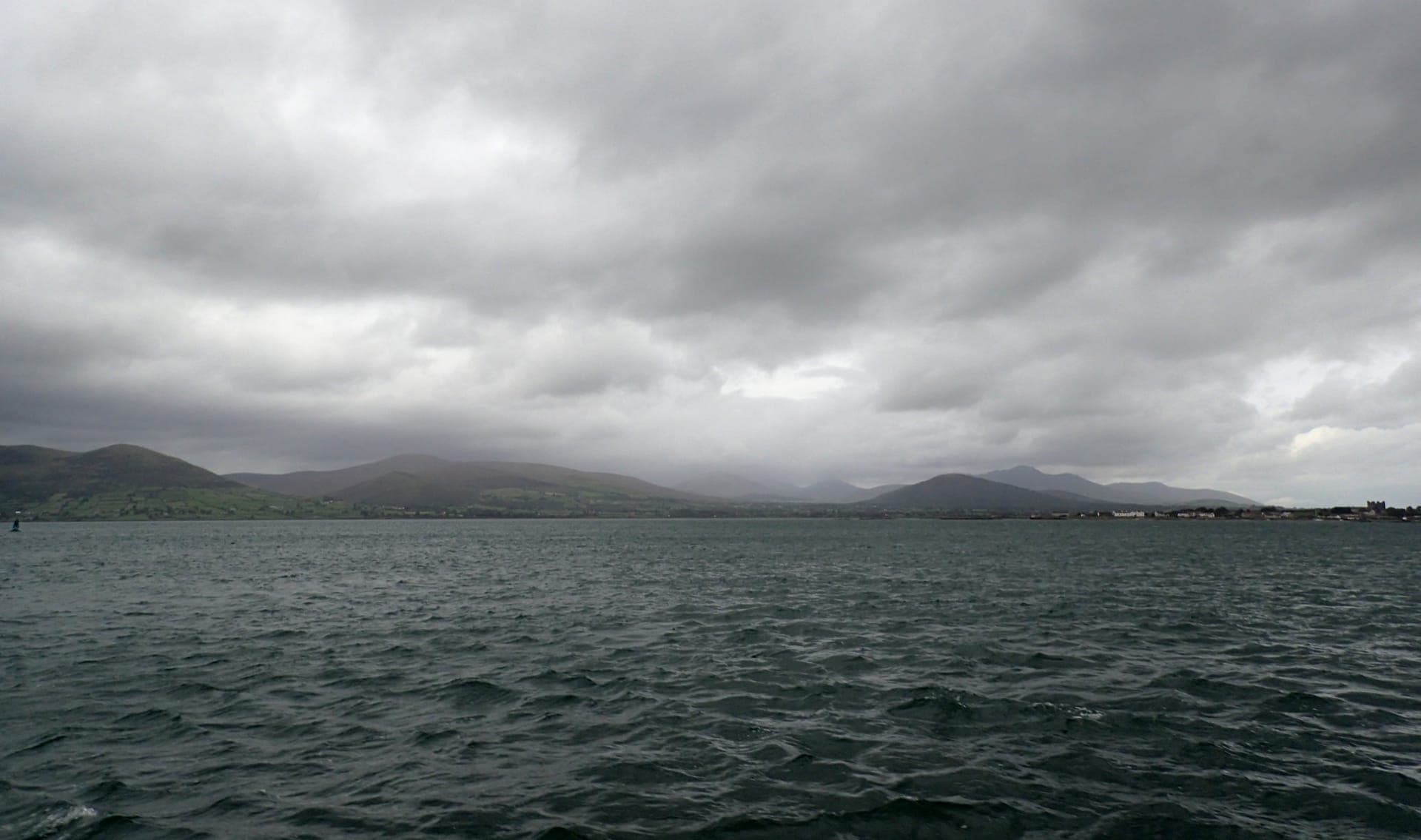
Spelga Dam & the Gravity Hill
30-45 minFrom Silent Valley, drive over the mountain road to Spelga Dam — the pass that cuts through the heart of the Mournes. The views from Spelga are vast: mountains in every direction, bog cotton waving in the wind, and the distant shimmer of the coast. Look for the "gravity hill" on the approach road — a stretch where your car appears to roll uphill. Physics says it's an optical illusion. The locals are less certain.
The hill where cars roll uphillPicnic Lunch at Spelga
30-45 minThere are no restaurants in the High Mournes — that's the whole point. Pick up supplies before you leave Kilkeel or Warrenpoint and spread out a picnic at Spelga Dam. Sandwiches, flask of tea, something sweet. The view from the car park across the central Mournes is one of the best in the range. This is lunch as it should be.
Blue Lough
2-2.5 hours (return)From the Carrick Little car park (a short drive from Spelga), a path leads into the mountains to Blue Lough — a hidden lake tucked beneath the granite tors of Slieve Binnian. The water shifts from black to electric blue depending on the sky. The walk is about 3km each way, mostly along a clear path through heather and bog. At the lough, the silence is total. Slieve Binnian rises in a wall of granite above you. This is the Mournes at their most dramatic and intimate.
The lough that changes colourBrandy Pad Viewpoint
1-1.5 hoursIf you still have legs under you, drive to the Bloody Bridge car park and walk the first section of the Brandy Pad — the old smugglers' trail that crosses the High Mournes. You don't need to do the full crossing; even 30 minutes up gives you extraordinary views back down to the coast and across the central peaks. This is the path that ponies laden with French brandy, silk, and tobacco wore into the mountainside over two centuries of illicit trade.
The smugglers' trailDinner
1.5-2 hoursBack to base, tired and happy. Tonight try the Rostrevor Inn for solid pub food and a well-earned pint, or a hotel restaurant in Warrenpoint for something more formal. You've earned a long meal — you've been in the heart of the mountains all day.
More restaurantsDay 4
Heritage & History
From Saint Patrick's grave to 5,000-year-old dolmens and a Norman castle with the best view in Ulster.
Breakfast
45 minRest your legs today — this is the heritage day, and it's mostly driving and exploring on foot. Try a cafe in Downpatrick once you arrive, or grab something at Denvir's — one of the oldest coaching inns in Ireland, serving breakfast in a building that's been welcoming travellers since 1642.
Downpatrick Cathedral & Saint Patrick's Grave
1-1.5 hoursDownpatrick (*Dun Padraig* — "Patrick's fort") is one of the most important heritage sites in Ireland. The cathedral sits on the hill where the druids already worshipped before Patrick arrived. His grave is marked by a simple granite slab in the churchyard — Ireland's patron saint, buried on a hill overlooking the plain where he preached. The Down County Museum next door is free and excellent — housed in the old jail, it tells the story of the region from the Neolithic to the present.
Where they buried a saintStruell Wells
30-45 minTen minutes from Downpatrick, hidden in a quiet valley, are the Struell Wells — two wells, two bathhouses, and a ruined church. For centuries, hundreds of pilgrims came here on Midsummer Eve, walking the stations and bathing in the icy water. Patrick himself is said to have blessed these wells. The site is atmospheric and almost always deserted. The eye-well and the drinking-well still flow. The 18th-century bathhouses are remarkably intact.
The wells they visited at midnightLunch in Downpatrick
1 hourHead back into Downpatrick for lunch. Denvir's Coaching Inn is the obvious choice — wood-panelled, atmospheric, and the food is honest and generous. Or try the Daily Grind Cafe for something quicker. Downpatrick is a proper market town with good independent shops — worth a wander after lunch.
Goward Dolmen — "Finn's Finger"
20-30 minDrive south towards Hilltown and pull off into a farmer's field (signed) to see the Goward Dolmen. A 50-tonne capstone balanced on ancient stones for five thousand years. They call it Finn's Finger — *Cloch an Fhomhóraigh* — and from certain angles it does look like a giant's hand pressing into the earth. There's no visitor centre, no cafe, no entrance fee. Just a Neolithic monument standing where it was placed before the pyramids were built.
A 5,000-year-old mysteryLegananny Dolmen
20-30 minIf one dolmen whets your appetite, drive north to the slopes of Slieve Croob for the Legananny Dolmen — arguably the most photogenic Neolithic monument in Ireland. A 3-metre capstone balanced on three impossibly slender legs, with the entire Mourne range spread out before it. The dolmen is in a field reached by a short laneway. Farmers still work the land around it, as they have for millennia.
The dolmen with the best view in UlsterDundrum Castle
45 min - 1 hourHead south to Dundrum, where a Norman castle built by John de Courcy around 1177 commands the hilltop above the village. The climb to the castle is short but steep, and the reward is extraordinary — views over Dundrum Bay, the Mourne Mountains behind, and the Irish Sea stretching to the horizon. The keep is remarkably well preserved. Free to visit. Dungeons, curtain walls, and the wind whistling through 850 years of stone.
Explore DundrumDinner in Dundrum or Newcastle
1.5-2 hoursEnd the heritage day with dinner. The Buck's Head Inn in Dundrum is a gastropub with real character and excellent food, or head back to Newcastle for Brunel's Restaurant. If you fancy a drink after, the pubs in Dundrum village are friendly and unpretentious.
More restaurantsDay 5
Hidden Gems
Ring of Gullion, Rostrevor, Killowen Distillery, and a farewell dinner on Carlingford Lough.
Breakfast
45 minLast day. Make it count. Grab breakfast wherever you're based — a cafe in Rostrevor for something quick and friendly, or Bennett's Bistro in Warrenpoint for a more leisurely start. Today you're heading into the Ring of Gullion, the least-visited and most mystical corner of the region.
Slieve Gullion Forest Park & Summit
2-3 hoursSlieve Gullion (*Sliabh gCuillinn*) is the heart of the Ring of Gullion — an ancient volcanic landscape ringed by a near-perfect circle of hills. Drive the 10km scenic route through the forest park, or leave the car and walk to the summit. At the top, two things wait for you: a Neolithic passage tomb older than the pyramids, and the Lake of Enchantment where the warrior Fionn Mac Cumhaill was tricked into diving in and emerged an old man. The lake is still there, dark and still, and the views stretch to every horizon.
Fionn and the Lake of EnchantmentLunch in Rostrevor
1 hourHead back to Rostrevor (*Ros Treabhair*) for lunch. The village is tucked into the foot of Slieve Martin with Carlingford Lough spread out before it. Try the Olive Tree for a proper lunch, or the Corner House for something hearty and local. Rostrevor has a creative, slightly bohemian energy — independent shops, craft studios, and a village square that hosts one of Ireland's longest-running folk festivals.
Explore Rostrevor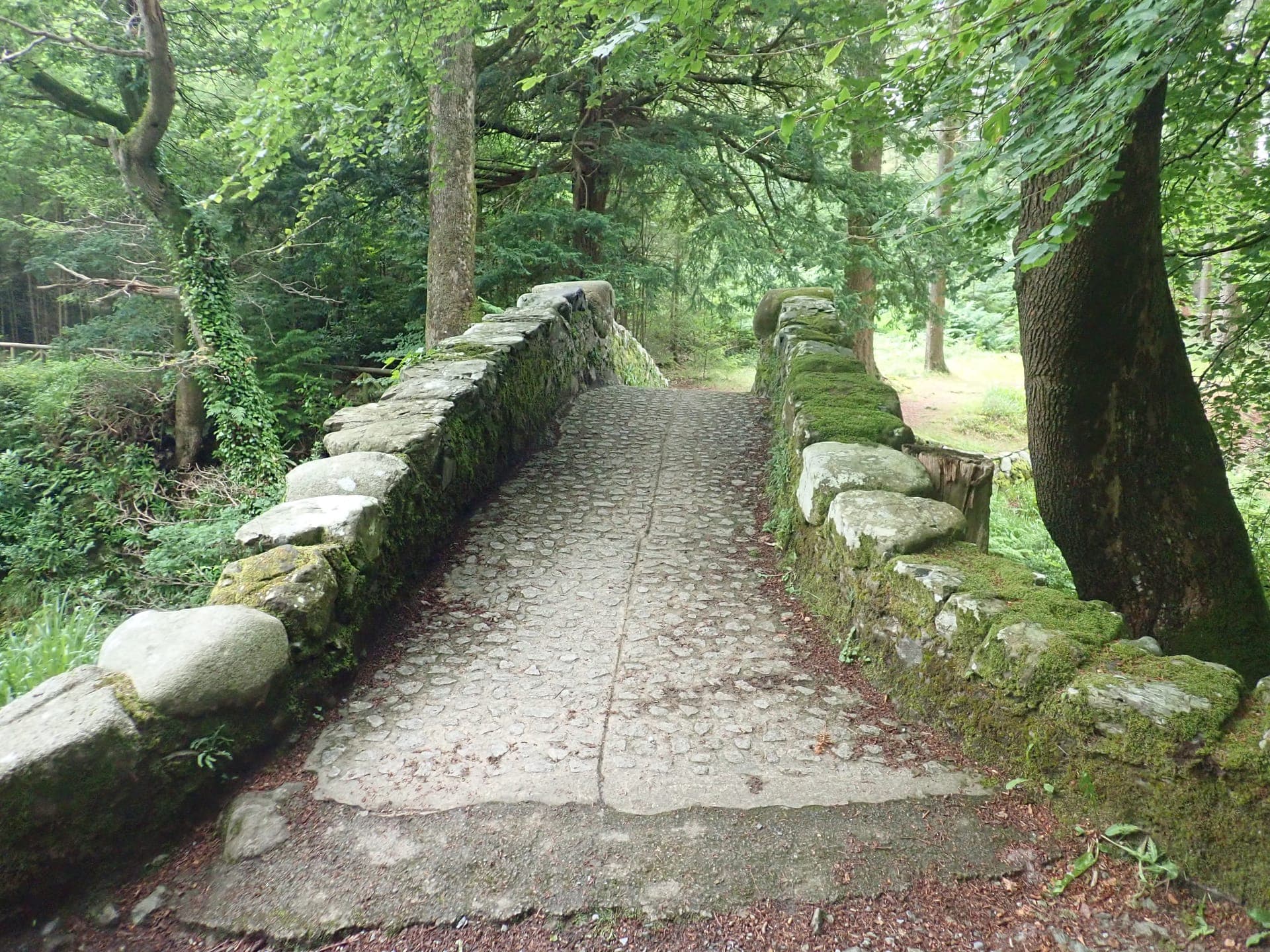
Cloughmore Stone
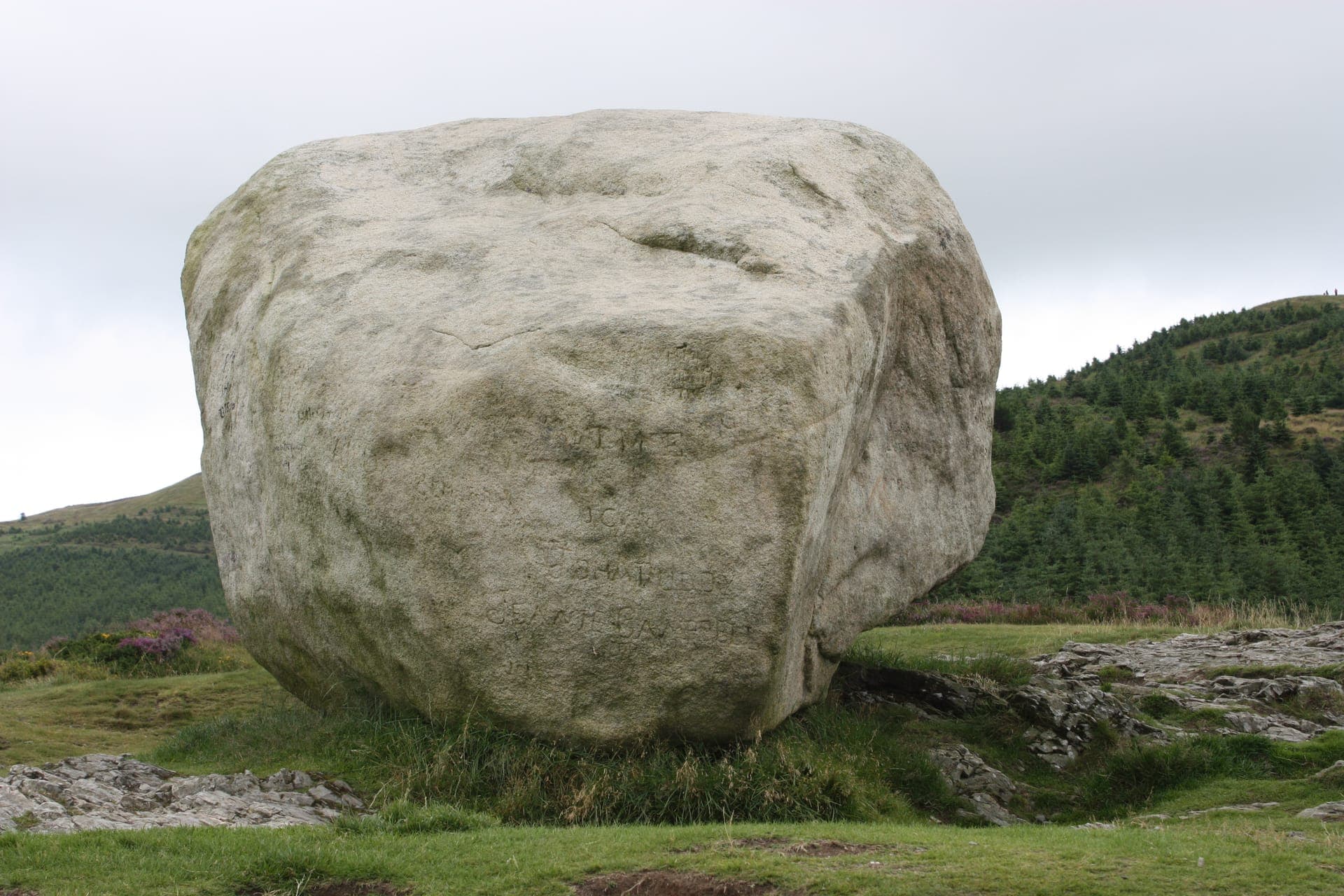
1-1.5 hours (return)From the village, walk up through Kilbroney Park to the Cloughmore Stone — a 40-tonne granite boulder perched impossibly on the hillside above Rostrevor. Legend says the giant Fionn Mac Cumhaill threw it across Carlingford Lough from the Cooley Mountains. Geologists say it was deposited by a glacier. Either way, the views from up here are extraordinary: the lough, the Cooley Mountains, the Mournes behind you, and Rostrevor spread out below like a model village.
The stone Fionn threw across the loughKillowen Distillery
1-1.5 hoursA ten-minute drive from Rostrevor brings you to Killowen — Ireland's smallest distillery, run by Brendan Carty at the foot of the Mournes. Everything is done by hand in small batches: pot still whiskey, poitin, and experimental releases that sell out before they're bottled. Book a tour in advance and Brendan will walk you through the process himself. The whiskey tastes of the landscape — peat, heather, and the mountain water that feeds the stills.
Ireland's smallest distilleryFarewell Views — Carlingford Lough
15-20 minBefore dinner, drive along the lough shore between Rostrevor and Warrenpoint one last time. The evening light on Carlingford Lough is the best in the region — the water turns silver, the Cooley Mountains go purple, and the whole landscape feels like it's holding its breath. Find a layby. Get out. Take it in. This is the view you'll remember.
Farewell Dinner
2 hoursYour last evening deserves something special. The Lockkeeper's Inn at Narrow Water has an atmospheric waterside setting for a farewell meal. Or splash out at the Whistledown Hotel restaurant in Warrenpoint. This is the dinner where you recap five days of mountains, coast, history, and whiskey — and start planning when you're coming back.
More restaurantsInsider Tips
Base yourself in Newcastle for nights 1-2 and Warrenpoint/Rostrevor for nights 3-4. This keeps drive times short and puts you close to each day's attractions.
Day 1 (Slieve Donard) and Day 3 (High Mournes) are the physically demanding days. Schedule them with rest days between — that's why the coast drive and heritage day are in the middle.
Golden hour photographers: the best light on the Mournes is early morning from the coast, and late afternoon on Carlingford Lough. Plan accordingly.
Don't try to add more stops. This itinerary is full. If anything, drop a stop to give yourself breathing room — rushing through the Mournes defeats the purpose.
Pack a picnic for Day 3 — there are no restaurants in the High Mournes. A flask of tea at Spelga Dam with the mountains around you is better than any cafe.
Book Killowen Distillery in advance (Day 5) — they only do small group tours and sell out quickly, especially in summer.
Bring proper walking boots for Days 1 and 3, waterproofs regardless of the forecast, and layers. Mourne weather changes in minutes.
Silent Valley and Spelga Dam have limited phone signal. Download offline maps before Day 3. Your satnav may not know these mountain roads.
More Itineraries
Explore more ready-made trip plans for the Mourne region
Stories Along This Route
Discover the tales woven into the places you'll visit.
Ready for the Ultimate Mourne Trip?
Get practical information on getting here, where to stay, and everything you need to make five unforgettable days happen.
Plan Your Trip